Umbrella Insert Cards for Retail Branding and Care Messaging
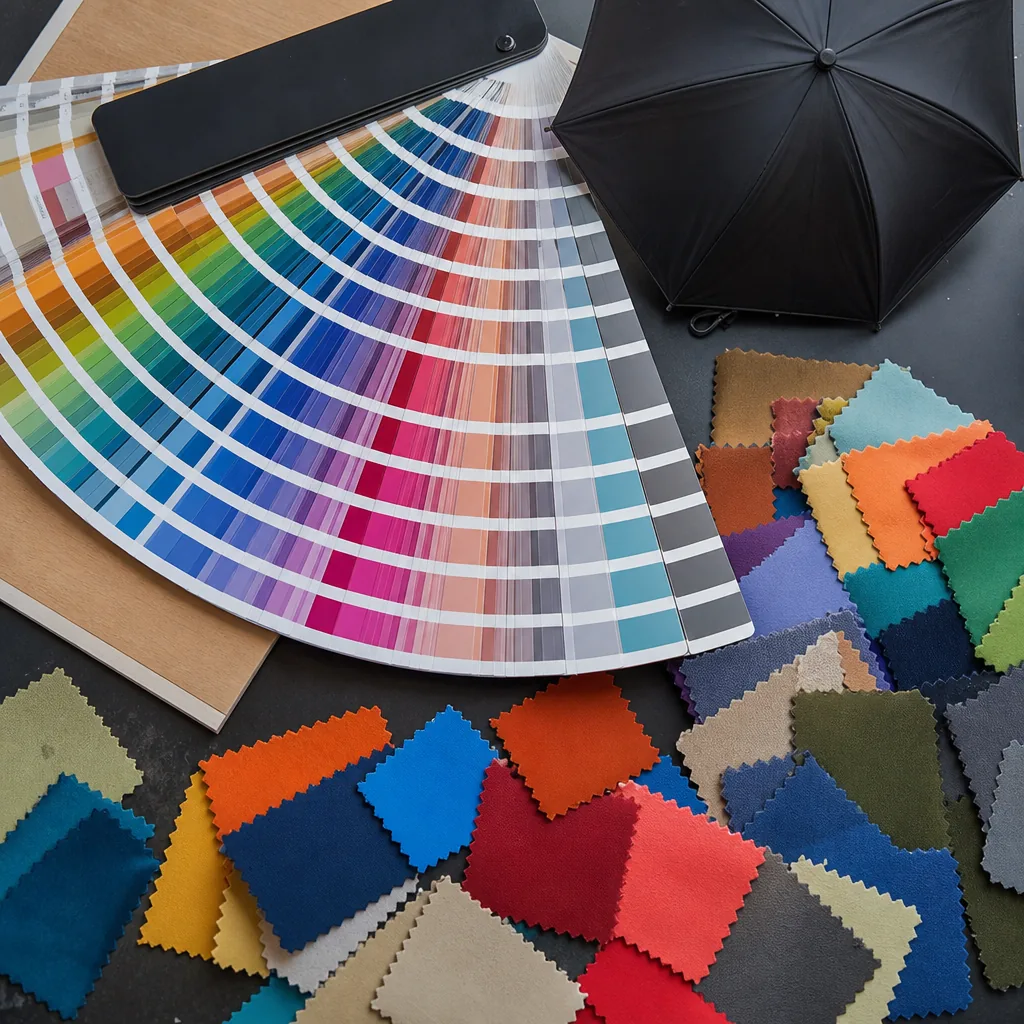
Retail buyers often focus on canopy color and handle finish, then discover the pack feels incomplete at shelf or creates after-sale questions about care, warranty, and brand origin. On our Songxia production floor, we treat umbrella insert cards as part of the packing spec: sized to sit cleanly with 190T or 210T pongee, printed with scannable QR codes, and checked so they protect the folded umbrella without adding bulk or slowing carton loading.
Why Insert Cards Matter in Retail Packs
The cheapest branding surface in a retail umbrella pack is often the one buyers ignore: the insert card. A 300–350 gsm coated card costs a fraction of a printed sleeve or upgraded gift box, but it gives you controlled space for product story, care guidance, warranty terms, batch traceability, and QR code packaging. For a 23" auto-open 190T pongee umbrella, the consumer usually sees the hang tag for three seconds; the card stays with the product longer, especially in boxed golf umbrellas, premium folding umbrellas, and corporate gift sets. I like insert cards because they reduce confusion after purchase: how to dry the canopy before closing, how to avoid forcing an auto-open-close shaft, what windproof means on a double-canopy frame, and what is not covered under warranty. Done correctly, umbrella insert cards make a low-margin SKU feel more complete without changing ribs, fabric, handle tooling, or carton dimensions.
Placement depends on the pack format, and bad placement causes bent cards, creased canopies, or missed messaging. In a rigid retail box for a 27" or 30" golf umbrella, the card usually sits flat on top of the folded canopy, under tissue paper or a thin PET window, so the first open reveals the brand message. In a fabric sleeve or self-fabric pouch for a 21" or 23" compact umbrella, the card can be tucked between the umbrella and pouch wall, but we keep it below the runner area so it does not catch on the ribs or stretchers during repacking. For POE or PVC clear umbrellas, the card should not press directly against printed panels in hot containers, because ink transfer can happen after 30–40 days at sea. Our standard practice at ZheBrella is to check card fit during pre-production packing, not after mass sewing is finished.
The content should be practical, not decorative filler. Branded umbrella care cards should explain drying, stain cleaning, storage, and wind-use limits in plain language: a fiberglass 8K frame may survive 50+ mph gust testing in a lab, but no umbrella should be used as a walking stick or forced open when inverted. Umbrella warranty cards should define coverage by components: canopy seam defects, broken rib tips, handle separation, shaft mechanism failure, and exclusions such as storm damage or misuse. A QR code can link to registration, assembly video, replacement policy, WeChat or WhatsApp support, or cross-sell pages for rainwear and travel accessories. For retail umbrella packaging, I recommend using one side for emotional brand story and one side for service information, with a printed lot code matching the master carton label. That small detail helps AQL 2.5 inspection, after-sales claims, and retailer chargeback defense.
Card Content Buyers Should Specify
The safest umbrella insert cards are written from the bill of materials, not from a marketing deck. Buyers should specify the exact copy blocks before artwork approval: short brand message, model or SKU, open/close instructions, fabric care, windproof claim, UV note if applicable, warranty limits, importer or distributor details, country of origin, and support contact. For retail umbrella packaging, I also like a small “before first use” line telling customers to shake the canopy loose before opening; it prevents complaints caused by sticky 190T or 210T pongee panels after long ocean transit. If the card doubles as umbrella warranty cards, define the claim window clearly, usually 30, 90, or 180 days, and separate manufacturing defects from misuse, storm damage, bent ribs, lost sleeve, or broken tips caused by forced closing.
Mechanism wording must change by construction. A manual 23" straight umbrella can say “slide runner upward until it clicks,” while an auto-open model needs “press button away from face and keep clear of ribs.” Auto-open-close 21" folding umbrellas need stricter language: “press once to open, press again to collapse canopy, then push shaft back until locked.” Double-canopy vented windproof models should avoid vague claims like “storm proof”; better wording is “vented canopy helps release gust pressure” or “tested to 50+ mph under controlled conditions” if the frame actually passed that test. For fiberglass ribs, steel shaft, 8K or 10K frames, put claims in measurable terms instead of saying unbreakable, because customers will test that sentence in the first bad storm.
Fabric and compliance notes need the same precision. For Teflon-coated pongee, say “shake dry and leave open until fully aired; do not machine wash, tumble dry, iron printed panels, or store wet.” For POE, PVC, or EVA clear umbrellas, warn against high-heat storage in cars because panels can deform or stick. UPF 50+ umbrellas should include the tested standard if available and a plain UV note: “Provides UPF 50+ coverage on canopy area only; reflected UV can still reach skin.” Branded umbrella care cards can carry QR code packaging that links to video instructions, replacement policy, or multilingual support, but the printed card should still show importer name, address, email, batch code, and service contact. Our standard practice at ZheBrella is to lock this copy before AQL 2.5 final inspection so the factory checks card placement, language version, and SKU match together.
Size, Paper, and Print Requirements
For umbrella insert cards, I usually specify 300–400 gsm C1S or art card because thinner stock curls inside retail umbrella packaging after ocean freight, especially when cartons sit through 30–35 days of humidity swings. A 300 gsm card is enough for compact 21" and 23" folding umbrellas; 350–400 gsm feels better for 27" golf umbrellas, gift-box sets, and premium retail displays. Standard sizes we run are 85 x 55 mm, 90 x 60 mm, or a long 120 x 70 mm card when care icons and warranty text both need room. Rounded corners at R3–R5 mm are not cosmetic only; sharp corners snag 190T/210T pongee canopies and can leave pressure marks on light colors. Matte lamination is the safest finish because it hides fingerprints and scans reliably, while soft-touch looks upscale but should be tested for scuffing against metal shafts, plastic handles, and EVA sleeves during vibration testing.
Print choice depends on whether the card must match a retail brand standard or simply carry clear instructions. Pantone spot color is the right call for logo-critical branded umbrella care cards, especially when the same red or blue also appears on the canopy print, hangtag, and master carton label. CMYK is cheaper and faster for photo instructions, icons, and multilingual blocks, but buyers should approve a hard proof because uncoated-looking matte lamination can dull dark navy, black, and deep green. Our standard practice at ZheBrella is to keep small text at 6.5 pt minimum for English, 7 pt for French/German, and 8 pt or larger for Chinese, Japanese, or Korean characters. For umbrella warranty cards, avoid squeezing legal copy around the logo; use a clean grid with one face for brand and care steps, the other for warranty term, batch code, importer address, and country-of-origin statement.
QR code packaging fails most often because the code is designed by a screen designer, not checked as a printed object. Keep the QR code at 18 x 18 mm minimum for normal smartphone scanning, 20–25 mm if the card has soft-touch lamination, metallic ink, or will be placed inside a glossy PVC/POE sleeve. Use black or very dark ink on a white or pale background, with a quiet zone at least 4 modules wide; do not place the code over gradients, canopy photos, woven textures, or low-contrast brand colors. For multilingual layout planning, decide languages before artwork lock, not after AQL inspection. English plus Spanish usually fits one side; English, French, German, Italian, and Dutch need icon-led instructions and shorter warranty phrasing. If the card supports DDP retail programs, include a production lot or PO reference so customer service can trace frame type, canopy fabric, and shipment batch.
Protecting the Umbrella During Packing
The first rule for umbrella insert cards is simple: the card must not become a sandpaper sheet inside the pack. A 300–400 gsm card with sharp die-cut corners can scratch ABS, rubberized, bamboo, or plated metal handles during ocean freight vibration, especially when 24 or 48 pieces are packed tight in a master carton. Ferrules are even easier to mark because many are painted or nickel-plated over thin metal. For printed 190T or 210T pongee panels, I do not allow loose cards to sit directly against the outside canopy if the umbrella uses screen print, heat transfer, or reflective ink; repeated rubbing can haze the logo before the buyer ever opens the carton. Rounded corners, matte lamination, and a low-abrasion surface are not cosmetic choices. They are packing controls, the same way we choose PE sleeve thickness or carton flute grade.
Placement matters more than card design. For straight umbrellas, branded umbrella care cards work best tucked under the closure strap or inserted into the clear sleeve pocket, not floating beside the handle. For 21 inch and 23 inch folding umbrellas, the card should sit flat along the folded canopy inside the sleeve, away from the cap and button side. In retail umbrella packaging, especially window boxes or magnetic gift boxes, we usually position the card on top of the inner tray or behind the sleeve so it is visible but not load-bearing. If the product has a soft-touch handle, leatherette wrap, or metallic logo badge, I prefer a thin tissue layer between the card and the handle. Our standard practice at ZheBrella is to run a shake test after packing: 10 cartons dropped and vibrated, then checked for scuffing before bulk assembly is released.
Auto-open and auto-open-close umbrellas need extra discipline because a card can press the button during compression packing. If the insert sits across the handle face, carton stacking can trigger the mechanism or preload the spring, which creates bent ribs, stretched 190T/210T pongee, or a failed open-close test at final AQL 2.5 inspection. Keep umbrella warranty cards and QR code packaging panels offset from the button by at least 15–20 mm, and never use elastic bands that pull a card over the actuator. In gift boxes, add a molded pulp, EVA, or paperboard spacer so the handle cannot rotate and trap the card against the button. For umbrella insert cards with QR codes, print orientation should allow scanning after the sleeve is opened without requiring the buyer to unfold the wet-weather product on a retail counter.
Approval, MOQ, and Inspection Workflow
Approval has to start with the card artwork, not the umbrella assembly schedule, because a 2 mm shift in a QR code or warranty line can create more trouble than a loose thread on a canopy. For umbrella insert cards, we normally ask buyers to submit vector files in AI, PDF, or CDR with dieline, bleed, Pantone or CMYK values, barcode zone, QR code URL, and the final language for care and warranty terms. Our standard proofing sequence at ZheBrella is digital artwork proof first, then a printed paper proof when color or barcode readability matters, and finally a pre-production sample packed exactly as mass production will be packed. For QR code packaging, we scan from finished paper stock under warehouse lighting, not just from a screen, because glossy lamination can cause failed scans at retail checkout or during after-sales registration.
MOQ for insert cards is usually tied to the umbrella MOQ, because the packing line cannot efficiently separate 1,000 umbrellas with cards from 2,000 without cards unless we build a special packing instruction and hold inventory aside. If the umbrella order MOQ is 1,000 pcs for a 23" auto-open model or 3,000 pcs for a promotional 21" compact, the branded umbrella care cards or umbrella warranty cards are normally produced in the same quantity plus 1% to 2% overage for line loss. Digital short-run cards are possible, but offset printing becomes more economical above 3,000 to 5,000 pcs, especially with matte lamination, spot UV, folded formats, or multi-language versions. Buyers should also allow several extra days in lead time: simple one-sided cards may add 2 to 3 days, while folded cards with QR testing, barcode approval, or FSC paper sourcing can add 5 to 7 days before final carton sealing.
Inspection has to verify insertion, placement, and accuracy, not just whether the card looks clean. During carton insertion checks, the line leader confirms that every umbrella sleeve, hangtag loop, gift box, or polybag contains the correct card version before cartons are sealed, especially when one PO has multiple colors, SKUs, or language markets. Under AQL 2.5 for retail umbrella packaging, we check card presence, quantity per carton, print smudging, wrong artwork, bent corners, poor folding, barcode readability, QR scan function, and mismatch between carton mark, inner label, and warranty message. A missing insert card is usually treated as a major defect for retail orders because it affects compliance, consumer care instructions, and warranty handling. For DDP shipments to Amazon, chain stores, or event distributors, I prefer a final random carton pull after palletizing, because packing errors often appear when operators switch from one canopy color or handle style to the next.
Frequently Asked Questions
Can one insert card cover several umbrella models?
Yes, but only if the instructions fit all mechanisms. Auto-open, auto-open/close, manual, UPF 50+, and windproof double-canopy umbrellas often need different care or safety wording.
Should QR codes go on insert cards or hang tags?
Insert cards allow more explanation and are protected inside the pack. Hang tags are better for in-store scanning before purchase, so many retail programs use both.
What card size works best for retail umbrella packs?
Common insert card sizes are 90 x 55 mm, 100 x 70 mm, or A6, depending on whether the card sits inside a sleeve, pouch, or gift box. For compact folding umbrellas, 90 x 55 mm is usually enough for care steps, warranty terms, and a QR code.
Can QR codes be printed on umbrella insert cards for warranty registration?
Yes. Most buyers use a QR code linking to warranty registration, care videos, product pages, or after-sales support. A minimum QR size of about 18 x 18 mm is recommended for reliable scanning after printing.
What is the typical MOQ and lead time for custom umbrella insert cards?
For OEM umbrella orders, custom insert cards are usually included from 500–1,000 pieces per design. Lead time is typically 3–7 days for print proof approval and produced alongside the umbrella packaging schedule.
Looking to Launch Your Custom Umbrella Line?
ZheBrella is a Zhejiang-based OEM/ODM umbrella manufacturer with 17 years of export experience. Free design, low MOQ from 100 pieces, windproof construction, full-color print.
Get Free Quote Now »People Also Search For
Related Articles
Umbrella Insert Cards That Strengthen Private-Label Branding
Use insert cards to explain features, care, warranty, and brand story while supporting premium presentation for retail a...
Read More »
Umbrella Insert Cards for Private-Label Brand Storytelling
Use insert cards to explain fabric, frame, care, warranty, and brand values while improving perceived value in private-l...
Read More »
Umbrella Retail Insert Cards for Brand Storytelling
Use insert cards to explain umbrella quality, care, and brand story while keeping the canopy, pouch, and retail packagin...
Read More »