Umbrella Production Tolerances That Prevent Fit and Finish Defects
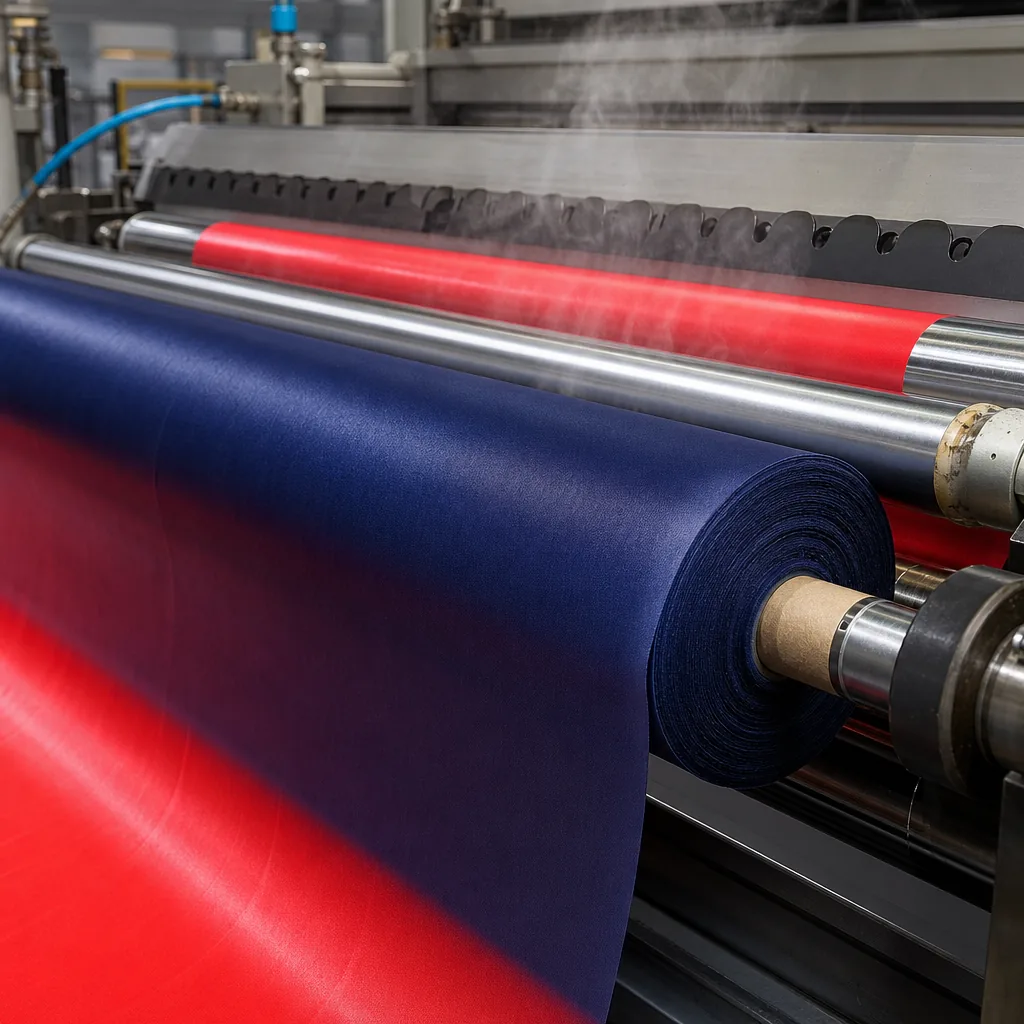
When umbrella assemblies look acceptable on paper but arrive with skewed canopies, wobbling shafts, or runners that bind, the problem is usually uncontrolled umbrella production tolerances rather than isolated operator error. On our Songxia lines, these defects trace back to measurable variation at cutting, rib forming, tube straightening, and final assembly, so buyers need clear tolerance limits that can be checked before rework, rejects, and customer complaints start compounding.
Why Tolerances Matter in Umbrella Manufacturing
Small dimensional drift is the root cause of many fit and finish defects in OEM umbrellas. A 1.5-2.0 mm mismatch in rib length, notch position, or stretcher hole spacing is enough to pull one canopy side higher, creating a skewed profile before print alignment is even checked. Poor canopy panel alignment creates the next visible failure: twisted seam lines, off-center tips, and wrinkling between panels. That problem shows faster on 190T pongee than on heavier 210T fabric because tension differences telegraph more clearly across the canopy. Shaft straightness tolerance is just as critical. Excess shaft runout causes opening wobble, a top cap that sits off-center, and a closed umbrella that stacks unevenly in its sleeve. On 21 inch, 23 inch, and compact 8K or 10K frames, these defects are immediately visible and difficult to hide at final packing.
The runner is where umbrella production tolerances shift from cosmetic defects to functional failures. Runner clearance that is too tight lets plating burrs, paint buildup, or an oversized plastic insert stop travel midway, leading to sticky opening on manual, auto-open, and auto-open-close styles. Clearance that is too loose creates chatter on the shaft, uneven closing, and a low-grade feel even when the canopy and handle are within spec. The tolerance stack is even less forgiving on 16K fashion umbrellas and double-canopy vented windproof styles, where canopy registration and vent placement must stay consistent around the full perimeter or the umbrella will wrinkle, twist under load, and risk failure in 50+ mph wind testing. For buyers, that translates directly into higher rework, slower line output, and more incoming complaints after shipment. On OEM orders of 3,000-10,000 pieces, drift forces operators to file runners, reseat canopies, and swap frames, while tighter control of rib, shaft, runner, and canopy dimensions helps keep AQL 2.5 inspections from finding crooked profiles, sticky runners, and uneven closing.
Critical Dimensions Buyers Should Put on the Spec Sheet
Put the dimensions that drive assembly yield and visible quality directly on the spec sheet. For a 21-inch or 23-inch folding umbrella, call out shaft straightness tolerance at 1.5 to 2.0 mm maximum bow over the full assembled length, and define top-to-runner travel so the frame reaches full lock without over-stressing the spring or dragging at the notch. Runner clearance also needs a numeric limit. On plated steel or aluminum shafts, runner-to-shaft radial play is typically held at 0.15 to 0.30 mm, with allowance for coating thickness and mechanism type. These umbrella production tolerances matter most on auto-open and auto-open-close frames, where travel force and locking consistency are less forgiving than on basic manual styles. If clearance is too tight, the runner can hesitate in cold weather; if it is too loose, it rattles, accelerates notch wear, and creates fit and finish defects within weeks. Tight control here also reduces the risk of an off-center canopy after repeated opening cycles.
Apply the same discipline to canopy geometry and handle seating. If the target open diameter is 42 inches on a 23-inch 8K stick umbrella, or 48 to 54 inches on a 27-inch golf style, lock the diameter tolerance only after rib material and canopy fabric are fixed, because fiberglass and steel ribs recover differently under fabric tension. A practical checkpoint is rib length consistency within plus or minus 1.0 mm across the full rib set, backed by canopy panel alignment and panel symmetry checks at every seam. When one panel runs long or sewing feed drifts, the peak twists, scallops stop matching, and printed logos read visibly crooked. For handles, specify insertion depth, adhesive type, and allowable rotational play. A 0.5 mm cosmetic gap at the ferrule or handle collar may be acceptable on a basic manual frame if the joint is secure, but auto-open styles need a tighter fit because each cycle shock-loads the handle joint. Pair these specs with open-close cycle testing and AQL 2.5 final inspection before packing.
Material Choices That Change Tolerance Windows
Material choice sets the usable window for umbrella production tolerances before sewing starts. Fiberglass ribs recover from deflection better than plated steel, but they do not return to the exact same arc on every cycle, so rib-tip position and stretcher-joint geometry usually need a wider allowance to protect canopy panel alignment. On a 23-inch 8K auto-open-close frame, repeated cycling can leave nominally matched fiberglass ribs separated by a few millimeters at the tip line, which shows up first as uneven canopy tension and drifting panel match. Steel ribs are easier to fixture to repeatable geometry, so factories can hold shaft straightness tolerance and runner clearance more consistently during assembly. The tradeoff is field durability: once low-grade steel takes a permanent set, the frame leans, crown tension shifts off center, and fit and finish defects appear quickly. For buyers, the practical decision is straightforward: fiberglass usually performs better in use, but it demands stricter canopy-stage control; steel is easier to assemble to spec, but deformation risk is higher after handling and repeated opening.
Frame geometry changes tolerance risk as much as rib material. An 8K frame uses wider canopy wedges, so small cutting or sewing drift is easier to absorb; on a 16K frame, each panel is narrower, and a 1.5 to 2.0 mm seam error can accumulate around the canopy and become visible at the tip line, final closing seam, and printed artwork registration. That makes 10K and 16K styles less forgiving than standard 8-rib promotional or golf umbrellas, especially when factories are trying to hold canopy panel alignment across all ribs. Fabric weight matters too. 190T pongee is cost-efficient but shifts more during cutting and sewing, particularly after heat-transfer printing or on dark reactive-dyed lots, so feed tension and seam allowance control have to be tighter to keep canopy tension even. 210T pongee is usually more dimensionally stable and tracks better through sewing, but if the pattern is cut too tight it can pull harder on the frame and telegraph waviness. Double-canopy vented designs need added allowance at the vent opening, overlap zone, and upper-to-lower canopy tie points; using single-canopy umbrella production tolerances on these styles often leaves the vent off center and the top canopy wrinkled between ribs, even when the umbrella still passes opening tests.
How Factories Control Tolerances on the Line
First-article approval is the point where umbrella production tolerances are fixed before volume starts. The factory should sign off a sealed sample before bulk sewing or frame assembly, not after several hundred units are already in work. For the canopy, approval should use a marked pattern for the exact 21 inch, 23 inch, or 27 inch size, check canopy panel alignment, confirm arc accuracy, and measure cut-panel symmetry so adjacent gore edges stay within 2 to 3 mm at the tips. On the frame, the sample should be checked on a rotating gauge for shaft straightness tolerance; on a 3-fold steel or fiberglass shaft, visible wobble usually indicates poor tube concentricity or a riveting issue upstream. The same first article should verify runner clearance, opening and closing force, top-notch seating, ferrule fit, and runner travel with no scraping on the shaft coating. Catching those faults before fabric, handles, wrist straps, and export cartons are added cuts rework cost and lowers the risk of late corrections.
On-line control needs fixtures, gauges, and fixed sampling intervals. At stamping and frame assembly, factories should use jigs and go/no-go gauges to confirm rib length, stretcher hole position, notch spacing, and runner clearance; a 0.5 mm error at the runner slot is enough to create a sticky auto-open-close action after final assembly. On canopy sewing lines, supervisors should pull semi-finished tops every 30 to 50 pieces to check seam balance, center-cap position, and print registration on 190T or 210T pongee. Clear POE, PVC, or EVA canopies need even tighter control because weld drift, waviness, and panel mismatch show immediately under light and turn into visible fit and finish defects. Final inspection at AQL 2.5 still matters, but it should confirm function and cosmetics rather than replace in-process measurement: sample opening action, crown height, finished diameter, handle alignment, fabric tension, skewed tips, loose threads, scratched shafts, and offset printing. Pairing AQL 2.5 with in-line dimensional checks is cheaper and faster than finding defects after full assembly, when correction can mean rework, downgraded goods, or a missed FOB or DDP ship date.
What Tolerance Control Means for Cost, MOQ, and Lead Time
Tighter umbrella production tolerances increase cost when the part itself has to deliver the fit, rather than the assembler compensating during final build. The biggest cost jumps usually show up in ODM work with new tooling, custom ABS or rubber-coated molded handles, and nonstandard frames such as 10K compact auto-open-close or 16K fashion stick umbrellas. If you specify handle-to-shaft wobble below 0.5 mm, runner clearance tighter than the normal assembly window, or near-perfect canopy panel alignment on a full-panel print, the factory typically adds go/no-go gauges, slows line speed, and rejects more semi-finished parts before assembly. Yield drops first on ribs, ferrules, molded parts, and plated steel or aluminum tubes when shaft straightness tolerance is tighter than the normal production range. The result is straightforward: more setup time, more inspection labor, and more scrap. Buyers should reserve tight specs for dimensions that affect opening performance, visible print registration, or customer-noticed wobble, and allow normal commercial tolerance on sewn and riveted features that do not change function.
Tolerance demands also change MOQ, sample approval, and lead time. A standard 23-inch 8K manual umbrella in 190T pongee with a stock frame and stock handle can often stay at a 500 to 1,000 piece MOQ. An ODM program with a new injection mold, Pantone-matched handle, and stricter control of fit and finish defects often needs 2,000 to 3,000 pieces to absorb mold cost, setup waste, and first-run adjustment. Freeze critical tolerances before pre-production or golden sample approval, not after: late changes to cap height, runner travel, or sewing balance can invalidate fabric already cut or tubes already plated. A repeat FOB order on a proven frame may still ship in 25 to 35 days, while a new ODM style with unusual umbrella production tolerances can extend to 45 to 60 days once mold sampling, frame trial assembly, print registration checks, and AQL 2.5 planning are built in. Under DDP, add transit and customs buffer, because a tolerance-sensitive order has less recovery time if rework causes a missed vessel cutoff. A practical RFQ separates specs into critical-to-fit, critical-to-appearance, and normal commercial tolerance.
Frequently Asked Questions
Should buyers request the same tolerance standard for manual and auto-open umbrellas?
No. Auto-open mechanisms usually need tighter control on shaft, spring, and runner interaction because small dimensional errors can cause misfire or drag. Manual styles are generally more forgiving on moving-part fit, but canopy symmetry still needs clear limits.
Do 16K umbrellas need tighter canopy sewing control than 8K umbrellas?
Yes. With more panels, small cutting or sewing errors accumulate faster and become visible as twist, puckering, or uneven edge shape. Buyers should ask for panel matching checks during pre-production, not only at final inspection.
What tolerance should buyers put on canopy panel offset in a PO or QC spec sheet?
For straight visual seams, many buyers use a canopy panel alignment tolerance of +/-2 mm at the seam match point, with a tighter target of +/-1.5 mm for premium retail programs. Anything beyond 3 mm is usually visible in final inspection and should be classified as rework or reject depending on the style.
How is shaft straightness typically checked during umbrella production?
Factories usually roll the assembled shaft on a flat inspection plate or check total runout with a fixture after assembly. A common control point is no more than 1.5-2.0 mm visible deviation over the full shaft length for standard stick umbrellas, with tighter limits for auto-open models that are sensitive to runner travel.
What runner clearance is practical without causing wobble or sticking?
For most OEM umbrellas, buyers often approve runner-to-shaft clearance in the range of 0.2-0.5 mm depending on shaft material and coating thickness. Below that, the runner may bind during opening; above that, users can feel side play and hear rattling, which creates fit-and-finish complaints.
Looking to Launch Your Custom Umbrella Line?
ZheBrella is a Zhejiang-based OEM/ODM umbrella manufacturer with 17 years of export experience. Free design, low MOQ from 100 pieces, windproof construction, full-color print.
Get Free Quote Now »People Also Search For
Related Articles
Umbrella Canopy Cutting Tolerances for Consistent OEM Fit
Control canopy panel cutting tolerances for 190T and 210T pongee umbrellas to improve rib fit, seam alignment, appearanc...
Read More »
Umbrella Panel Cutting and Sewing: Print Alignment Tolerances
Understand how cutting, sewing, and frame assembly affect logo alignment, panel matching, and inspection tolerances in c...
Read More »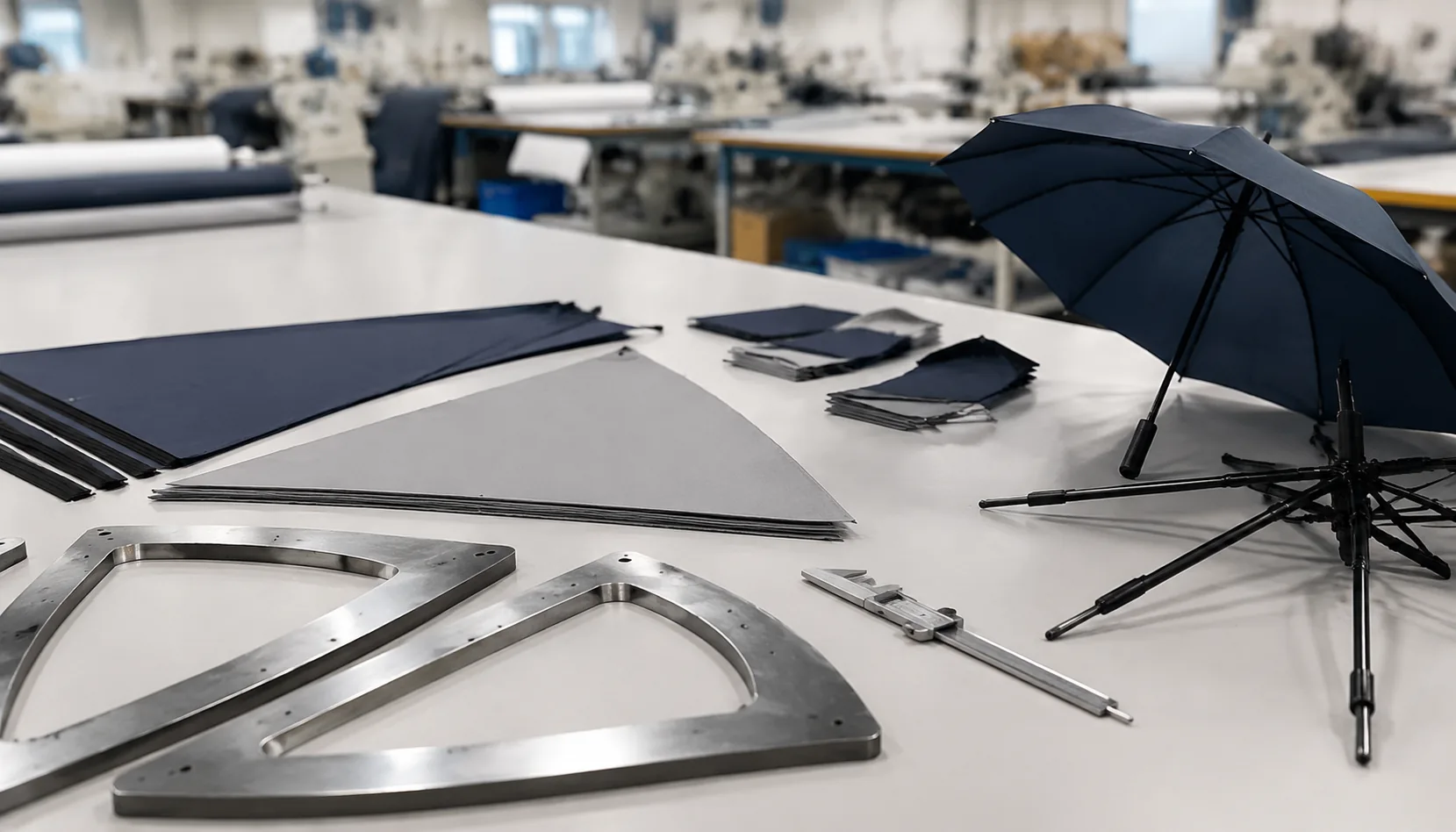
Umbrella Panel Cutting Tolerances for Consistent Canopy Fit
Learn how panel cutting tolerances, fabric lot control, and sewing allowances keep OEM umbrella canopies tight, aligned,...
Read More »