Umbrella Panel Cutting and Sewing: Print Alignment Tolerances
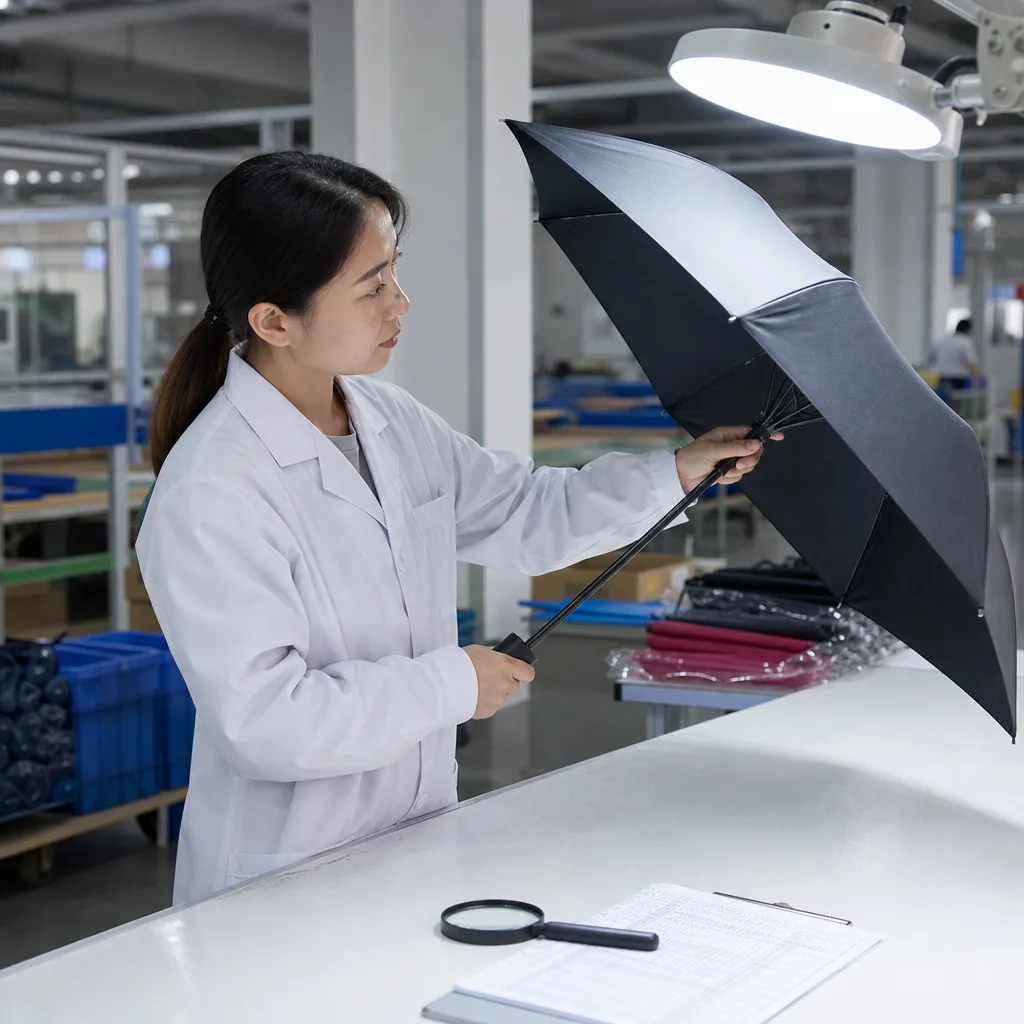
A logo that looks centered on a digital mockup can shift noticeably once fabric is stretched, cut into gores, sewn into a canopy, and pulled onto ribs. On our Songxia factory floor, umbrella print alignment tolerance is managed across printing registration, panel cutting marks, seam allowance, operator sewing control, and final frame tension—not at one single step. For B2B buyers, understanding these variables helps set realistic inspection standards before bulk production begins.
Why Umbrella Prints Shift During Production
The first thing buyers need to understand is that an umbrella canopy is not printed as one perfect round graphic and then dropped onto a frame. In normal umbrella canopy production, we cut 8, 10, or 16 separate triangular panels, usually from 190T or 210T pongee, polyester, RPET, POE, PVC, or EVA depending on the model. Each panel has its own grain direction, seam allowance, and cutting tolerance. When those triangles are sewn together, the artwork crosses physical seams, not imaginary design lines on a PDF. A logo that looks centered on a flat CAD template can move 2–5 mm after cutting, handling, and umbrella panel sewing. That is why a realistic umbrella print alignment tolerance must be defined before mass production, especially for border prints, full-canopy patterns, photo sublimation, and artwork that crosses from one panel to the next.
Fabric behavior is the main reason prints shift, and different materials move in different ways. Pongee has a softer hand and can relax slightly after heat-transfer or sublimation printing. Polyester with a Teflon coating is more stable but can still distort if the heat press pressure is uneven. POE and PVC clear umbrellas do not fray like woven fabric, but they stretch and recover differently under sewing tension. Even a small 1 mm stretch at the inner seam can become visible near the outer edge of a 23 inch or 27 inch umbrella. During custom umbrella manufacturing, we normally allow seam margins of about 7–10 mm, and the sewing operator must keep consistent feeding speed through the machine. If one panel is pulled harder than the next, the print may line up near the top cap but drift at the rib tips.
The final frame shape also changes the apparent print position. A canopy is cut flat, but once mounted on steel or fiberglass ribs, it becomes a curved tensioned surface. An 8K compact umbrella, a 10K golf umbrella, and a 16K windproof model all distribute tension differently, especially on double-canopy vented constructions rated for 50+ mph wind-tunnel tests. Curved ribs pull fabric outward, seam pockets lock the canopy to rib tips, and the top notch compresses all panels toward the center. In umbrella quality control, we check print alignment after full assembly, not only on loose fabric panels, because the frame reveals the true result. Our standard practice at ZheBrella is to set approval standards by sample photos and measurable limits, such as center logo deviation, seam-to-seam mismatch, and acceptable edge drift under AQL 2.5 inspection.
Cutting Methods and Panel Control
For 190T and 210T pongee, the cutting method decides half of the final print accuracy before umbrella panel sewing even starts. Die cutting is still the fastest and most stable choice for repeat orders: a hardened steel rule die can hold panel shape within about ±1 mm if the fabric stack is controlled at 20 to 40 layers and the operator does not over-compress the pile. Hand cutting is acceptable for samples, low MOQ promotional jobs, or oversized 30" golf umbrellas, but I do not trust it for tight logo registration across 8K or 10K canopies because the chalk line, scissors angle, and fabric drag all add error. Automated CNC knife cutting gives the best repeatability for complex artwork and sublimation panels, often within ±0.5 to ±1 mm, but only when the vacuum table is clean and the marker file includes seam allowance, hem allowance, and rib-tip reinforcement positions.
Grain direction control is not optional in umbrella canopy production, especially on pongee with a PU, Teflon, or UV UPF 50+ coating. If one panel is cut slightly off-grain, it may stretch differently during stitching and tensioning, which shows up as a twisted seam, uneven scallop, or a logo that jumps at the rib line. Our standard practice at ZheBrella is to relax fabric rolls for 12 to 24 hours before cutting, longer if the material arrived tightly packed after dyeing or digital printing. This matters because pongee can shrink or recover a few millimeters per meter after unrolling; cutting immediately from a tight roll is asking for inconsistent panels. For solid-color umbrellas the defect may look minor, but for custom umbrella manufacturing with edge-to-edge artwork, those small movements become visible alignment errors.
Panel numbering is the simple factory-floor discipline that prevents expensive rework. After cutting, every panel set should be bundled in sequence, usually 1 through 8 for a standard 8K stick umbrella or 1 through 16 for a 16K fashion canopy, with the print direction marked toward the top notch. Mixed bundles are one of the main causes of failed umbrella quality control because left and right print drift can look like a sewing problem when it actually started at the cutting table. For a normal promotional umbrella, a practical umbrella print alignment tolerance is often ±2 mm at the seam and ±3 mm around the outer hem; for full-panel logos or continuous patterns, buyers should specify tighter inspection points before mass production. During AQL 2.5 final inspection, we check not only broken stitches and seam slippage but also whether the printed graphic crosses adjacent panels cleanly after the canopy is mounted on the frame.
Sewing Tolerances Buyers Should Expect
For normal umbrella panel sewing, buyers should expect small but measurable movement after cutting, stitching, and stretching onto the frame. On an 8K canopy, a realistic seam-to-seam matching tolerance is usually ±2 to ±3 mm at the outer edge and ±1.5 to ±2 mm near the crown, assuming 190T or 210T pongee and stable screen or heat-transfer printing. For 16K panels, the tolerance tightens visually because each panel is narrower, but the handling risk increases; ±2 mm at seams is still a fair production standard. Logo centering on one panel should normally be within ±3 mm left/right and ±3 to ±5 mm up/down, measured from the panel centerline after the canopy is mounted, not as a flat cut piece. In custom umbrella manufacturing, I would be cautious with any supplier promising perfect alignment across every rib line, because fabric tension changes once the tips, runner, and notch are assembled.
The practical umbrella print alignment tolerance becomes harder when graphics cross seams or repeat around all 8K or 16K panels. A repeating stripe, checker, border, or panoramic cityscape must survive several variables: cutting die position, fabric shrinkage after coating, seam allowance variation, operator feed speed, and the pull from steel or fiberglass ribs during final canopy setting. For repeat graphics across seams, ±3 to ±5 mm is a reasonable commercial tolerance; for large edge-to-edge artwork running around the full canopy, ±5 to ±8 mm may be more realistic, especially on 27-inch or 30-inch golf umbrellas where panel length amplifies distortion. A single-panel logo is easier because the eye judges it inside one triangular panel, while an edge-to-edge print is judged against every seam, rib, and neighboring panel. That is why umbrella quality control should define both panel-level tolerance and full-canopy visual acceptance before bulk production.
Our standard practice at ZheBrella is to confirm alignment with a pre-production sample mounted on the exact frame: 21-inch compact, 23-inch stick, 27-inch golf, or 30-inch oversized, because the same printed panels will sit differently on different rib arcs. Buyers should put tolerance language into the purchase order, not just approve a flat artwork file. For example: single-panel logo centered within ±3 mm; seam-matched repeat within ±5 mm; border height variation within ±5 mm around the canopy; no obvious print break when viewed from 1 meter. For AQL 2.5 inspection, alignment defects should be classified by visibility: a 2 mm shift on a busy floral repeat may be acceptable, while the same shift on a thin circular logo border can look crooked. Good umbrella canopy production is not about claiming zero tolerance; it is about setting a tolerance the sewing line can repeat across the full MOQ.
How Frame Assembly Changes the Final Look
The cut and sewn canopy is only flat on the sewing table; the frame decides what the customer actually sees. When the runner is pushed up, the notch, stretcher, ribs, tips, and cap pull each panel into a curved triangle under tension. A print that measures perfectly at the center seam can still drift near the ferrule or skirt if rib length varies 2–3 mm or if the tip pocket is sewn slightly deep. On a straight 23" or 27" umbrella, the rib arc is longer and smoother, so logos spanning two panels usually look cleaner. On a 21" folding umbrella, the segmented ribs create small angle changes at the joints, and the canopy is pulled in shorter sections; that makes border stripes, circular artwork, and panel-to-panel registration more sensitive. This is why umbrella print alignment tolerance must be checked on an assembled sample, not only on loose panels after cutting.
Steel and fiberglass frames change the visual result in different ways. Steel ribs are dimensionally consistent and hold a firm canopy shape, but they can permanently bend if overloaded, leaving one panel flatter than the others. Fiberglass ribs flex more under wind, especially on 8K and 10K windproof models, so the canopy may look slightly softer at rest but recovers better after gust testing. In custom umbrella manufacturing, we normally treat 16K frames as a separate alignment case because the narrower panels increase the number of seams and multiply small sewing errors. A 1.5 mm seam allowance shift on each panel may not sound serious, but across 16 panels it can rotate a circular logo or break a repeating pattern. Good umbrella panel sewing keeps seam allowance, notch position, and tip-pocket depth consistent before any print alignment judgment is made.
Double-canopy constructions add another layer of movement. The upper vent panel and lower canopy are sewn with overlap, mesh, or hidden vent gaps, then attached to the same rib system, so air release and fabric tension must be balanced. If the upper canopy is cut too tight, it pulls against the lower canopy and distorts printed lines near the vent opening; if it is too loose, it wrinkles during umbrella quality control and makes the print look misaligned even when the panels were sewn correctly. In umbrella canopy production, our standard practice at ZheBrella is to inspect printed approval samples fully assembled on the nominated frame: steel or fiberglass, straight or folding, manual, auto-open, or auto-open-close. For retail and promotional orders, a practical umbrella print alignment tolerance is usually defined by visible seam matching, logo centering from the top cap, and border consistency at rib tips, not by flat-panel measurement alone.
Inspection Points for Printed Canopies
Inspection has to start before bulk cutting, because a wrong print position on one approved panel becomes 5,000 wrong umbrellas very quickly. For pre-production samples, I check the full layout: logo distance from panel tip, distance from seam allowance, rotation angle against the rib line, color density after curing, and whether the artwork crosses a seam or sits safely inside one panel. On 190T or 210T pongee, our normal working target is within ±3 mm for single-panel logos and ±5 mm for multi-panel continuous artwork, but the agreed umbrella print alignment tolerance must be written on the sample tag and signed off with photos. For POE, PVC, or EVA transparent canopies, distortion after opening is more visible, so we tighten the visual standard even if the numeric tolerance is the same. Pre-production approval should include top-view open umbrella photos, close-up seam photos, and rejected examples showing crooked registration, cut-off letters, or artwork pulled into the hem.
During umbrella canopy production, in-line panel audits catch most problems before umbrella panel sewing hides the mistake. The cutting team should verify the first 20 printed panels from each layer stack, especially when using rotary cutting dies or hot-knife cutting on slippery fabric. A common factory-floor issue is fabric skew: the logo looks correct on the flat print table but shifts 4–6 mm after panels are stacked, cut, and sewn into an 8K or 10K canopy. Sewing inspectors should check every bundle for panel sequence, seam allowance consistency, rib-tip orientation, and whether continuous graphics match across adjacent panels. For double-canopy vented windproof umbrellas, the outer and inner canopy must be checked separately because a 2 mm sewing drift at each seam can create an obvious 10–15 mm mismatch around the vent. ZheBrella’s standard practice is to keep one approved sample open at the sewing line and one flat panel standard at the cutting table for direct comparison.
Finished canopy measurement should be done with the umbrella fully opened, not only with loose panels on the inspection table. Inspectors should measure logo position from the nearest rib seam, panel centerline, canopy edge, and top notch; for a 23 inch auto-open umbrella, even a small off-center print becomes obvious when the shaft, runner, and ribs put the canopy under tension. Opening tests matter because poor umbrella panel sewing can twist the canopy, changing the visual alignment even when the printed panel was cut correctly. Final umbrella quality control under AQL 2.5 should classify defects clearly: minor for slight but acceptable shift within the approved umbrella print alignment tolerance, major for visibly crooked logos or mismatched continuous graphics, and critical if brand text is unreadable or reversed. The final inspection report should include pass and fail photos under the same lighting, camera angle, and umbrella opening position, so buyers, QC teams, and suppliers judge alignment by the same standard instead of opinion.
Frequently Asked Questions
Can a logo be perfectly centered across umbrella seams?
Factories can control centering closely, but seams, fabric tension, and hand sewing create small variation. Buyers should approve a realistic tolerance on the pre-production sample before bulk production.
Which print designs are hardest to align on umbrellas?
Continuous patterns, full-canopy graphics, circles crossing seams, and text spanning multiple panels are the most sensitive. Single-panel logos or repeated panel graphics are easier to control at scale.
What alignment tolerance should buyers approve for a logo printed across two umbrella panels?
For artwork crossing a seam, many factories use a visual tolerance of about 3-5 mm at the panel join, depending on canopy size and fabric stretch. If the design has thin lines or repeating geometry, buyers should confirm a tighter pre-production standard on the approved sample.
Does umbrella size or frame style affect print alignment after sewing?
Yes. Compact folding umbrellas usually show more variation than straight umbrellas because shorter panel widths, higher fabric tension, and frame curvature can shift the artwork during assembly. Buyers should expect different tolerances for 21-inch foldable styles versus larger golf umbrellas.
When should print alignment be checked during production?
The most reliable checkpoints are after panel cutting, after sewing the canopy, and again after the canopy is mounted on the frame. AQL final inspection alone may miss whether the shift came from print registration, sewing allowance, or frame tension.
Looking to Launch Your Custom Umbrella Line?
ZheBrella is a Zhejiang-based OEM/ODM umbrella manufacturer with 17 years of export experience. Free design, low MOQ from 100 pieces, windproof construction, full-color print.
Get Free Quote Now »People Also Search For
Related Articles
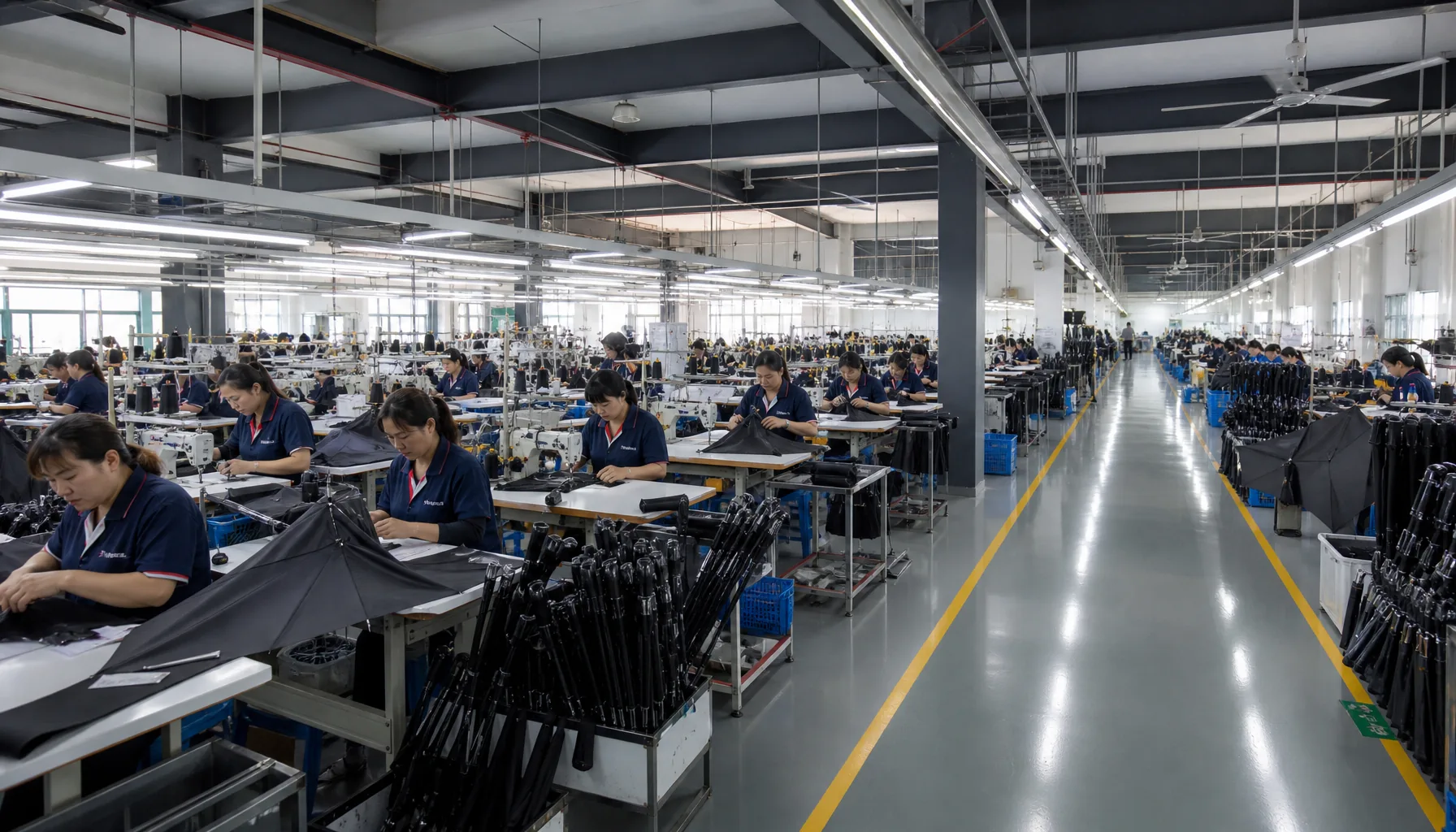
Umbrella Canopy Panel Cutting and Seam Alignment Controls
Understand how panel cutting, seam alignment, and stitch control shape canopy appearance, waterproofing, and rejection r...
Read More »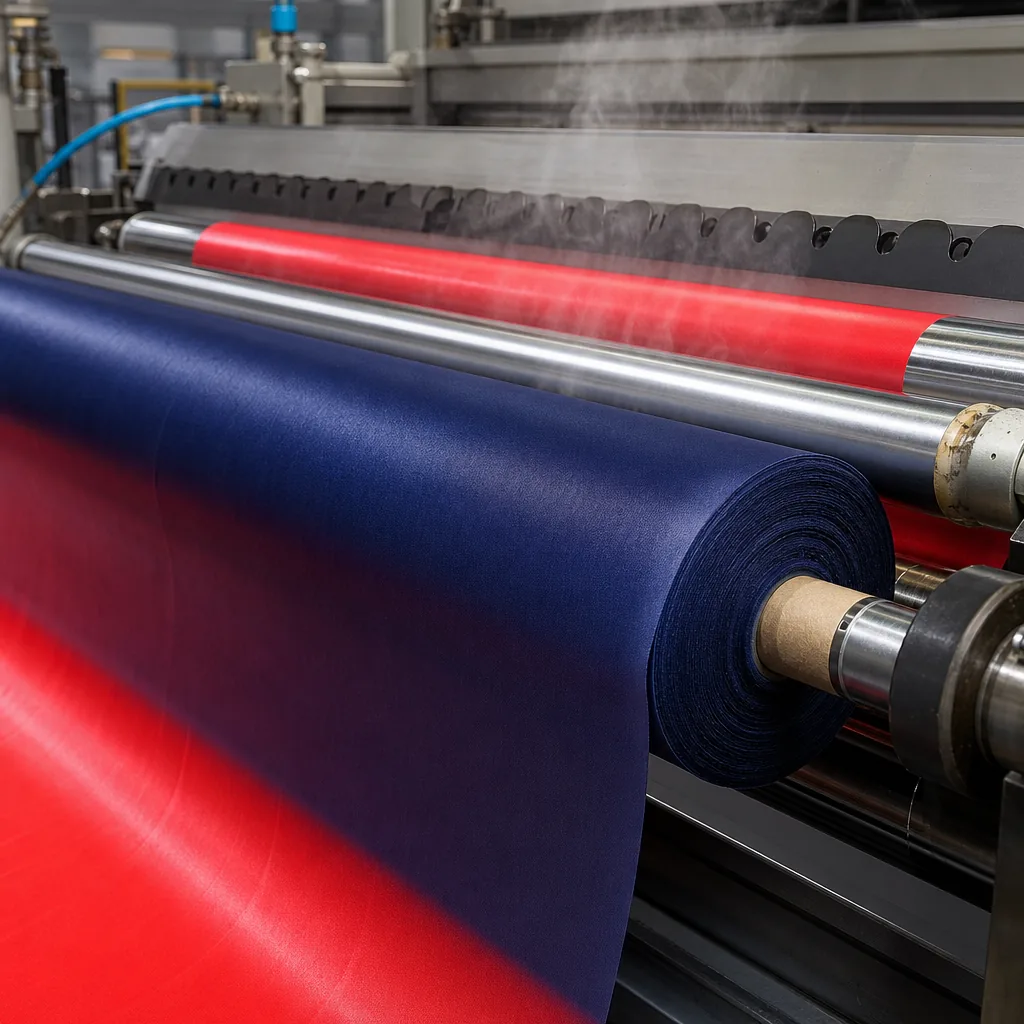
Umbrella Canopy Panel Cutting Tolerances for OEM Production
Learn how panel cutting tolerances, fabric relaxation, and die control affect canopy fit, print alignment, leak risk, an...
Read More »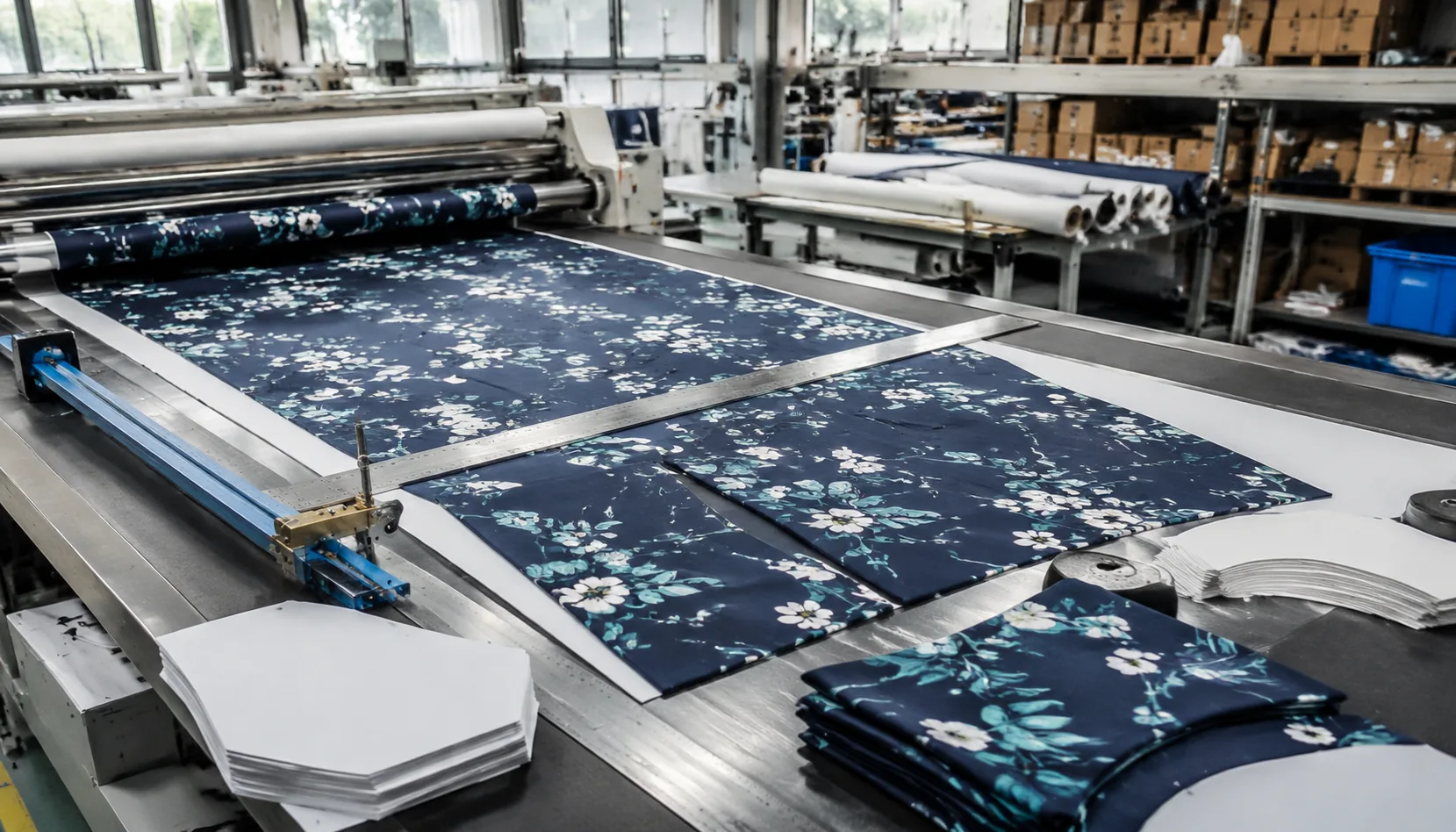
Umbrella Canopy Cutting Tolerances for OEM Production
Learn canopy cutting tolerances, panel grain control, and sewing allowances that keep 190T/210T pongee umbrellas fitting...
Read More »