Umbrella Runner and Notch Assembly Controls for OEM Lines
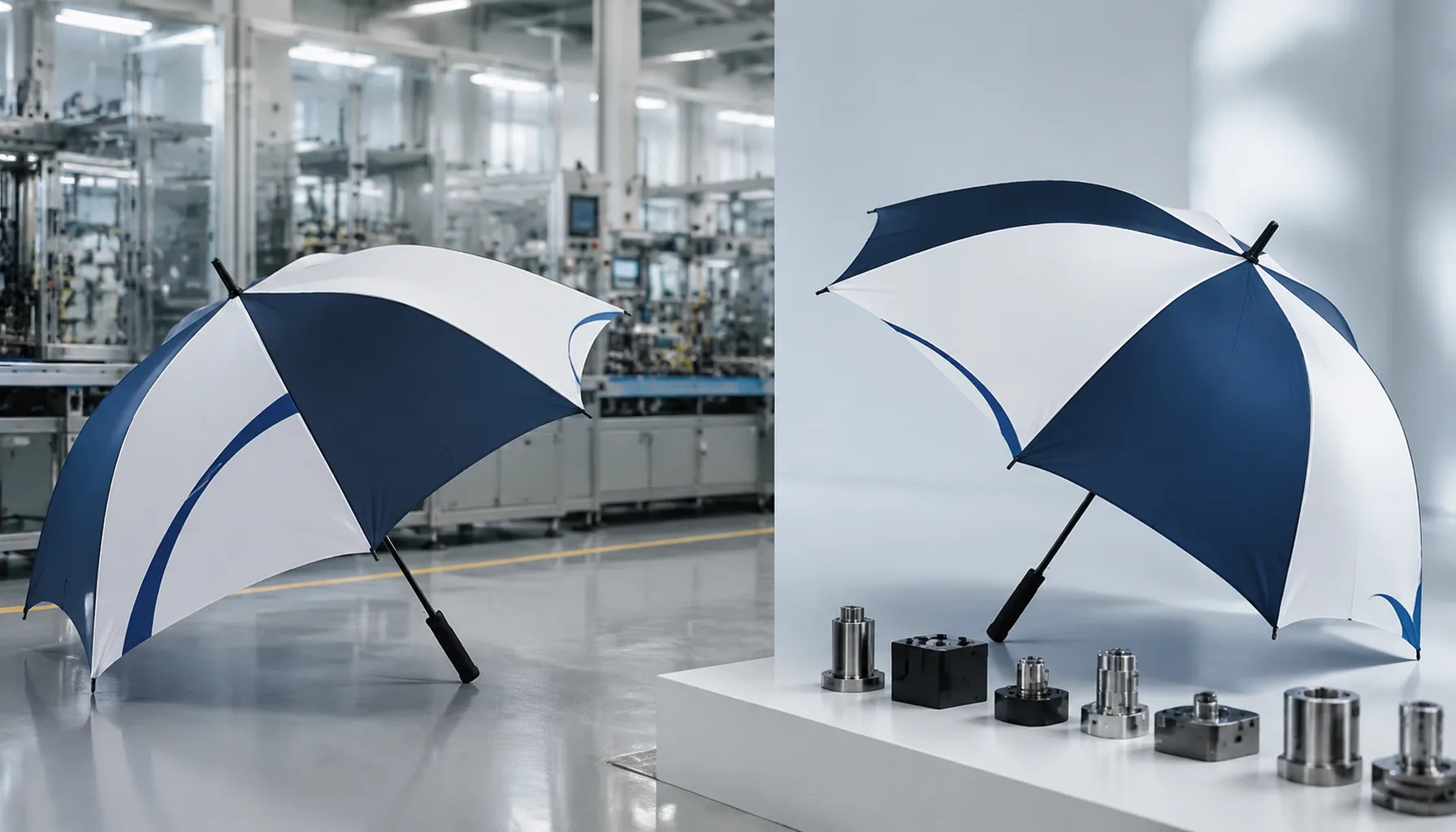
For OEM buyers, a loose runner or poorly set notch does not show up as a small defect; it becomes hard opening, frame wobble, broken ribs, and warranty noise after shipment. On our Songxia production floor, umbrella runner assembly controls start with runner bore fit, rivet pressure, spring force, and pull checks before the frame ever reaches canopy sewing. These details decide whether a bulk order opens smoothly across thousands of pieces, not just on the approval sample.
How the Runner and Notch System Works
Manual and auto-open frames need different umbrella production line QC because the failure modes are not the same. For manual umbrellas, inspectors focus on smooth runner sliding, no burrs on the shaft slot, secure latch holding, and equal rib spread across all panels. For auto-open models, the critical checks are spring compression, button release force, runner lock height, and whether the shaft rebounds or stalls after 20 to 30 open-close cycles. Our standard practice at ZheBrella is to test frame function before canopy sewing and again after final assembly under AQL 2.5, because fabric tension can expose a marginal runner or crooked notch. For fiberglass frames, we also check rib-tip alignment and stretcher rivet rotation after flexing. For steel or aluminum assemblies, plating scratches, rust points, and ovalized rivet holes are watched closely, especially on FOB export orders where replacement costs are much higher than catching defects on the line.
Riveting Pressure and Hole Alignment
Riveting pressure is one of the fastest ways to ruin a good frame because the defect hides until the runner starts moving under load. Over-riveting flattens the rivet head too hard, pinches the rib joint, and makes the runner feel sticky or uneven, especially on auto-open umbrella mechanism models where spring force must overcome every friction point. Under-riveting does the opposite: ribs swing loosely, the canopy rattles in shake testing, and notch-to-rib geometry shifts after 200–300 open-close cycles. For umbrella runner assembly controls, we set pneumatic riveters by material stack, not by habit: steel ribs usually tolerate higher pressure than fiberglass ribs, while mixed fiberglass/steel windproof frames need a softer setting to avoid crushing the joint washer. On OEM umbrella frame assembly lines, I want operators checking movement immediately after riveting, not waiting for final QC, because a tight 10K runner can slow the whole opening action before anyone sees a visible deformation.
Hole alignment starts with the jig, not with the worker’s eye. For umbrella notch riveting, the notch slot, rib end hole, and stretcher hole must sit on the same centerline before the rivet is pressed; if the jig pin is worn by even 0.2–0.3 mm, the frame may still assemble but the canopy tension will pull unevenly. Our standard practice at ZheBrella is to use separate locating plates for 8K, 10K, and 16K frames because rib spacing changes the angle at the notch and runner. An 8K 23-inch frame is forgiving, but a 16K 27-inch golf umbrella has twice the connection points, so small hole-position errors multiply into visible waviness along the canopy edge. We also separate jigs for manual, auto-open, and auto-open-close frames because the runner height and spring housing change the effective rib opening angle.
Good umbrella production line QC uses both feel and measurement. After riveting, inspectors should check that each rib rotates freely through the designed arc without side play, then run a shake test to catch rattling joints that visual inspection misses. For 8K frames, sampling every bundle may be enough after the first-piece approval, but for 10K and 16K orders I prefer in-line checks at least every 30–50 frames because higher rib counts make one bad rivet harder to isolate later. Calipers should verify rivet head diameter and compression height against the approved sample, while a go/no-go pin confirms that incoming rib holes have not drifted from stamping wear. In AQL 2.5 final inspection, loose ribs, jammed runners, and distorted notches should be treated as functional defects, not cosmetic issues, because they directly affect wind resistance, opening smoothness, and warranty returns.
Spring Force and Auto-Open Reliability
Auto-open reliability is mostly decided before the canopy is sewn: spring force, runner travel, and latch geometry have to match the exact frame size and rib material. On a 23 inch 8K straight umbrella, a main shaft spring that feels acceptable by hand may still open weakly once 190T pongee, tips, and sleeve drag are added. On a 27 inch golf frame with fiberglass ribs, the same spring spec can overload the latch and cause harsh release. Our standard umbrella runner assembly controls check free runner travel on the bare shaft, loaded travel after rib assembly, and final opening speed after canopy installation, because friction changes at each stage. For OEM umbrella frame assembly, I like to see 1.5–2.5 mm latch engagement after full lock, no visible runner tilt, and no scraping marks on the plated or powder-coated shaft after 20 manual strokes.
Cycle testing should separate mechanism fatigue from cosmetic handling. For auto-open umbrella mechanism validation, we normally test 300 cycles for promotional orders, 500 cycles for retail-grade compact umbrellas, and 1,000 cycles when the buyer is claiming windproof or premium performance. The test is not just pressing the button repeatedly; operators must close the umbrella fully, confirm the runner catches, shake lightly, then trigger the release. During umbrella production line QC, samples are pulled by size and color under AQL 2.5, with special attention to mixed components after plating or handle installation. A good frame opens cleanly within one press, reaches full canopy spread without hand assistance, and keeps the runner locked when the handle is tapped against the inspection table. Any intermittent failure is treated as a mechanism defect, not a packing issue.
The common failures are easy to name but harder to control without disciplined assembly. Weak opening usually comes from under-spec springs, excessive shaft friction, tight runner molding, or rib joints that were over-compressed during umbrella notch riveting. Stuck runners often trace back to burrs inside aluminum or steel shafts, uneven runner slots, or paint thickness after black coating. Accidental release is more serious: it can come from shallow latch bite, a worn button pin, poor spring alignment, or a notch and runner stack height that changed after switching from steel to fiberglass ribs. Good umbrella runner assembly controls include go/no-go checks for shaft diameter, rivet height checks at the notch, and functional testing after handle fitting, because the handle button can shift the trigger point by fractions of a millimeter. That fraction is enough to turn a clean auto-open into a field complaint.
Line QC Checks Before Canopy Mounting
The last sensible place to catch frame defects is before the canopy is sewn to the tips, because after mounting a 190T or 210T pongee canopy, every correction costs labor and risks needle damage to the fabric. For umbrella runner assembly controls, we first cycle each bare frame 5 to 8 times and feel for drag, chatter, or a hard stop between the lower spring and notch. On a 23" auto-open umbrella mechanism, the runner should travel cleanly without scraping the center shaft plating, and the lock button should engage without needing thumb pressure above normal use. Steel shafts with zinc plating need extra attention because burrs around the spring slot can cut plastic runners; aluminum shafts usually fail by ovality or denting after transport between workstations. Any runner that sticks, tilts, or rebounds off the lock point is rejected before canopy issue, not “watched” until final inspection.
Notch security is checked by hand twist, visual rivet spread, and rib alignment, not just by confirming the rivet is present. In umbrella notch riveting, the cap should sit square to the shaft, the rivet head should be fully rolled, and there should be no side gap that allows the 8K, 10K, or 16K rib set to rock under load. For OEM umbrella frame assembly, I like a simple go/no-go angle jig at the frame table: open the frame, place the shaft vertical, and confirm all ribs reach the same crown height within roughly 3 mm on standard promotional models and tighter on retail orders. Fiberglass ribs can hide a poor notch because they flex back; steel ribs show the defect faster as one panel line sits low. Asymmetric ribs will make the canopy look twisted even if the sewing team does perfect work.
Opening angle is the check that ties the mechanical frame to the finished umbrella appearance. A 21" folding umbrella, 23" straight umbrella, and 30" golf umbrella do not use the same crown spread, but each approved sample should define a target arc and tip-to-tip diameter before production starts. We compare bulk frames against the golden sample, then record failures by defect type: sticky runner, loose notch, uneven rib, weak spring, over-open angle, or under-open angle. These umbrella runner assembly controls feed directly into umbrella production line QC and the final AQL 2.5 inspection plan. If a defect would cause unsafe opening, visible canopy distortion, failed auto-open function, or rib-tip mismatch after sewing, it is treated as major, not minor. Our standard practice at ZheBrella is to stop the line when repeated frame faults appear in the pre-canopy check, because final inspection should confirm stability, not discover basic assembly drift.
Buyer Specs That Reduce Assembly Risk
The safest tech packs lock the frame decisions before artwork, because runner and notch tolerances change with material, rib count, and opening system. For OEM umbrella frame assembly, I want to see steel, aluminum, or fiberglass called out separately for shaft, ribs, stretchers, runner, and notch; “metal frame” is not a spec. An 8K steel 23" stick umbrella uses different riveting pressure and notch hole clearance than a 10K fiberglass windproof frame or a 16K fashion frame with thinner ribs. If the buyer wants an auto-open umbrella mechanism, define manual, auto-open, or auto-open-close, plus spring force target and button style. These choices drive umbrella runner assembly controls because the runner must slide cleanly without wobble, binding, or premature latch wear after cycling.
Windproof double-canopy requirements should be written as engineering targets, not catalog language. A vented 27" golf umbrella with fiberglass ribs, 210T pongee, and double canopy may survive 50+ mph wind-tunnel testing, but only if rib flexibility, stitch tension, canopy vent overlap, and runner travel are matched. If the canopy is POE, PVC, or EVA, the extra stiffness can change opening load and may require stronger springs or a revised notch profile. For umbrella notch riveting, buyers should specify rivet material, head diameter, pull-out check, and whether the notch is plastic, zinc alloy, or stamped steel. Our standard practice at ZheBrella is to run opening-cycle checks before bulk cutting fabric, because a frame that fails at 300 cycles should not be dressed with printed panels.
Commercial risk is also tied to these specs. A standard 23" manual 8K steel umbrella with 190T pongee may fit a 1,000-piece MOQ and 25–35 day lead time after artwork approval, while a custom 30" double-canopy fiberglass golf umbrella with UPF 50+ coating, Teflon water repellent finish, and private tooling can push MOQ to 2,000–3,000 pieces and 45–60 days. FOB pricing moves with rib count, spring mechanism, frame plating, and AQL 2.5 inspection scope; DDP planning must also allow carton size changes, dimensional weight, and spare-part buffers for runner or notch rejects. Good umbrella production line QC starts with the buyer’s tech pack: define test cycles, acceptable runner smoothness, latch engagement, rib symmetry, and windproof test method before the purchase order is released.
Frequently Asked Questions
Why do some umbrella frames feel loose before shipment?
Loose frames often come from under-riveted rib joints, oversized holes, or runner clearance that is too wide. In-process frame checks should catch this before canopy assembly.
Should auto-open umbrellas use different runner QC than manual umbrellas?
Yes. Auto-open umbrellas need checks for spring force, latch engagement, and full runner travel. A manual frame can pass a basic opening test while an auto-open version still fails cycle testing.
What runner and notch checks should be included during OEM umbrella frame assembly?
Factories should check runner sliding fit, notch rivet tightness, rib alignment, spring response, and open-close function on the line. A common QC approach is 100% functional testing after frame assembly plus AQL sampling before canopy attachment and packing.
How does poor notch riveting affect umbrella warranty claims?
Loose or uneven notch riveting can cause rib wobble, poor canopy tension, failed opening, or frame collapse in wind. For OEM orders, rivet position, pull resistance, and visual deformation should be controlled before mass packing to reduce returns.
Can spring force be adjusted for different auto-open umbrella models?
Yes, spring force is selected based on frame size, shaft length, canopy weight, and opening style. Compact auto-open umbrellas usually require different spring tension than golf or straight umbrellas, and samples should pass repeated open-close cycle testing before bulk production.
Looking to Launch Your Custom Umbrella Line?
ZheBrella is a Zhejiang-based OEM/ODM umbrella manufacturer with 17 years of export experience. Free design, low MOQ from 100 pieces, windproof construction, full-color print.
Get Free Quote Now »People Also Search For
Related Articles
Umbrella Runner Assembly Quality for Auto-Open Orders
Understand runner molding, spring fit, friction control, and cycle testing that keep auto-open umbrellas reliable from P...
Read More »
In-Line Umbrella Frame Assembly Controls for Bulk Orders
See how in-line frame assembly controls reduce loose rivets, misaligned ribs, weak springs, and opening failures before ...
Read More »
Umbrella Frame Riveting Process Controls for OEM Durability
See how rivet diameter, setting force, washer fit, and in-line pull tests prevent loose ribs, noisy frames, and AQL 2.5 ...
Read More »