Choosing a Reflective Safety Umbrella for Commuter Programs
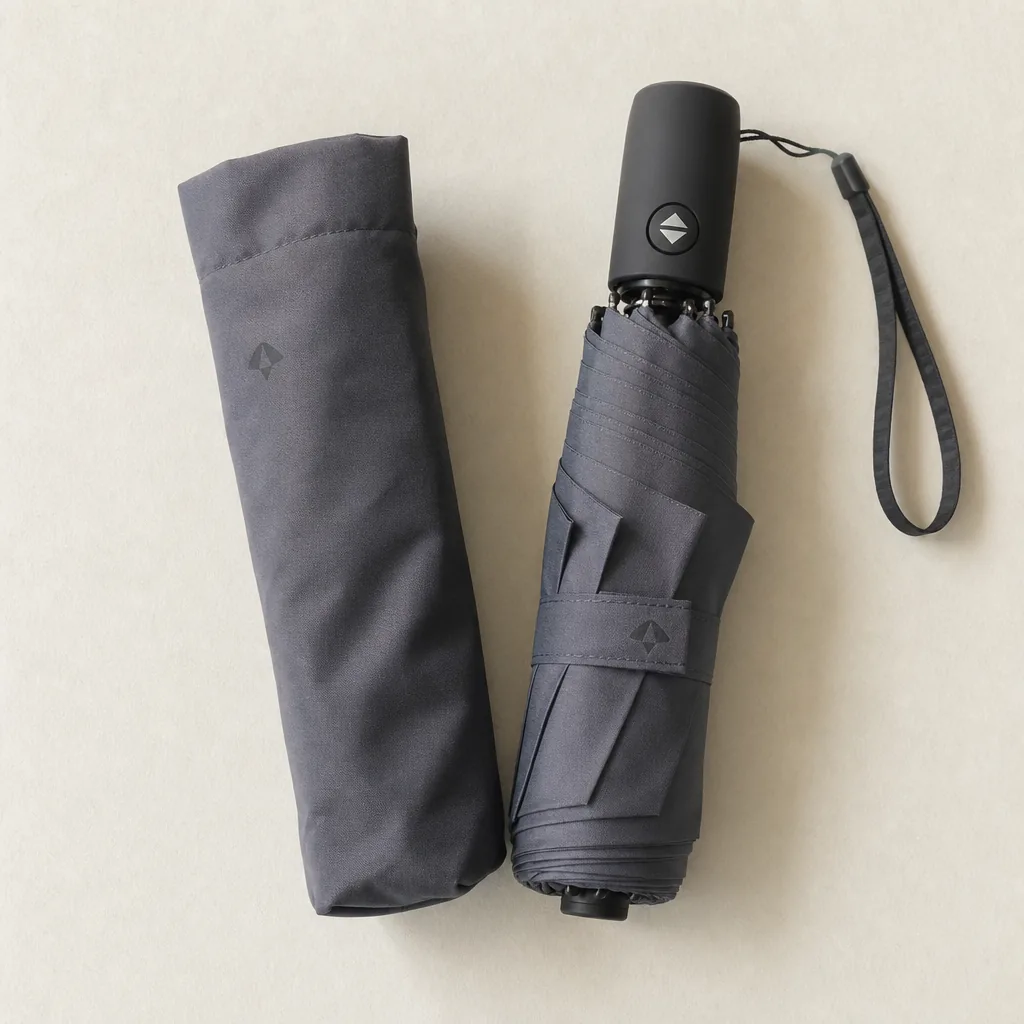
Commuter programs buy umbrellas to solve a practical problem: keep riders dry while making them easier to see in dawn, dusk, and rain-slick traffic. The right reflective safety umbrella has to balance panel placement, high-visibility color, and a frame that holds up in daily use, while also staying straightforward to spec, source, and import.
Where reflective safety umbrellas are used
A reflective safety umbrella earns its keep in commuter programs because it solves the same problem as a hi-vis vest without forcing the user to wear one. For rail commuters, bike-share riders, and anyone walking in pre-dawn rain, the reflective tape or print matters more than the frame finish. In practice, buyers should look at commuter umbrella specs the way they would any daily-use item: 23" or 27" canopy size, fiberglass ribs for flex in gusts, and an auto-open umbrella mechanism so one hand stays free for a bag, phone, or transit pass. A fluorescent umbrella canopy helps in daylight drizzle, but the reflective element is what carries visibility at night under headlights and street lighting.
Schools use a high-visibility umbrella differently: it is usually tied to student safety, crossing-point control, and group movement during pickups, field trips, or outdoor events. Delivery teams value the same visibility, but they care just as much about repeat opening cycles, stronger runners, and a canopy that can take abuse from quick in-and-out use. In both cases, the reflective safety umbrella is less about branding and more about being seen early enough for drivers and pedestrians to react. That is why school districts and logistics operators tend to ask for stricter commuter umbrella specs than casual retail buyers, especially when the umbrellas will be issued in batches and need consistent color matching across lots.
Event programs and promotional campaigns are where visibility features are often judged by the market, not the end user. Outdoor races, night markets, municipal campaigns, and travel brands usually want a reflective safety umbrella that reads clearly in photos and crowds, while procurement teams in Japan, the UK, parts of Western Europe, and dense urban U.S. transit markets tend to place the highest value on visibility. For an OEM umbrella buyer guide, the right question is whether the umbrella needs daytime branding first or night-time conspicuity first; that choice affects canopy color, reflective placement, and even whether the order should use a straight-stick frame or a compact auto-open umbrella.
Visibility materials and layout options
For a reflective safety umbrella, the material choice matters less than where the visibility features sit on the frame. Reflective piping on the canopy edge catches headlight beams quickly, while printed safety bands across the lower panels give drivers a larger recognition zone when the umbrella is moving. On a high-visibility umbrella, I usually prefer a fluorescent umbrella canopy in yellow, lime, or orange because color recognition works in daylight and the reflective trim takes over after dark; relying on print alone is weak in rain, when contrast drops and the user’s walking angle changes.
Panel layout changes how fast people read the umbrella as a human silhouette instead of a random bright object. Wide alternating panels, especially on a 8K or 10K canopy, create stronger motion cues than small logos scattered around the top, and the best commuter umbrella specs keep the reflective elements on the lower half where car headlights actually hit. For an OEM umbrella buyer guide, I would treat the handle mechanism separately: an auto-open umbrella helps commuter use, but the visibility package must be built into the canopy pattern, not added as an afterthought in decoration.
In factory terms, the cleanest setup is a two-layer visibility strategy: fluorescent base color for daytime recognition and reflective print or tape for night return. If the order is for transit or campus programs, I would avoid dark center panels unless the client wants a contrast-heavy design, because dark fields break up recognition in wet weather and make the umbrella look smaller. The reflective safety umbrella performs best when each panel line stays consistent from top to hem, so the eye can track the whole shape in rain, not just a few bright accents.
Frame choices for frequent city use
For a reflective safety umbrella used in commuter programs, fiberglass ribs are the better default than steel if the umbrella will be opened and closed every day. Fiberglass flexes under gusts instead of taking a permanent bend, so the frame recovers better after repeated loading from buses, train platforms, and street corners. Steel ribs still have a place on very low-cost units, but they add weight, corrode faster at the joints, and usually feel harsher in wind. In commuter umbrella specs, I would look first at the rib material, then at the shaft wall thickness and the runner, because those parts see the most abuse before the canopy ever tears.
Rib count matters more than buyers usually admit. An 8K frame is a practical minimum for a compact auto-open umbrella if the product is being carried daily, but 16K builds distribute wind stress better and keep the canopy shape steadier under repeated opening cycles. The extra ribs also help when a fluorescent umbrella canopy is printed with reflective tape or high-contrast panels, because the fabric stays flatter and the graphics read cleaner from a distance. For an OEM umbrella buyer guide, I would treat 16K as the safer spec for transit programs, while 8K works when weight and cost matter more than long-term stiffness.
The weak points are almost never the full-length ribs; they are the tips, joint ferrules, stretcher connections, and the crown where the canopy is stapled or sewn into the top cap. Those areas should be reinforced with thicker polymer tips, double stitching at stress points, and a stronger hub if the umbrella uses auto-open mechanics. A high-visibility umbrella should also have reinforced seams near the reflective panels so the fabric does not split after wet-dry cycles. If the program expects heavy daily use, I would specify reinforced rib ends, a metal or thickened resin runner, and a canopy hem that resists fraying before approving production.
Opening system and user convenience
For a reflective safety umbrella used in commuter programs, auto-open makes sense when speed matters more than absolute simplicity. In rain, at a station exit or crosswalk, one-handed deployment is the difference between keeping a phone in a pocket and fumbling with a wet canopy. A good auto-open umbrella should fire cleanly with a single thumb press, lock without a sticky mid-stroke, and reset without requiring a hard push that fatigues the spring. For buyers comparing commuter umbrella specs, this mechanism is usually the right choice for office workers, delivery staff, and transit riders who open and close the umbrella several times a day.
Manual systems still win when durability and low failure risk matter more than convenience. Fewer moving parts means fewer spring breaks, fewer accidental openings in a bag, and less complaint volume after a few months of heavy use. That is why some OEM umbrella buyer guide programs specify manual ribs for low-cost giveaways or for markets where the umbrella may be stored tightly in backpacks and car doors. On a reflective safety umbrella, the mechanism choice should match usage: auto-open for high-frequency commuting, manual for rough handling, long storage, or very cost-sensitive procurement. A high-visibility umbrella does not need a complicated opener to do its job; it needs to work every time.
Handle shape and strap type affect daily carry more than most spec sheets admit. A curved hook handle hangs better on a desk edge or shopping cart, while a straight handle fits tighter into umbrella sleeves and transit bags; EVA and rubberized grips are better than hard PP when hands are wet because they reduce twisting during wind gusts. Strap choice matters too: a narrow woven strap is fine for light office use, but a wider webbing strap is easier to grab with gloves and less likely to tear at the bar-tack. For commuter umbrella specs, I also look at whether the strap is sewn into the handle shell or simply stapled through the cap, because that detail tells you how it will survive daily carry with a fluorescent umbrella canopy and reflective trim.
In practice, the best opening system is the one that matches the rider’s routine, not the sales brochure. If the umbrella will live in a tote, be opened under a train awning, and handled with one hand, auto-open is the safer operational choice; if it will be packed hard, loaned out, or used as a budget safety item, manual is easier to control and cheaper to maintain. That is the real rule for a reflective safety umbrella: convenience should not create weak points that fail in month three. For commuter programs, I usually specify the simplest mechanism that still supports the user’s daily motion, then pair it with a grip and strap that keep the umbrella easy to carry without adding bulk or snag risk.
Buying terms and quality control
For a reflective safety umbrella, the first thing I ask a buyer to lock down is the sample approval path, because most problems show up before mass production if you know what to look for. Approve the canopy color under daylight, then check the reflective tape width, stitch straightness, and panel registration on an open frame; a fluorescent umbrella canopy should still read clearly when it is folded, not just when it is spread out on a photo table. For commuter umbrella specs, I want the buyer to confirm the mechanism, shaft material, rib count, and panel print position in writing, because a design that looks fine in a rendering can fail once the factory cuts and seams it. ZheBrella’s standard practice is to keep the signed sample, the golden reference, and the carton mark sheet aligned before mass production starts.
For quality control, I would not accept a commuter umbrella program without AQL 2.5 inspection on critical points: panel seam slippage, tip attachment, runner function, reflective tape adhesion, and opening/closing cycles on an auto-open umbrella. In practice, that means checking more than cosmetics; a high-visibility umbrella that passes color but fails on frame alignment is still a reject for retail or transit programs. A sensible OEM umbrella buyer guide also includes carton drop checks, barcode verification, and random rain-spray testing on finished goods, because commuter use punishes umbrellas harder than promotional giveaways. If the order is time-sensitive, target 25 to 35 days for repeat production after sample approval, and 35 to 50 days if new tooling, new printing, or special packaging is involved.
On trade terms, FOB is usually the cleaner choice for distributor programs when the buyer already has a freight forwarder, import broker, or local consolidation hub; it keeps the factory scope clear and makes landed cost easier to compare across suppliers. DDP only makes sense if the buyer wants one invoice, limited customs involvement, and a fixed landed price, but it adds risk around duty classification, last-mile delivery, and country-specific tax handling, which can create avoidable disputes on a reflective safety umbrella order. For most commuter programs, I recommend FOB for the first order and DDP only after the route, duty rate, and delivery address are proven stable. That is the practical decision point: use FOB when the distributor can manage logistics, and use DDP only when convenience is worth the extra margin and control loss.
Frequently Asked Questions
Do reflective umbrellas need special certification?
Usually the key is performance specification, not a special umbrella certification. Buyers should still ask for visibility material samples, color consistency targets, and testing evidence for reflectivity if the claim is important.
Should safety umbrellas be auto-open or manual?
Auto-open improves convenience for commuters getting in and out of vehicles. Manual models can be simpler and slightly more durable, so the choice depends on the end-user environment and target price.
What reflective details should be specified for commuter safety umbrellas?
Most B2B buyers specify reflective piping on the canopy edge, reflective panels on 2 to 4 ribs, or a reflective logo print. A common reflective tape width is 10–20 mm, with silver reflective material used for the strongest low-light contrast.
Which canopy colors work best for high-visibility commuter umbrellas?
Fluorescent yellow, lime green, orange, and bright red are the most visible options for rain and dusk conditions. For retail or corporate programs, buyers often combine a bright canopy with reflective trim to maintain safety visibility without making the umbrella look overly industrial.
What frame specs are recommended for bulk commuter umbrella orders?
For daily commuting, importers usually choose an auto-open shaft, fiberglass ribs, metal or fiberglass frame, and a 21–23 inch canopy size. Typical OEM production lead time is about 30–45 days after sample approval, depending on printing, reflective material availability, and order volume.
Looking to Launch Your Custom Umbrella Line?
ZheBrella is a Zhejiang-based OEM/ODM umbrella manufacturer with 17 years of export experience. Free design, low MOQ from 100 pieces, windproof construction, full-color print.
Get Free Quote Now »People Also Search For
Related Articles
Reflective Safety Umbrellas: Specs for Commuter Programs
Plan reflective umbrella orders with fabric, tape placement, windproof frames, print limits, AQL 2.5 checks, MOQ, and FO...
Read More »
Reflective Umbrellas for Commuters: Buyer Spec Guide
Specify reflective commuter umbrellas with the right fabric, rib count, print placement, and QC checks for safer retail ...
Read More »
Reflective Safety Umbrellas: OEM Specs for Urban Programs
Specify reflective safety umbrellas with piping, panels, frames, and QC checks for commuter, campus, and corporate safet...
Read More »