Logo Durability Testing for Printed Promotional Umbrellas
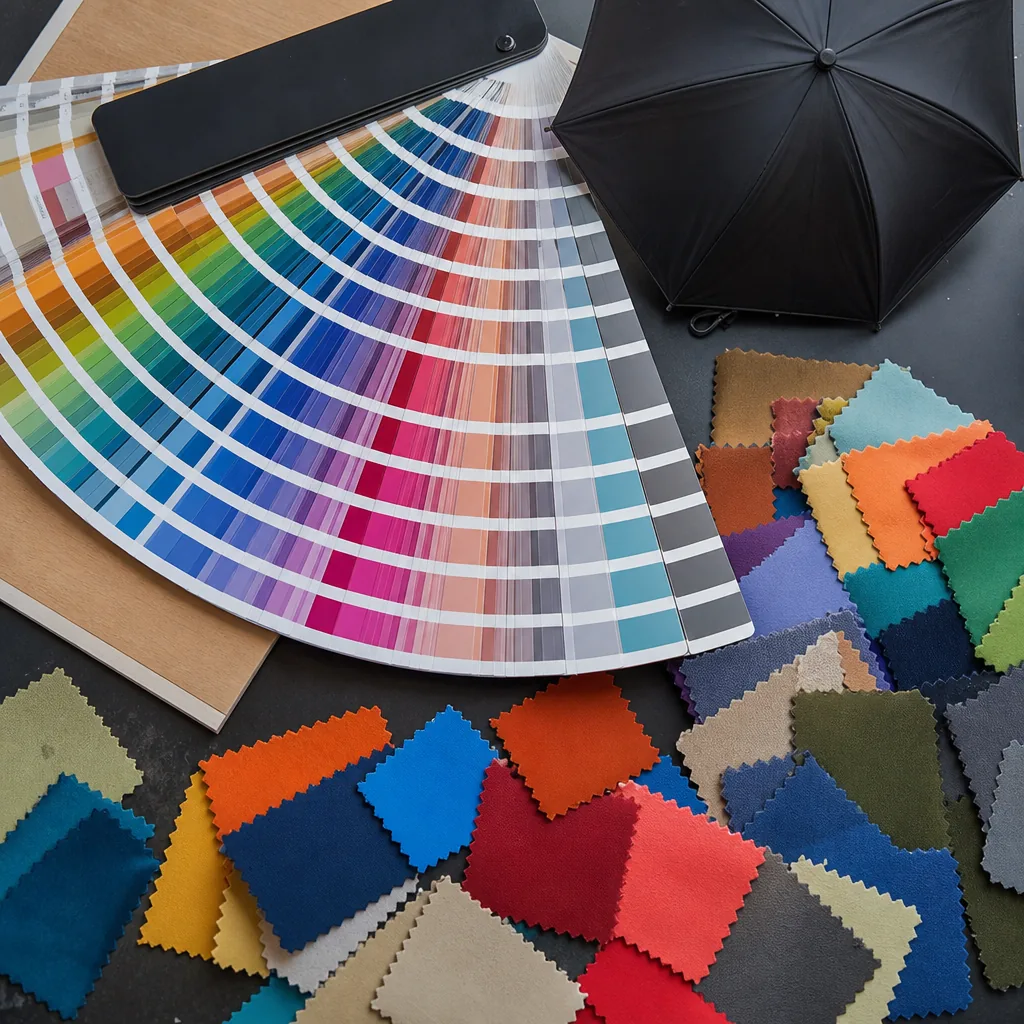
A promotional umbrella can pass a desk review and still fail after a few wet openings, tight folds, or cartons shifting in transit, leaving a cracked or faded brand mark in the customer’s hand. On our Songxia production floor, umbrella logo durability testing is treated as a process check, not a lab formality: we rub, fold, soak, dry, and inspect real printed panels before bulk packing so buyers can catch weak inks, poor curing, or mismatched fabric coatings before shipment.
Why Logo Durability Should Be Specified Before Production
Logo durability has to be specified before cutting fabric because the printing method, ink system, coating, and curing temperature all depend on the canopy material. A logo that looks sharp on the first approval sample can fail after 200 open-close cycles if the ink film is too brittle, the heat-transfer adhesive is mismatched, or the panel tension pulls across fine text. On printed pongee umbrellas, especially 190T and 210T polyester, we often see cracking on thick screen-printed white underbases, peeling at transfer film edges, fading on low-grade sublimation inks, and ink transfer when canopies are packed before full curing. POE, PVC, and EVA canopies create different problems because plasticizers can migrate into the print layer. That is why umbrella logo durability testing should be written into the specification together with fabric type, coating, print position, and test method, not discussed after mass production has already started.
The business risk is bigger than one rejected logo. Promotional umbrella print quality directly affects campaign visibility: if a bank, university, auto dealer, or event sponsor orders 5,000 pieces and 10% show distorted logos after repeated opening, the buyer does not see a technical defect; they see a damaged brand impression in public. Retail programs are even less forgiving because consumers return umbrellas for peeling graphics, color loss, or sticky ink transfer onto hands and sleeves. A simple logo rub test umbrellas program, such as dry rub, wet rub, tape pull, folding crease check, and repeated opening inspection, catches most problems before shipment. For darker 210T pongee with a light logo, I prefer testing both the white base layer and the final color layer, because many failures start between those two films rather than at the fabric surface.
Durability requirements should be tied to AQL umbrella inspection so the factory and buyer agree on what counts as a major defect. For example, visible peeling larger than 2 mm, logo cracking across key brand text, color variance beyond the approved standard, or ink transfer under normal handling should be classified as major, not cosmetic. Our standard practice at ZheBrella is to include logo position checks, adhesion checks, rub resistance, folding-line inspection, and open-close cycling in pre-shipment control when the order carries corporate branding. This matters for manual, auto-open, and auto-open-close umbrellas because the canopy flex pattern is different on 21-inch folding models versus 23-inch straight umbrellas or 30-inch golf umbrellas. Good umbrella logo durability testing prevents arguments later, protects the campaign, and gives procurement a measurable standard instead of relying on a nice-looking pre-production sample.
Key Tests for Printed Umbrella Logos
The first screen for umbrella logo durability testing is simple abrasion: dry rub and wet rub. On printed pongee umbrellas, especially 190T and 210T polyester with PU, Teflon, or UV UPF 50+ coating, the ink must sit cleanly without chalking, bleeding, or lifting at the edges. For a practical logo rub test umbrellas should be checked with a white cotton cloth under consistent hand pressure, typically 10 to 20 back-and-forth strokes for dry rub and again after the cloth is dampened. Dark inks on light canopies and white or metallic inks on navy, black, or red fabric show problems fastest. I look for color transfer on the cloth, loss of sharpness in small text, and cracking in thick ink deposits, because these are the issues buyers actually see after events, golf outings, or retail display handling.
Water exposure is the next failure point because umbrellas are not tote bags; the logo gets soaked, folded, and reopened many times. A water spray test should hit the printed panel from the outside for several minutes, then the umbrella should be left open to dry naturally before inspection. Do not judge the print while the canopy is still wet, because some coatings temporarily darken and can make a sound print look defective. After drying, check for halo marks, ink migration, peeling, and staining on adjacent folds. For promotional umbrella print quality, this is where heat-transfer logos and low-cure screen prints separate themselves from properly cured ink systems. Our standard practice at ZheBrella is to test production samples on the same canopy material and coating specified in the purchase order, not on a convenient substitute fabric from the sample room.
Fold-and-open cycling is the test many importers skip, but it is where logo failures usually appear. Compact folding umbrellas and auto-open or auto-open-close mechanisms put more repeated stress on printed panels than straight 23 inch stick umbrellas, because the canopy is compressed into tighter folds and snaps open under spring force. A sensible pre-shipment check is 50 to 100 open-close cycles, followed by a tape adhesion test over the logo and a visual inspection after the canopy rests open. The tape should not pull ink, film, or flocking from the surface. During AQL umbrella inspection, inspectors should record defects such as pinholes, broken logo lines, color mismatch, ghosting, off-center placement, and print distortion across seams or rib tips. These checks give a much clearer picture than approving a logo from a flat fabric swatch.
How Fabric, Frame, and Print Method Affect Results
Fabric choice changes the test result before the ink is even mixed. On printed pongee umbrellas, 190T polyester has a slightly more open weave and softer hand, so screen ink can bite well but may show more distortion when the canopy is stretched over 8K or 10K ribs. 210T pongee is tighter, smoother, and usually gives cleaner logo edges, especially for fine text under 1.5 mm, but the surface can be less forgiving if the fabric has heavy water-repellent finishing. UPF 50+ coatings, silver backing, and black-out layers add another variable: they reduce ink penetration and make adhesion more dependent on the correct catalyst, curing temperature, and dwell time. In umbrella logo durability testing, I always separate uncoated 190T, coated 210T, and UV-block fabrics into different test groups because the same logo rub test umbrellas can pass 500 dry rubs on plain pongee and fail early on a slick coated panel.
Frame structure affects print stress because an umbrella is not a flat banner after sewing. A 23 inch straight umbrella with steel ribs pulls the canopy differently from a 21 inch folding umbrella with fiberglass ribs and multi-section stretchers. Steel is rigid and can create hard tension lines from the rib tips to the crown, which may crack thick heat-transfer logos after repeated opening and closing. Fiberglass ribs bend more under wind load, so the print sees flexing instead of sharp tension; this is better for wind resistance but tougher on large solid logos placed across two panels. Double-canopy vented windproof designs add seam bulk and airflow movement, so logos printed near the vent overlap or seam allowance face more rubbing during packing, shake testing, and wind-tunnel runs at 50+ mph. For reliable promotional umbrella print quality, logo placement should avoid rib pockets, vent edges, and crown compression zones whenever possible.
Print method decides how much flex the logo can tolerate. Screen printing remains the strongest option for simple one- to three-color logos on 190T or 210T pongee because the ink film is controlled, elastic, and cured directly into the fabric surface; for export orders, our standard practice at ZheBrella is to check adhesion by cross-hatch tape pull, wet/dry rubbing, and open-close cycling before AQL umbrella inspection. Digital printing gives better gradients and photographic artwork, but ink loading must be balanced because oversaturated areas can stiffen the panel and reduce water repellency. Heat transfer is clean for small MOQ orders, complex logos, and exact Pantone-style artwork, but the film sits on top of the fabric, so edge lifting and cracking are the usual failure points after folding. A practical umbrella logo durability testing plan should compare all three methods after 24 hours of curing, then repeat checks after water spray, drying, folding, and sleeve packing.
Setting Acceptable Standards in the Buyer Spec
The buyer spec should define umbrella logo durability testing in pass/fail language before bulk production starts, not after cartons are packed. For color change, I recommend a clear tolerance such as “no visible fading, whitening, dye migration, or color shift greater than approved sample under D65 light box comparison.” For cracking and peeling, the standard should say the printed area must remain intact after opening/closing cycles, fabric flexing, and a dry or wet rub test, with no flaking visible at normal viewing distance of 30–40 cm. For logo edge sharpness, specify that letters, fine lines, and registration marks must remain clean, with no bleeding beyond 0.5 mm unless the artwork itself uses a soft edge. This is especially important on printed pongee umbrellas, where 190T and 210T fabric texture can make small type look rough if the screen mesh, heat-transfer pressure, or sublimation profile is not controlled.
Promotional umbrella print quality should be judged against a signed pre-production sample, not a PDF proof or Pantone number alone. Buyers should keep one approved sample in their office and require the factory to retain a sealed duplicate for bulk comparison. The sample should show the actual canopy fabric, coating, logo process, ink or transfer film, handle color, rib count, and opening mechanism, because print adhesion can change between 190T pongee, coated polyester, POE, PVC, and EVA. A logo rub test umbrellas standard can be written simply: after 20 dry rubs and 10 wet rubs with white cotton cloth, no obvious ink transfer, smearing, or loss of edge definition is acceptable. For heat-transfer logos, add a peel check at the corners and thin strokes, because weak press temperature or short dwell time usually fails there first.
Final inspection should connect the print standard to AQL umbrella inspection, usually AQL 2.5 for major defects on promotional orders. In practice, cracking, peeling, wrong logo color, severe ink migration, off-center placement, and unreadable text should be classified as major defects, while tiny dust marks outside the logo area may be minor if they do not affect retail presentation. The inspection checklist should include logo position tolerance, size tolerance, color comparison, rub result, edge sharpness, and canopy contamination. Our standard practice at ZheBrella is to compare random bulk pieces against the approved sample under consistent lighting, then record defects by panel and carton lot so problems can be traced back to a specific printing table, transfer press, or sewing line. This keeps umbrella logo durability testing measurable and prevents arguments about whether a logo “looks acceptable” after production is already finished.
Using Test Results to Control MOQ, Lead Time, and Risk
Extra testing costs time at the front end, but it is cheaper than discovering weak ink after 10,000 printed pongee umbrellas are already packed in export cartons. For a normal logo approval, we usually need 3 to 5 days for artwork checking, film/output, strike-off printing, drying or curing, and basic adhesion review. If the buyer requests umbrella logo durability testing, add another 2 to 4 days for wet rub, dry rub, tape pull, folding abrasion, and accelerated aging checks. That delay matters when the order is tied to a marathon, trade show, or retail launch date, but it protects the buyer from bulk failures such as cracked heat-transfer film on 190T pongee, ink bleeding on dark 210T fabric, or logo loss where the canopy folds over the rib tips.
Test results should be used to lock production rules before the deposit is paid, not after the first 2,000 pieces come off the line. If the logo rub test umbrellas show edge lifting, the solution may be a different ink system, longer curing, lower print coverage, or a switch from screen print to heat transfer or sublimation. Each choice affects MOQ because fabric color, panel cutting, and printing setup are not equally flexible. A 23-inch auto-open umbrella with an 8K fiberglass frame and one-position white logo may support a 500-piece MOQ, while a four-panel full-color retail design with UPF 50+ coating may need 1,000 to 3,000 pieces to justify stable material sourcing and print setup. Promotional umbrella print quality is not just a visual issue; it changes scheduling, wastage allowance, and carton release timing.
FOB and DDP deadlines must include a written decision path for failed tests. AQL umbrella inspection normally catches defects such as misaligned panels, broken tips, weak stitching, or poor opening force, but it does not automatically prove long-term logo durability unless the buyer specifies the test method and acceptance level. Before production starts, agree whether failed print testing allows reprint, panel replacement, discount acceptance, or full remake, and who pays for the lost days. For large event programs, I prefer confirming bulk fabric, frame components, and logo process together, then keeping 3% to 5% spare printed panels for emergency rework. Our standard practice at ZheBrella is to tie sampling approval, MOQ, lead time, and delivery terms into one production sheet, because a tight DDP date with no rework buffer is where most umbrella orders become expensive.
Frequently Asked Questions
Should every promotional umbrella order include logo durability testing?
At minimum, new artwork, new fabric, new ink, or a new supplier setup should be tested before bulk production. Repeat orders can use the previous approved sample if materials and methods have not changed.
Which umbrella styles are hardest on printed logos?
Compact folding umbrellas usually create the most stress because the canopy is folded tightly after use. Large golf umbrellas may be easier on logos, but windproof double-canopy construction still requires placement and adhesion checks.
What rub test spec is practical for printed umbrella logos?
Many importers request 50 dry double-rubs and 20 wet double-rubs with no visible transfer, cracking, or edge lift. If the canopy uses dark ink on light pongee, add a sunlight check because fading often shows up before peeling.
Where do logos fail most often on folding umbrellas?
The highest-risk zones are the panel seams, the canopy edge, and any area that folds against the ribs. If artwork crosses a hinge line, test 20 to 30 open-close cycles on a sample before approving mass production.
What should an AQL umbrella inspection cover for print defects?
Inspect registration, color shift, missing ink, pinholes, and peeling on a sampled lot using an agreed AQL level, often 2.5 for major defects in branded programs. Keep one signed golden sample and compare each carton against it during final inspection.
Looking to Launch Your Custom Umbrella Line?
ZheBrella is a Zhejiang-based OEM/ODM umbrella manufacturer with 17 years of export experience. Free design, low MOQ from 100 pieces, windproof construction, full-color print.
Get Free Quote Now »People Also Search For
Related Articles
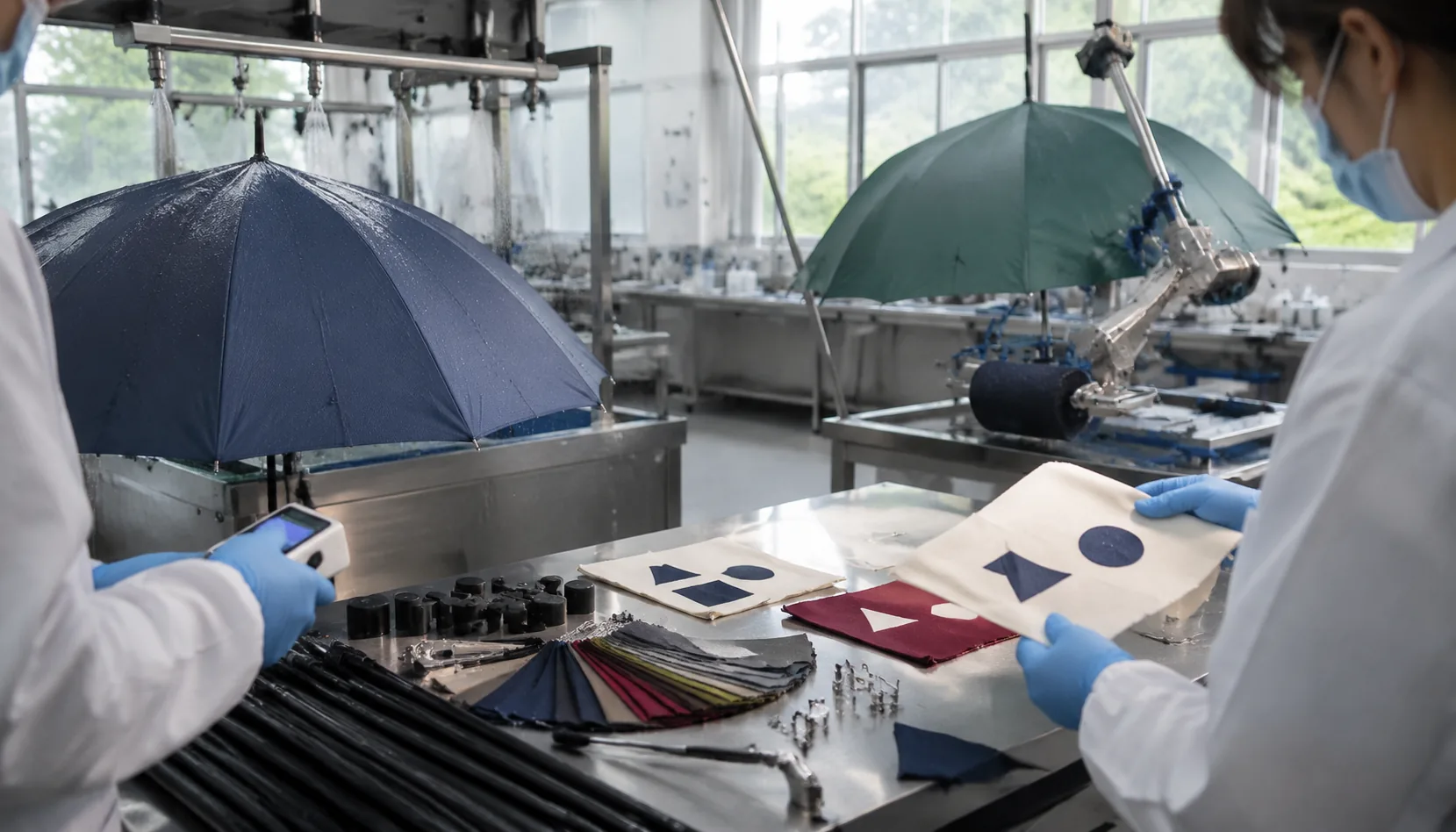
Logo Durability Testing for Branded Umbrella Programs
Plan branded umbrella orders with logo durability checks, AQL 2.5 inspection points, fabric tests, and approval steps be...
Read More »Print Durability Testing for Branded Umbrella Orders
Set practical logo durability standards for rain, UV, folding, and abrasion, including AQL 2.5 inspections, test samples...
Read More »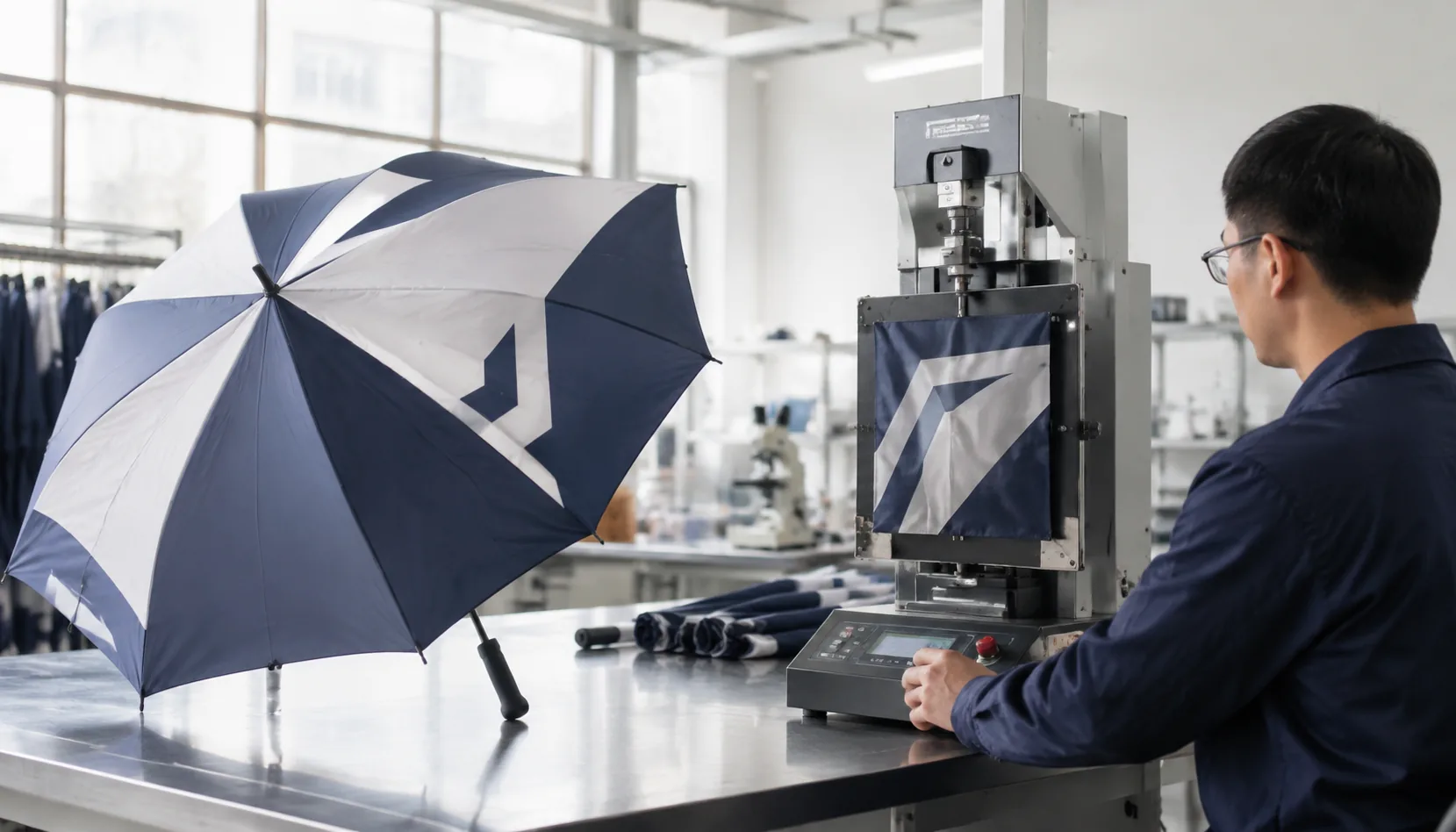
Print Durability Testing for Branded Umbrella Programs
Compare rub, adhesion, rain, UV, and folding tests for umbrella prints, with practical specs for 190T/210T pongee and AQ...
Read More »