Umbrella Canopy Cutting and Panel Alignment for OEM Orders
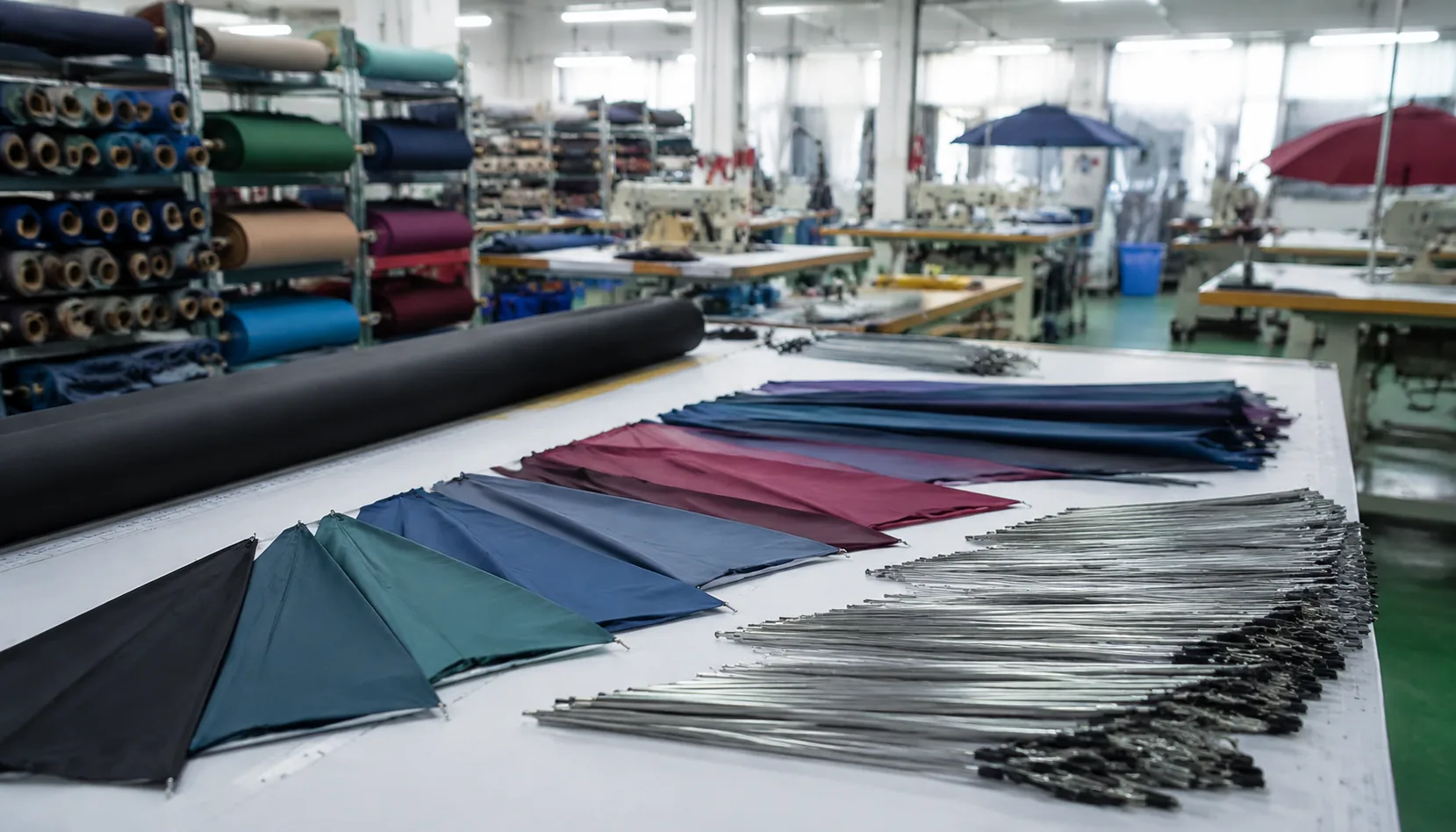
For OEM umbrella buyers, canopy defects usually show up after sewing: twisted panels, wrinkled ribs, off-center logos, or prints that miss at the seam. On our Songxia cutting floor, the umbrella canopy cutting process is controlled by fabric relaxation, marker layout, grain direction, and panel tolerance checks before 190T or 210T pongee ever reaches the sewing line. Getting these basics right is what keeps bulk orders consistent across colors, frames, and repeat shipments.
Why Cutting Accuracy Controls Final Umbrella Shape
Cutting accuracy decides whether an umbrella looks round, tight, and centered before anyone touches the sewing machine. In an 8-panel straight umbrella, a 2 mm width error on each panel can add up to 16 mm around the circumference; on 16K styles, the same small error becomes even more visible because the ribs create twice as many tension points. That is why the umbrella canopy cutting process is not just a fabric-saving operation. It controls canopy crown height, rib-to-tip matching, and whether the finished umbrella opens without a spiral twist. For standard OEM umbrella production, we normally hold panel cutting tolerance within ±1–2 mm, tighter for 190T or 210T pongee umbrella fabric with all-over printing, because the fabric has enough body to show tension imbalance instead of hiding it.
The most common defect from poor panel sizing is not a dramatic failure; it is a slightly crooked umbrella that buyers notice immediately in retail photos or event handouts. If one panel is long on the bias and the next is short, the sewn canopy pulls unevenly across the ribs, so one tip sits high while another droops. On auto-open 23-inch and 27-inch models, that uneven stress also affects how smoothly the runner locks because the frame is fighting the canopy. In double-canopy vented windproof umbrellas, cutting errors are even less forgiving because the top and lower canopies must align at the vent overlap. If the layers are off by 2–3 mm repeatedly, airflow gaps become inconsistent and the umbrella may flutter badly in a 50+ mph wind-tunnel check.
Canopy panel alignment also protects printing quality, especially when logos cross seams or when a border print must follow the umbrella edge. Umbrella print registration should be checked before mass cutting, not after 5,000 panels are already bundled. For screen printing, we mark reference points on the cut panel and keep the logo at a fixed distance from the seam allowance, usually within ±1.5 mm for promotional orders. For heat-transfer and sublimation layouts, we check both the panel template and fabric grain direction, because pongee can distort slightly under heat if the cut is already biased. Our standard practice at ZheBrella is to confirm the first cutting stack against a hard template, sew one pre-production canopy, mount it on the actual frame, and inspect tip alignment before releasing bulk cutting under AQL 2.5 final inspection.
Fabric Preparation for 190T and 210T Pongee
Fabric preparation decides whether the umbrella canopy cutting process runs clean or creates alignment problems that show up only after sewing. For 190T and 210T pongee umbrella fabric, we normally let rolls relax 12–24 hours after unpacking, especially in winter containers where the fabric arrives tight and slightly distorted. A 23-inch 8K canopy may look forgiving, but one biased panel can pull the whole crown off-center after stitching. Before cutting, the roll is checked for width, bowing, skew, oil spots, coating streaks, and pinholes under backlight. For OEM umbrella production, I also ask the cutting team to record roll number, fabric lot, coating type, and usable meters, because mixed lots are the usual source of shade complaints on navy, black, burgundy, and deep green orders.
Shade grouping is not paperwork; it is canopy panel alignment insurance. Panels from different dye lots can pass individually under warehouse light but look striped once eight or ten pieces are sewn into one canopy. We group rolls by shade before spreading, then assign one shade group to one PO line, one size, or at least one umbrella colorway. Grain direction also matters. Pongee has a subtle warp/weft behavior, and if panels are rotated casually to save fabric, the umbrella may open with uneven tension between ribs. For printed canopies, grain discipline is tied directly to umbrella print registration, because screen print, heat transfer, and sublimation graphics all depend on predictable panel stretch during sewing and final tensioning on the frame.
Coated pongee changes the cutting settings more than many buyers realize. A DWR finish makes layers slide during spreading, while silver UV or black UPF 50+ backing adds drag and can make the knife heat up or push the stack instead of slicing it. On 190T we may cut 60–80 layers if the coating is light; on heavier 210T with UV coating, 35–50 layers is safer for clean notches and consistent panel edges. Knife pressure, sharpening interval, vacuum strength, and clamp position are adjusted before mass cutting, not after the first 2,000 panels are already wrong. Our standard practice at ZheBrella is to cut a pilot stack, sew one full canopy, mount it on the correct 21-inch, 23-inch, or 27-inch frame, and check peak centering before releasing bulk cutting.
Cutting Methods for Solid, Printed, and Logo Panels
The umbrella canopy cutting process is where OEM umbrella production either stays tight or starts drifting. Hand cutting still makes sense for very low MOQ runs, sample approvals, and mixed-color orders where each panel may change after print strike-off. It is cheap to start, but the labor adds up fast, and repeatability depends on the cutter more than the pattern. Die cutting is better when the size is fixed and the order is stable, because a steel rule die gives clean edges and fast throughput, but the die cost only pays back on larger lots, usually a few thousand pieces and up. CNC cutting sits in the middle on setup cost and wins on consistency: once the nest is loaded correctly, it holds panel shape across 21" to 30" canopies with less drift, especially on pongee umbrella fabric that can relax after spreading or steaming.
For printed work, canopy panel alignment matters more than people think. Screen print needs the panel grain and stitch allowance locked before cutting, because even a 2 to 3 mm shift can push logos off center at the seam. Heat transfer is more forgiving on small solids, but the transfer position still has to be referenced from the same datum on every panel or the canopy will look twisted after sewing. Sublimated panels are the most sensitive, since the fabric can shrink unevenly after heat, so cutting should happen after the final print cure and cooling, not before. In practice, the umbrella canopy cutting process should treat print registration as part of the cutting step, not a separate printing issue; otherwise the panel stack looks good flat and fails the moment the rib tension opens it in 8K or 10K format.
Cost follows the same logic. Hand cutting is the lowest entry cost but the highest unit labor cost, so it fits prototypes, short promotional runs, and urgent replacements. Die cutting reduces cycle time sharply on repeat programs, but only if the OEM umbrella production schedule is stable and the canopy panel alignment does not change between seasons. CNC cutting costs more than hand cutting on day one, but it cuts waste, improves nesting, and keeps symmetry better on vented or double-canopy patterns where mirrored panels must match within a narrow tolerance. If the artwork includes screen print, heat transfer, or full sublimation, I always ask for final artwork, panel layout, and stitch allowance before cutting starts; that is the only way to keep umbrella print registration clean and avoid rework after sewing.
Panel Matching Before Sewing and Assembly
Alternating panel layout is not just for two-color golf umbrellas; it is also useful for managing fabric tension and shade consistency on solid-color OEM orders. When panels are cut from different positions in the fabric roll, alternating left and right orientations can balance slight stretch differences in warp and weft, especially on coated 190T pongee, Teflon-treated fabric, or UPF 50+ silver-backed canopies. Good umbrella canopy cutting process control gives the sewing line a canopy that sits smoothly over steel ribs or fiberglass ribs without forcing the assembler to hide defects with heavy tip pulling. On 27" and 30" windproof models, poor panel matching becomes more visible because longer ribs amplify every mismatch. Clean matching before sewing means the finished umbrella opens flatter, closes cleaner, and passes AQL 2.5 inspection with fewer seam, wrinkle, and print-position defects.
In-Process QC and Final AQL Sampling Points
The umbrella canopy cutting process has to be checked before sewing ever starts, because once a wrong panel reaches the automatic machine, you are paying twice: once in labor and again in scrap. For OEM umbrella production, we verify panel width, arc length, seam allowance, and tip spacing against the approved master pattern, especially on pongee umbrella fabric where stretch and coating can hide a small cut error. If the panel width is off by even 2–3 mm on a 23" or 27" canopy, the finished head will show puckering at the tips or a loose center after mounting.
Logo position is the next non-negotiable item. In umbrella print registration, the print must sit on the same panel reference every time, with the artwork centered to the rib line and matched to the panel seam allowance so the graphic does not drift when the canopy is closed or opened. We use in-line audits right after cutting and again after panel stitching to catch misaligned panels, uneven arc length, or shifted logos before they become a full-batch rework problem; that is standard practice in serious OEM umbrella production, not an extra.
Final checks happen after mounting, not before, because canopy tension changes once the runner, ribs, and tips are assembled. Inspectors should confirm that the canopy sits evenly on the frame, with no twisted panels, no visible smile or sag at the hem, and consistent tip spacing around the full circumference. Our line then moves to final AQL 2.5 inspection with the defects already reduced by in-line checks, which is the only practical way to keep rejection rates down on custom orders and avoid late-stage correction work on finished goods.
Frequently Asked Questions
What panel tolerance should buyers specify for custom logo umbrellas?
For most 8-panel promotional umbrellas, specify ±1-2 mm for key panel dimensions and a separate logo placement tolerance. Tighter tolerances may increase cutting and inspection time.
Does 210T pongee require different cutting controls than 190T?
Yes. 210T pongee is denser and can be more stable, but coated or UPF 50+ fabrics may still slip during stacking. Factories should control lay height, blade sharpness, and fabric relaxation time.
What panel tolerance is usually acceptable for OEM umbrella canopies?
For standard OEM umbrella production, many factories target panel length and width tolerances within about ±1 to ±2 mm, depending on umbrella size and construction. Printed panels often need tighter registration checks so logos and patterns stay aligned after sewing.
How does grain direction affect umbrella canopy quality?
Grain direction helps control stretch and shape stability during cutting and sewing. If the panels are cut off-grain, the canopy is more likely to twist, wrinkle, or shrink unevenly after assembly.
Do 190T and 210T pongee fabrics need different cutting settings?
Yes. 210T pongee is usually denser and slightly more stable than 190T, so the cutting and tension control can be a little more forgiving. Both still need consistent table lay, sharp blades, and controlled stack height to keep panel size and print registration accurate.
Looking to Launch Your Custom Umbrella Line?
ZheBrella is a Zhejiang-based OEM/ODM umbrella manufacturer with 17 years of export experience. Free design, low MOQ from 100 pieces, windproof construction, full-color print.
Get Free Quote Now »People Also Search For
Related Articles
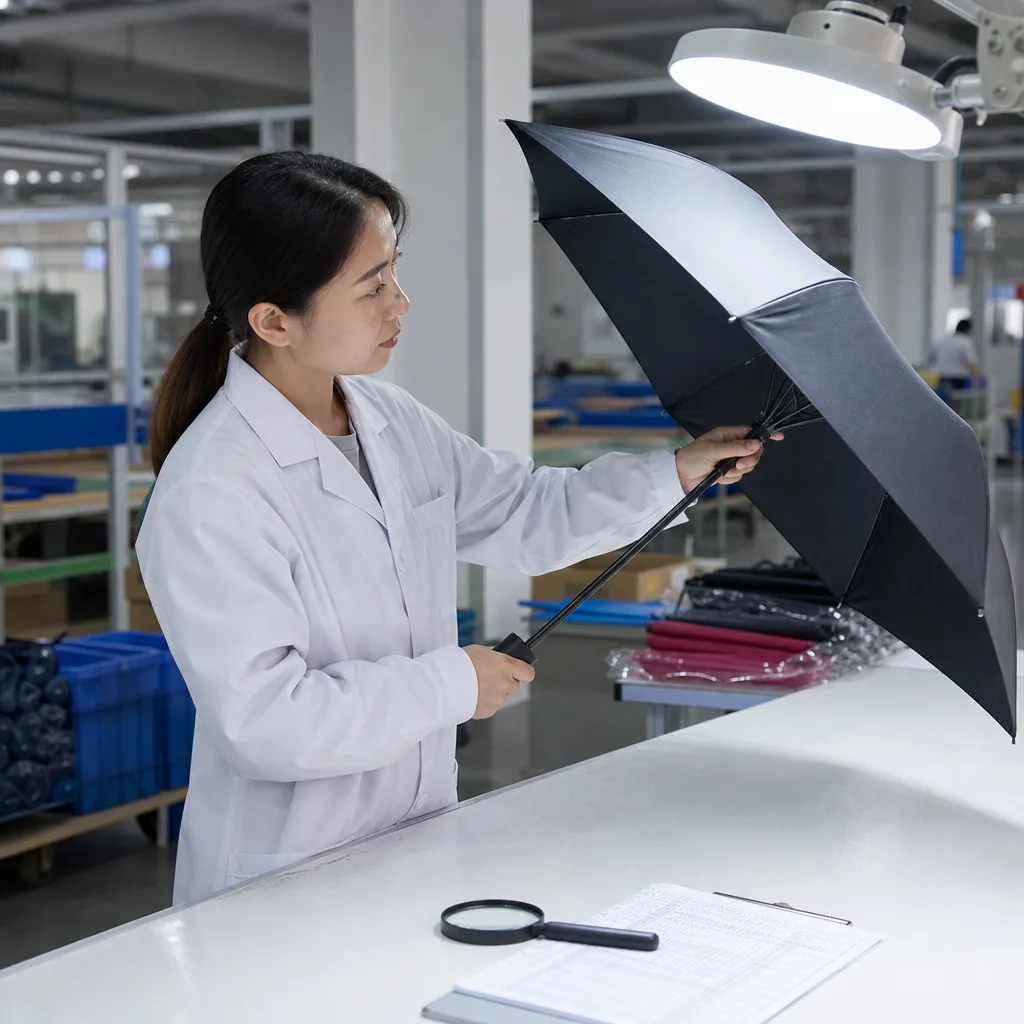
Umbrella Canopy Cutting Process for Accurate Bulk Orders
Understand how fabric spreading, panel cutting, and shade control keep 190T and 210T pongee canopies accurate across bul...
Read More »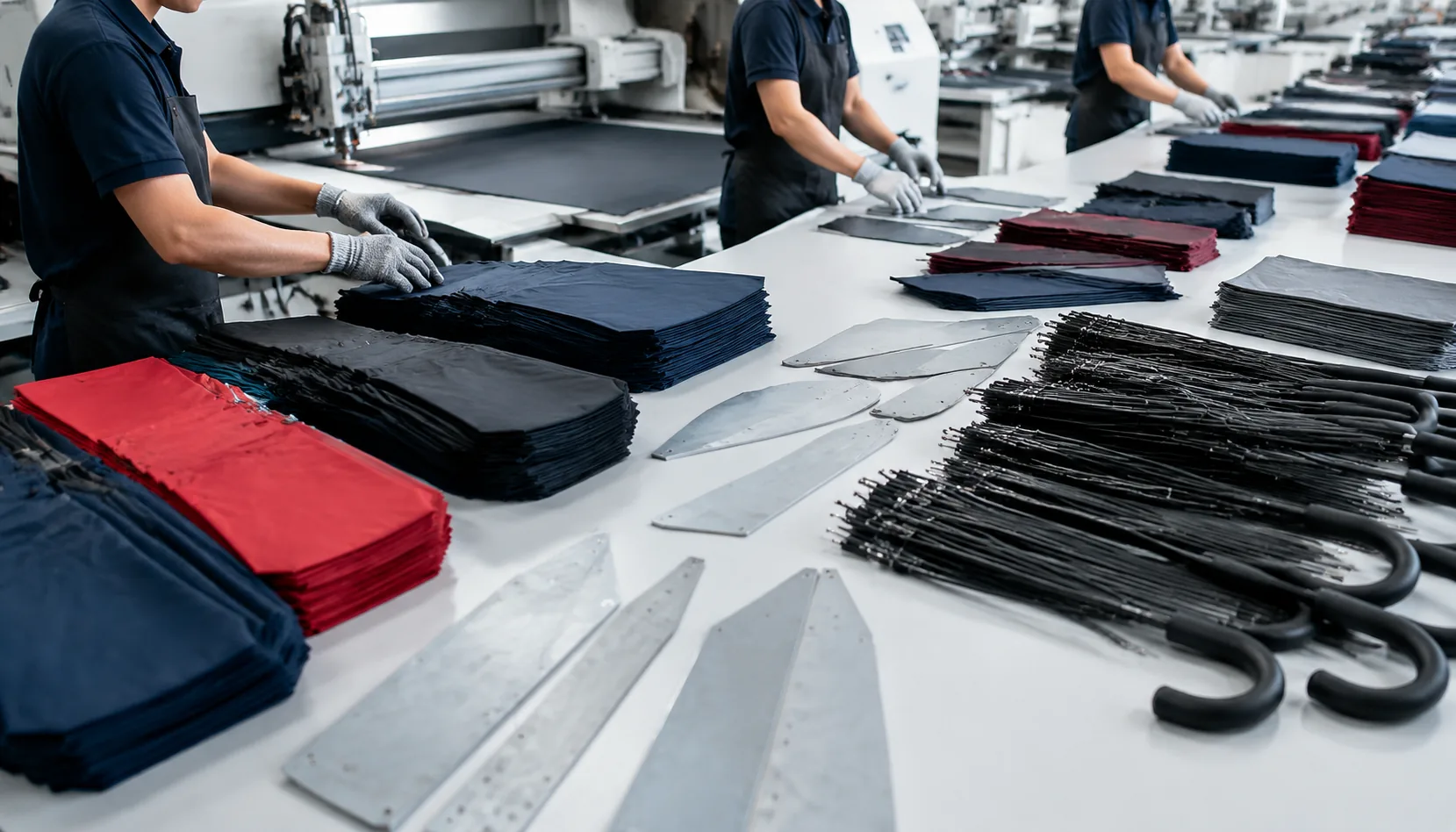
Umbrella Canopy Cutting: Panel Accuracy for Bulk Orders
Understand canopy cutting controls for 190T and 210T pongee, panel matching, shrinkage allowance, and print alignment in...
Read More »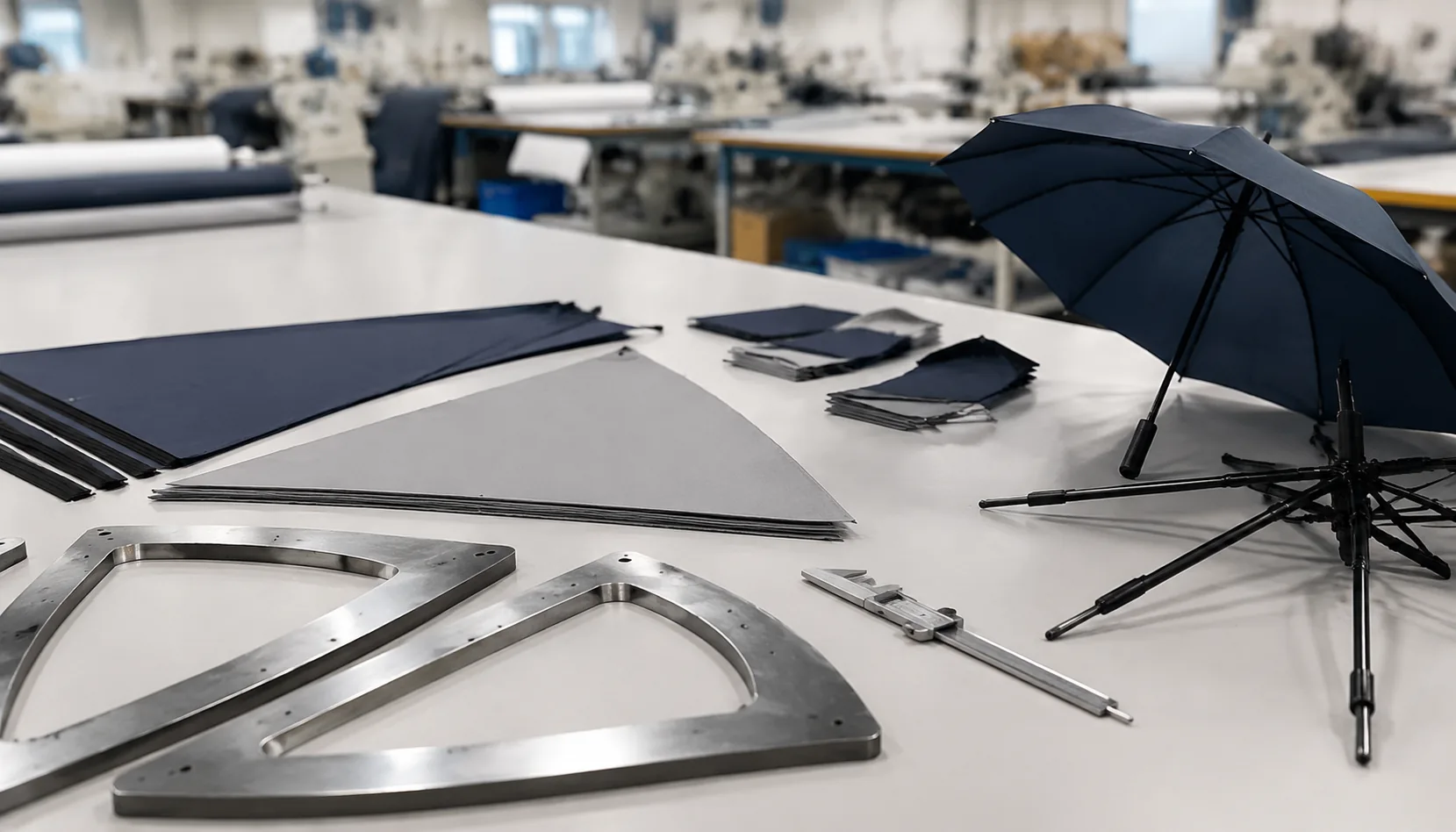
Umbrella Panel Cutting Tolerances for Consistent Canopy Fit
Learn how panel cutting tolerances, fabric lot control, and sewing allowances keep OEM umbrella canopies tight, aligned,...
Read More »