Umbrella Frame Assembly Jigs: Tolerances for OEM Consistency
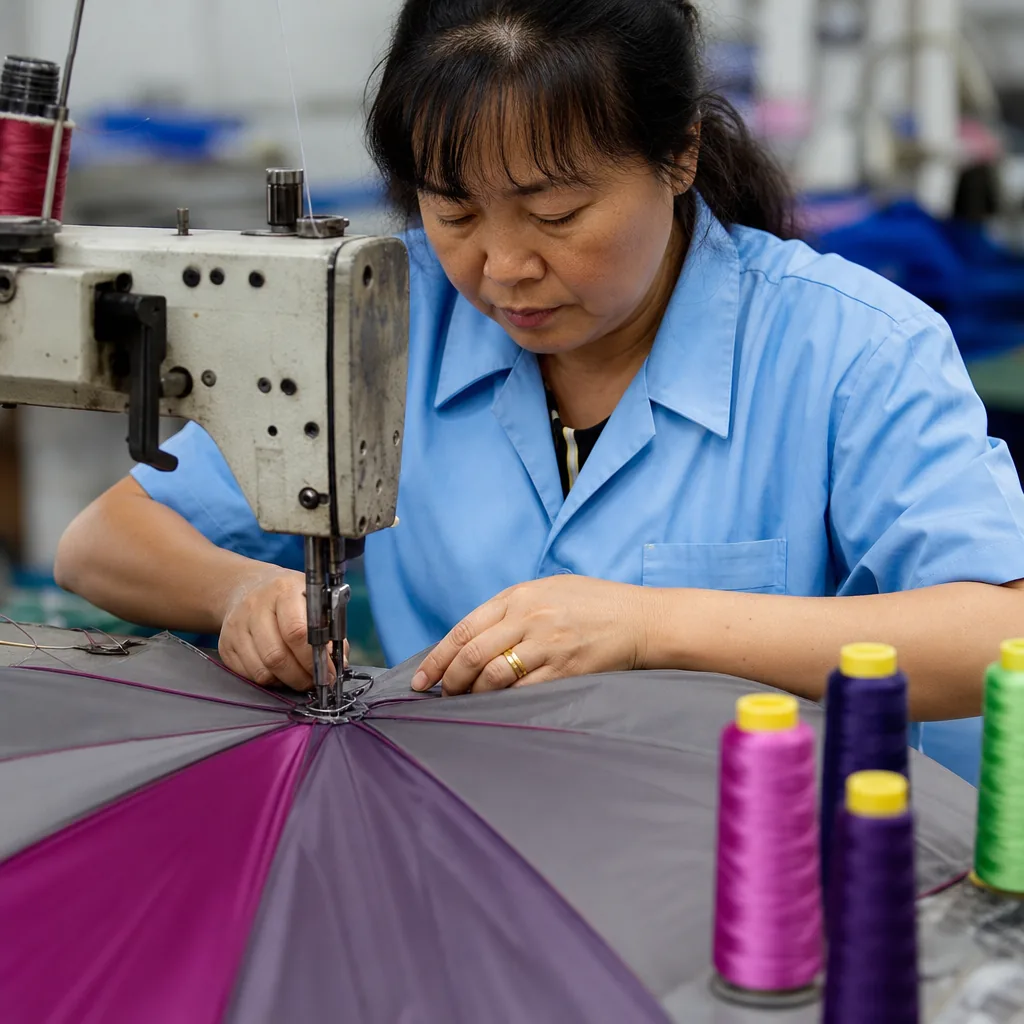
When OEM umbrellas arrive with top wobble, uneven canopy tension, or runners that bind after a few cycles, the root cause is often buried in the jig station, not the final inspection table. On our Songxia floor, we see how small shifts in umbrella frame assembly tolerances, rib angle control, and runner fit stack up across a production lot, which is why consistent jigs and in-line checks matter long before packing.
Why Frame Assembly Tolerances Matter in Bulk Production
In OEM umbrella manufacturing, the frame is not a commodity part; it is the tolerance stack that decides opening feel, canopy symmetry, and cycle life before sewing starts. Small dimensional errors compound quickly. A main rib cut 1.5 mm long, a stretcher eyelet set slightly off-center, and a shaft with excess runout can produce canopy wrinkles, a leaning crown, or two panels carrying more tension than the rest, even when 190T or 210T pongee panels are cut and stitched correctly. On a standard 21 inch or 23 inch 8K folding frame, buyers should expect practical umbrella frame assembly tolerances of plus or minus 1 to 2 mm for main rib length within a lot. Once rib variation exceeds that band, uneven panel tension becomes visible, and the sewing line cannot mask the defect. The result is usually the same set of buyer complaints: hard opening, crooked profile, and fabric that looks asymmetrical out of the carton.
Length control alone is not enough. Notch-to-rib angle, stretcher geometry, and shaft straightness determine whether the frame tracks evenly through opening and closing. On 8K, 10K, or 16K layouts, a few degrees of rib-angle variation can shift load across the canopy so one section bellies out while the opposite side sits flat, especially under wind. Fiberglass ribs recover better than steel, but neither material can compensate for a poorly set umbrella frame jig that relies on hand correction during assembly; that is a direct cause of piece-to-piece variation in opening force. Stretcher mismatch is equally expensive: on auto-open and auto-open-close frames, about 1 mm difference in stretcher length can alter spring preload enough that one unit opens cleanly while the next feels sticky mid-travel. The risk rises on heavier vented double-canopy designs and clear POE or PVC canopies, where frame error shows faster.
The cheapest control point is upstream, before final assembly and fabric fitting lock defects into the unit. Shaft straightness should be checked by fixture-based runout inspection before rib assembly, especially on 27 inch and 30 inch golf frames where slight bend is obvious at the canopy edge. Rib alignment QC should then confirm left-right symmetry after top and runner assembly, not after the canopy is installed. AQL 2.5 final inspection can still catch severe tilt, uneven opening force, or visible asymmetry, but by then the material and labor cost is already sunk. For stable umbrella production quality, buyers should ask suppliers to use calibrated jigs, go/no-go gauges for rivet and eyelet positions, and opening-force spot checks every 100 to 200 pieces. That process control holds umbrella frame assembly tolerances at the station level, where correction is fast and repeatable, instead of pushing risk into slow, inconsistent rework.
Jigs and Fixtures Used for 8K, 10K, and 16K Frames
The jig sets frame geometry before the first rivet goes in, so it is the first control point for umbrella frame assembly tolerances in OEM umbrella manufacturing. A dedicated umbrella frame jig uses hardened locating pins and fixed centers to hold the top notch, runner, ribs, and stretchers by frame size and rib count, whether the program is a 21 inch compact, 23 inch stick umbrella, or 27 inch golf frame. Fixture complexity rises with rib count. An 8K frame can run on a simpler indexed plate because the angular spacing leaves more room for minor variation, but 10K and especially 16K layouts magnify cumulative pitch error at the notch. A small indexing drift can translate into uneven canopy tension, off-center runner travel, and bays that sit high when the frame is closed. Useful control points are measurable, not visual: uniform rib tip height, consistent spoke spacing, centered notch rotation, rivet position, and stable runner clearance after riveting. That is why disciplined factories back the fixture with batch checks for notch concentricity, rivet location, and open-close action instead of relying on operator feel.
Compact folding frames need tighter fixture control than stick umbrellas because every hinge adds stack-up risk. A 2-fold or 3-fold frame combines upper ribs, lower ribs, joint links, and telescopic shaft sections, so the fixture must hold both location and fold angle during peening or screw fastening. Material also changes the setup. Steel ribs tolerate press load, but if the fixture forces the rib line out of true they can take a permanent set; fiberglass ribs recover better, yet they need softer clamping faces to avoid stress whitening or micro-cracks at the rivet hole. Stick umbrellas are less demanding to load and cycle because they use one-piece ribs, fewer pivots, and a straight shaft, which supports a more open fixture on 23 inch and 27 inch frames. The same tooling logic does not transfer across mechanisms: a steel 16K fashion frame needs very accurate notch indexing to prevent crown twist, while a fiberglass 8K windproof frame with vented or double-canopy hardware needs extra clearance around thicker rib sections and anti-inversion parts. For risk control, qualify each jig through first-piece approval, rib alignment QC, in-process opening tests, and AQL 2.5 final inspection for symmetry, lock reliability, and action smoothness.
Controlling Rivets, Runners, and Notch Fit
Most OEM umbrella manufacturing failures start at the riveted joints, so the writer should treat rivet compression as a controlled variable, not a hand-feel judgment. At the stretcher-to-rib and stretcher-to-runner hinges, a joint can feel acceptable on first inspection and still fail after roughly 200 open-close cycles if the rivet head is set at the wrong angle or compressed beyond the swing range. Over-compression causes binding, higher opening force, and incomplete tracking to full geometry on 21 in. and 23 in. 8K folding frames. Under-compression creates lateral play that turns into wobble, rib twist, and tip breakage under wind load. The umbrella frame jig should lock the rib and stretcher at a fixed reference angle during riveting, then verify two conditions immediately: full free movement through the travel arc and no visible side shake at the hinge. That is the practical core of umbrella frame assembly tolerances. The writer should also make rib alignment QC explicit here, because a poor rivet set often causes canopy skew before fabric cutting or sewing adds any visible error.
Runner clearance and notch locking strength need separate control points because they fail in different ways. The writer should specify runner checks at multiple positions on the steel or aluminum shaft on manual, auto-open, and auto-open-close frames; bore fit changes with shaft straightness, punched-hole burrs, and plating buildup. If runner clearance is too tight, the frame stalls, opens harshly, or scores the shaft. If too loose, the runner cocks under load, pulls stretchers unevenly, and quickly shows up in rib alignment QC, especially on 10K and 16K frames where tolerance stack-up is less forgiving. For auto-open models, repeated spring-actuated opening tests are required because spring force exposes weak or misaligned assemblies faster than manual use. The writer should separately cover top-notch fit and locking force: each rib end must seat evenly, slots must not cut into the rib coating or fiberglass shoulder, and the latch must hold through repeated lock-release cycling. Use AQL 2.5 sampling to verify lock retention, release consistency, and rib symmetry, especially on 27 in. and 30 in. straight umbrellas and vented windproof frames where larger canopy area magnifies small fit errors and raises warranty risk.
In-Line QC Before Canopy Mounting
The most expensive frame defect is the one found after canopy mounting, when the factory has already added sewing labor, print value, and packing time. In OEM umbrella manufacturing, the correct in-line QC gate sits immediately after the umbrella frame jig station and before top-notch tying, so frame-only defects are removed before they reduce finished-goods yield. For each batch, sample frames and verify open-close cycling, rib symmetry, runner travel, shaft straightness, and surface condition against the approved sample. On a standard 8K or 10K folding frame, cycle each sampled unit 10 to 20 times depending on mechanism risk; auto-open-close frames should use the higher count because spring force and latch engagement expose umbrella frame assembly tolerances faster than manual or auto-open designs. Treat runner hesitation, rebound, or an end-stop miss of 1 to 2 mm as an immediate hold. That travel error usually points to tolerance stack-up in the runner, spring, latch, or rivet set, and it will surface later as poor opening feel, canopy strain, or warranty returns.
Rib symmetry is the fastest on-line signal that the frame build is drifting. On a fully opened 21 inch or 23 inch compact frame, every rib tip should land on an even circle with no visible high-low pattern, twisted stretcher, or off-center crown. In rib alignment QC, a visible tip mismatch usually traces to uneven rib forming, loose riveting, or worn locator pins in the umbrella frame jig. Check frame balance by lightly spinning the shaft and confirming that no sector drops repeatedly; a repeating heavy side often means bent steel ribs, uneven rib weight, or mixed fiberglass components. Add a visual inspection for burrs at the runner slot, scratched black plating, cracked nickel finish around the notch, and split plastic ferrules, since these defects become corrosion points and snag hazards during canopy mounting. Final inspection can still run at AQL 2.5, but AQL is a shipment screen, not a process-control tool. The stronger method is to catch frame defects before canopy mounting, then use AQL 2.5 on finished umbrellas to assess canopy sewing, print registration on 190T or 210T pongee, opening feel, and packing condition as part of umbrella production quality.
What OEM Buyers Should Put in the Tech Pack
Lock the frame stack before you ask for a quote. In OEM umbrella manufacturing, vague terms like "steel frame" or "windproof" shift too much discretion to the factory and make price, durability, and lead time hard to control. Your tech pack should specify rib material by position: main ribs in fiberglass or electroplated steel; stretchers in steel or fiberglass; tips and top/bottom notches in nylon, ABS, or stamped metal. State the rib count because 8K, 10K, and 16K frames need different umbrella frame jig settings and create different canopy tension at the same diameter. Define the format in engineering terms: 21 inch compact auto-open-close, 23 inch straight auto-open, or 27 inch golf double-canopy vented. For the shaft, list material, outside diameter, wall thickness, and telescopic section count. A 3-section compact shaft with 12.0 mm OD does not perform like a straight 14.0 mm shaft when opening force, runner travel, and wind stability must stay consistent. Also name the runner type and opening mechanism - manual, auto-open, or auto-open-close - and state whether equivalent components are prohibited.
For umbrella frame assembly tolerances, replace "factory standard" with measurable pass-fail limits. A practical baseline is rib length within plus or minus 1.0 mm, shaft straightness within 1.5 mm over full length, runner travel within plus or minus 1.0 mm, and assembled canopy center deviation under 3.0 mm after opening. Add rib alignment QC points: maximum left-right rib spread difference, top-notch seating, spring-pin engagement, and allowable rivet looseness. Corrosion protection should be stated by finish and target, such as black electrophoresis or nickel plating on steel parts with a 24 to 48 hour salt-spray requirement based on market risk. Tie these umbrella frame assembly tolerances to AQL 2.5 inspection checkpoints so your team and the factory use the same acceptance standard before mass production. Be aware that tighter specs can change the commercial terms: a dedicated umbrella frame jig, extra in-line checks, and custom gauge blocks can push MOQ from 1,000 to 3,000 pieces on a private frame, add tooling cost, and move lead time from about 35 days to 45 to 60 days after sample approval.
Frequently Asked Questions
How tight should umbrella frame assembly tolerances be for OEM orders?
For many commercial umbrellas, rib length variation within 1-2 mm and consistent runner travel are practical targets. Premium windproof or auto-open models may need tighter checks because small misalignment increases opening force and canopy stress.
Can the same assembly jig be used for fiberglass and steel ribs?
Sometimes, but not always. Fiberglass ribs may flex more during positioning, while steel ribs hold shape differently, so factories often adjust clamping pressure, rib seats, or rivet settings by material.
What rib angle deviation is usually acceptable before a frame starts causing canopy fit issues?
For standard folding and straight umbrellas, many factories try to keep rib angle variation within about plus or minus 1 to 2 degrees across the same frame. Once variation moves beyond that range, you typically see uneven canopy tension, skewed opening geometry, and higher sewing mismatch rates.
How is runner fit checked during in-line umbrella frame inspection?
A practical in-line check is to cycle the runner open and close 5 to 10 times on sampled frames while checking for sticking, excessive lateral play, and incomplete lock-up. If the runner drags on the shaft or shows visible looseness, that batch usually needs immediate jig or component adjustment before canopy assembly.
Can tighter frame jig tolerances meaningfully lower OEM reject rates?
Yes, especially on higher-volume OEM orders above 3,000 to 5,000 pieces where small frame deviations multiply quickly. Buyers often see reject reduction when jig calibration is checked at shift start and after tooling changeovers, because it catches shaft, rib, and notch alignment drift before full-batch assembly.
Looking to Launch Your Custom Umbrella Line?
ZheBrella is a Zhejiang-based OEM/ODM umbrella manufacturer with 17 years of export experience. Free design, low MOQ from 100 pieces, windproof construction, full-color print.
Get Free Quote Now »People Also Search For
Related Articles
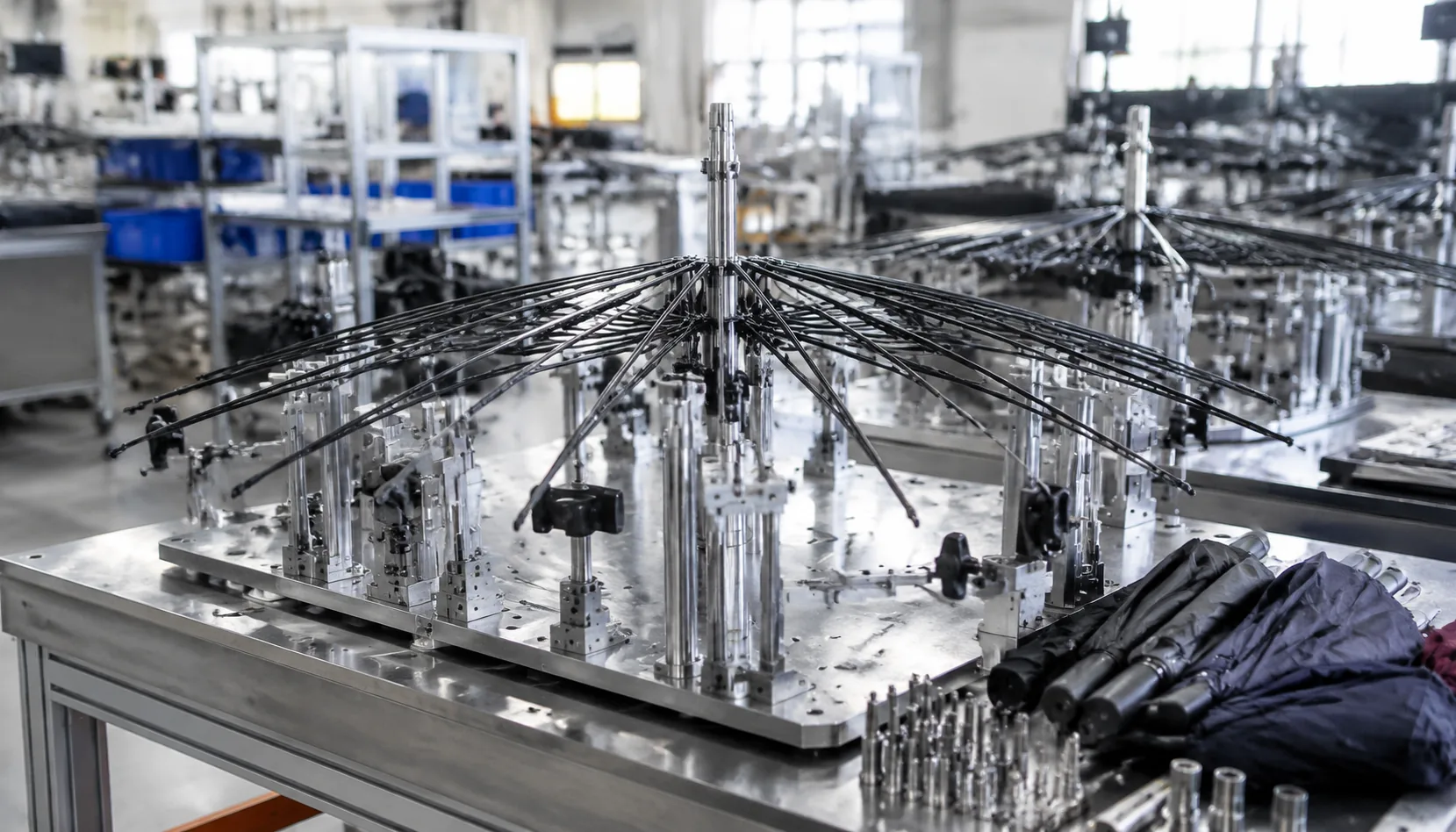
Umbrella Frame Assembly Jigs for Rib Alignment Control
See how assembly jigs control rib spacing, shaft straightness, and canopy symmetry to reduce defects in 8K, 10K, and 16K...
Read More »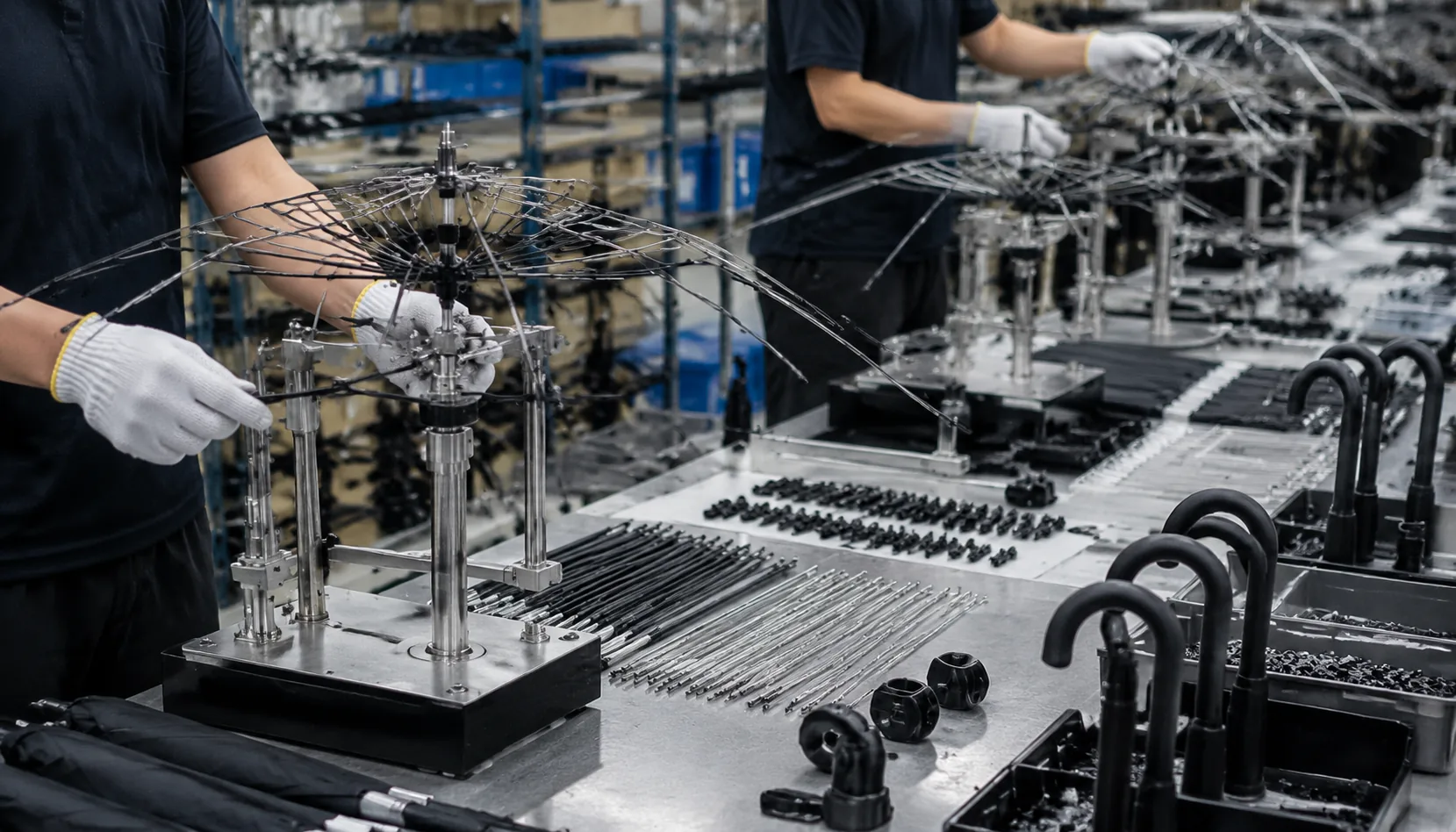
Umbrella Frame Assembly Jigs for Consistent Rib Alignment
Learn how frame assembly jigs control rib alignment, canopy tension, and opening smoothness in OEM umbrella production b...
Read More »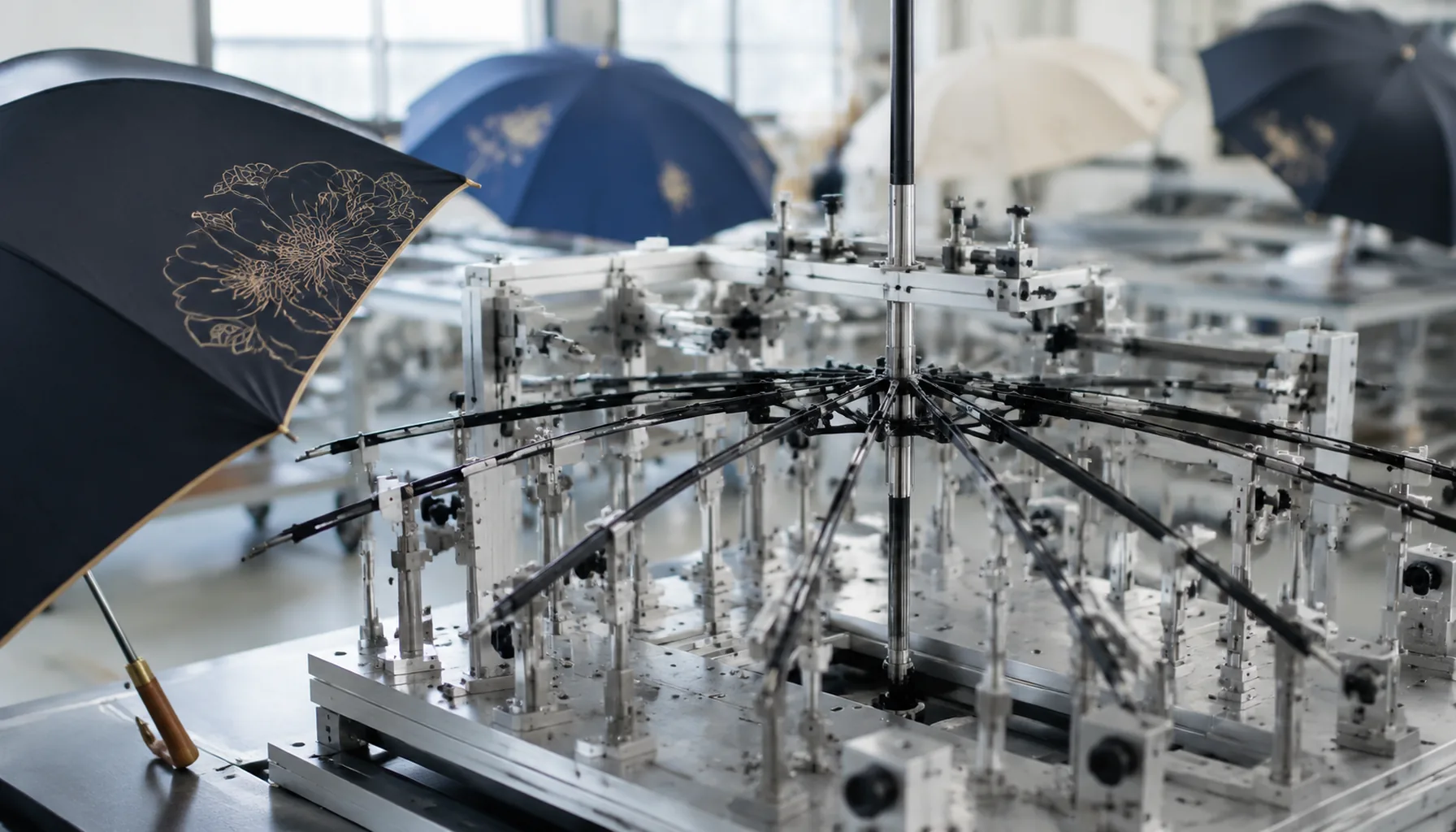
Umbrella Frame Assembly Jigs: Rib Alignment for Bulk OEM
Learn how frame jigs control 8K/16K rib angles, shaft straightness, and runner travel to reduce wobble, rework, and AQL ...
Read More »