Umbrella Frame Assembly Line Design for Consistent OEM Output
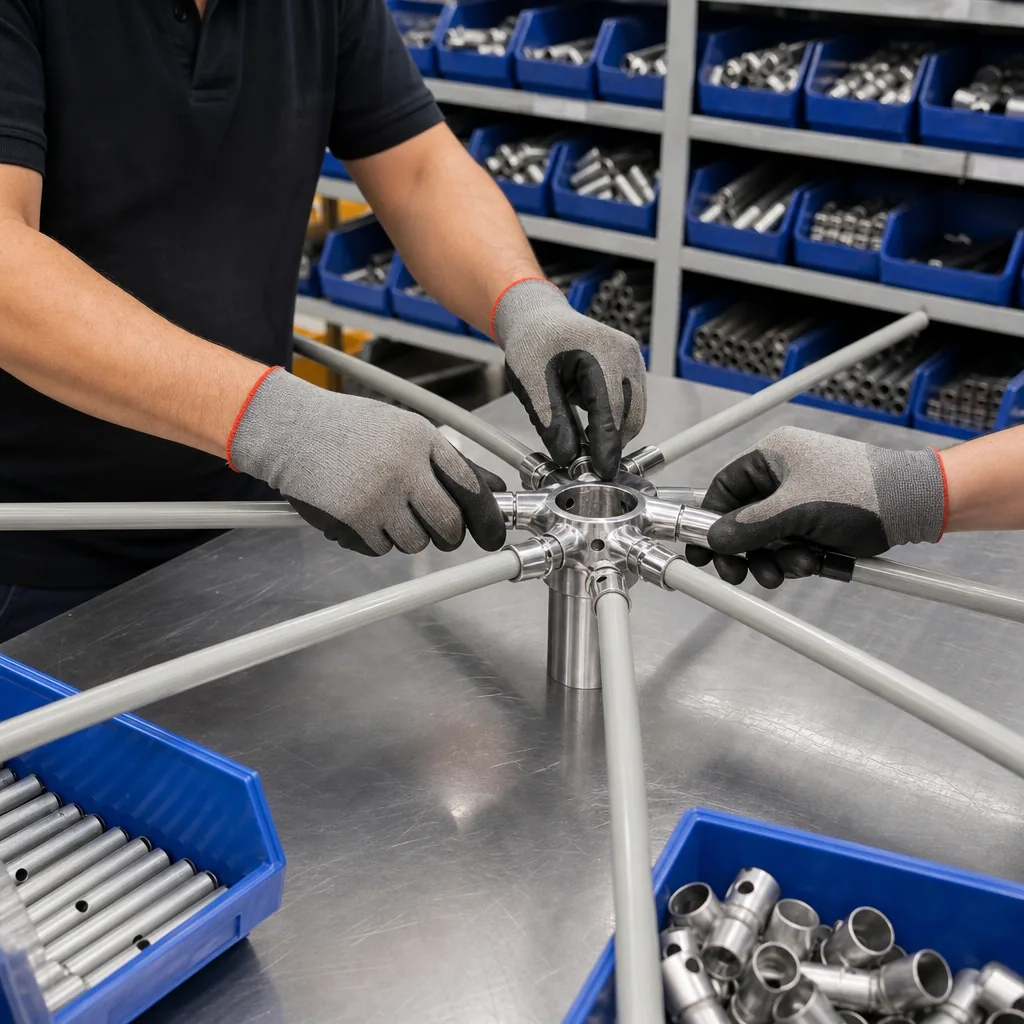
When an OEM umbrella program slips, the root cause is often not fabric or packaging but uneven frame output—rivet tension drifting between stations, handoff delays, or missed defects that surface only at final inspection. On a well-run umbrella frame assembly line, layout, in-line QC, and labor balancing have to work together at the station level to keep opening force, alignment, and cycle time consistent across large-volume orders.
What a Standard Umbrella Frame Line Looks Like
A reliable umbrella frame assembly line is built around the points where frames fail, not around operator preference. For most 21-inch to 27-inch, 8K or 10K OEM programs, the writer should map the flow into six stations: subassembly, rib mounting, runner and shaft assembly, spring fitting, canopy attachment, and final function check. Subassembly should cover the notch, top cap, ferrule, handle socket, and rib-set preparation, because material and geometry decisions start affecting yield here. Fiberglass ribs require different jigs and rivet pressure than plated steel ribs, and a 16K fashion frame cannot be set up like a straight 8-rib golf frame. That separation matters even more when one OEM umbrella production line runs manual walkers, auto-open sticks, and compact telescopic frames in parallel. If those SKUs share benches without dedicated fixtures, mixed setup errors show up before the umbrella assembly process even reaches canopy sewing.
Rib mounting is the first true precision station because rib alignment, stretcher angle, and rivet tension determine whether the canopy tracks straight when fully opened. Runner and shaft assembly is simpler on straight-shaft manual umbrellas, but tolerances tighten on telescopic auto-open and auto-open-close frames, where spring tubes, latch points, and shaft nesting all have to stay consistent. Spring fitting is the main separator between capable and weak suppliers: an auto-open spring with incorrect preload can pass a quick check and still fail after 200 to 500 open-close cycles. Double-canopy windproof umbrellas also diverge at this stage because frame geometry has to hold consistent vent spacing between the upper and lower canopies; otherwise, the air-release design will miss its 50+ mph wind target.
Canopy attachment should start only after in-line quality control confirms opening force, rib symmetry, and lock engagement. On 190T or 210T pongee, operators secure the tips, stitch or cap the crown, fix the runner points, and check panel centering so adjacent printed gores stay aligned. Final checks should be mechanism-specific: manual umbrellas need smooth travel and a positive full-open lock; auto-open models need clean spring release with no runner bounce-back; double-canopy windproof styles need tighter review of vent stitching tension and top-canopy registration. The last station should include repeated cycling, visual inspection to AQL 2.5, and carton segregation by mechanism type. That cuts rework, protects custom umbrella lead time, and lowers the risk of mixed-mechanism claims after shipment.
Line Balancing for 8K, 16K, and Mixed Model Production
Line balancing on an umbrella frame assembly line should start with frame architecture, because rib count changes component count, touch time, and defect exposure at every station. A 23-inch 8K straight umbrella with a steel shaft, steel ribs, a manual runner, and a 190T pongee canopy usually moves through notch setting, rib-to-stretcher assembly, runner fitting, canopy mounting, and final closing checks faster than a comparable 16K fashion model. The delay is not just eight extra ribs. A 16K frame adds more rivet points, more tip pockets, tighter panel-to-panel matching, and more opportunity for uneven opening force, so operators spend more time on hand positioning, alignment, and repeated open-close tests before the frame clears final inspection. That changes labor allocation: basic 8K promotional SKUs can hold higher output with fewer highly skilled operators at frame build and canopy mounting, while 16K styles need more experienced labor loaded into those slower stations. For buyers running mixed SKUs on one OEM umbrella production line, the planning rule is simple: base custom umbrella lead time on the slowest model family, not the average unit count.
Canopy construction and handle style can move takt time almost as much as rib count in the umbrella assembly process. A plain 190T or 210T pongee canopy on a 23-inch promotional model, with a simple 1-color screen print and loose seam tolerance, is faster to cut, sew, orient, and mount than a double-canopy vented design with contrast piping, edge binding, reflective trim, or full-panel heat-transfer printing. Those added features slow top stitching, panel orientation, and canopy centering because alignment has to stay consistent from sewing through final mounting. Handle choice adds another bottleneck. Straight EVA or molded plastic handles fit quickly, while wood handles, rubberized grips, and auto-open compact handles with integrated button sets require slower fitting, tighter adhesive control, and added pull-force and function checks. In mixed-model production, the slow stations are usually compact spring assembly, 16K canopy mounting, and auto-open final testing, so protect them with experienced float operators, small sub-assembly batches, and in-line quality control at hinge riveting, opening force, canopy centering, and strap alignment, then confirm outgoing quality at AQL 2.5 during final packout. That is how factories limit rework and avoid losing 2 to 3 production days to a bad spring lot or a misaligned 16K canopy batch.
In-Line Quality Gates That Catch Defects Early
The most cost-effective quality gate on an umbrella frame assembly line sits directly after frame riveting, before canopy sewing or handle fitting turns a frame fault into full-unit rework. Check rib alignment at the notch and runner with a go/no-go jig rather than visual judgment; a 2-3 mm offset is enough to cause uneven tracking, canopy skew, tip mismatch, or close-lock failure after repeated cycles. On a standard 8K or 10K OEM umbrella production line, operators should also verify top-notch seating, stretcher symmetry, rib arc consistency, and full spring seating in the runner or shaft groove on both manual and auto-open frames. Partial spring seating is a common hidden defect: the frame may open once at the station, then jam later during carton inspection or final QA. Catching these issues at the frame station prevents strip-down of finished 23-inch or 27-inch umbrellas and keeps defect clusters from reaching final inspection, where they can push AQL 2.5 results out of spec.
The next gates should measure function with tools, not operator feel. Opening and closing force should be spot-checked with a force gauge by mechanism type—manual, auto-open, and auto-open-close—because drift usually traces back to shaft burrs, poor spring seating, or inconsistent runner fit. After canopy installation, add in-line quality control for canopy centering over the shaft, equal panel tension, stitch security at the tips, and secure tie-on points at each rib end. On 190T or 210T pongee, poor centering quickly shows up as scalloped hems or one-sided tension; on POE or EVA canopies, weak stitch density can tear tip pockets during repeated opening cycles. The last gate is handle pull strength at the fitting station, especially for bulk straight umbrellas built on steel or fiberglass shafts. A basic pull test plus random open-close cycling removes weak handle bonds before packing, cuts final AQL 2.5 failures, and protects custom umbrella lead time by reducing rework, repacks, and missed FOB shipping windows.
How Material Choices Change Assembly Risk
On an umbrella frame assembly line, material choice changes clamp force, fixture geometry, and the acceptable assembly speed. Fiberglass ribs are standard on windproof frames rated above 50 mph, but they do not tolerate the same handling as steel. If the jig over-clamps at the notch, runner, or rib-end position, fiberglass can splinter at stress points that may only show up during open-close cycling. Steel ribs survive harder contact on an OEM umbrella production line, but lighter-gauge steel tends to kink rather than recover, which distorts canopy symmetry and increases rework. The risk rises when a line switches between different builds, such as a 21-inch manual 8K steel frame and a 23-inch auto-open 10K fiberglass frame. That change requires softer-contact jigs, a reset of rivet stroke, tighter rib-end positioning, and retraining operators on handling pace. In practice, the safest control is to slow setup at changeover, lock first-piece approval before full speed, and confirm runner travel and rib alignment before the line releases volume.
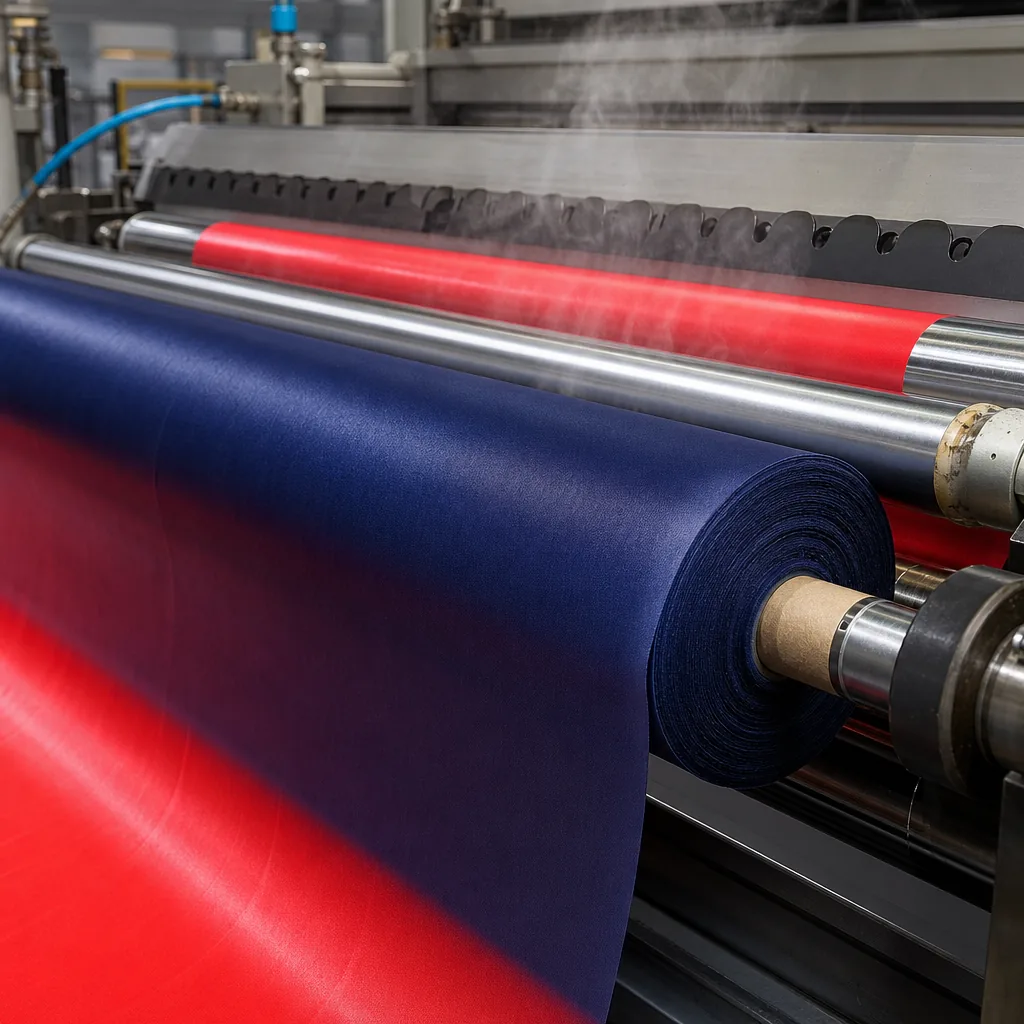
Canopy material can disrupt the umbrella assembly process as much as the frame. A 190T pongee canopy gives more stretch tolerance on 21-inch and 23-inch promotional frames, so sewing, crown fitting, and tip fixing are more forgiving. A 210T pongee canopy holds print better and gives a crisper retail look, but its higher density increases drag during fitting and makes small errors in panel cutting, rib arc, and tip-to-tip balance visible faster. Thicker finishes add another layer of risk. Teflon coatings and silver or black UV coatings used to reach UPF 50+ increase fabric stiffness, raise crown tension, and can shift strap alignment or prevent the canopy from seating cleanly at the top notch. For those SKUs, in-line quality control should treat any move from 190T to 210T, or from uncoated to heavy UV-coated pongee, as a process change. Add first-article checks for closing force, rib spread angle, tip attachment, and wrinkle pattern, because a late sample correction can add 2 to 5 days to custom umbrella lead time but still costs less than cracked ribs, off-center canopies, or an AQL 2.5 failure after packing.
What Buyers Should Confirm Before Booking Production
Do not book the umbrella frame assembly line until the pre-production sample is signed and frozen as the production standard. For an order of 5,000 to 20,000 pieces, that approval needs to cover the full BOM, not just the logo layout: frame size and mechanism, such as 21-inch 8K auto-open with fiberglass ribs or 23-inch 10K manual with a black steel shaft; canopy fabric, such as 190T or 210T pongee; handle material; strap style; and color reference by Pantone code or a sealed swatch. Put small build points in writing as well, including runner height, tip shape, and whether the canopy uses vented double-layer sewing for added wind resistance. On an OEM umbrella production line, those details control rib fitting, runner riveting, canopy matching, and sewing setup, so any change after raw-material release usually means rework, line stoppage, and avoidable delay in the umbrella assembly process.
Treat packaging as part of production control before bulk starts. Approve the exact pack method—OPP bag, sleeve, hangtag, barcode label, or retail box—then lock carton count, carton dimensions, gross weight, and any drop-test requirement. Confirm MOQ by color and print layout in writing at the same stage: a 3,000-piece order can often split into 1,000 black, 1,000 navy, and 1,000 red on one shared 23-inch 8K frame, but six 500-piece colors may not be workable if each color needs separate canopy cutting, screen setup, and carton marks. This is where in-line quality control begins, because even AQL 2.5 final inspection cannot fix wrong assortment ratios, mixed carton labels, or unapproved retail packs.
Confirm custom umbrella lead time by mechanism type instead of accepting one blanket promise. Manual styles usually run 25 to 30 days, auto-open 30 to 35 days, and auto-open-close 35 to 45 days because spring setting, safety-lock assembly, shaft tolerance control, and function testing are more demanding. Add time for POE dome panels, EVA trim, UPF 50+ coating, or double-canopy vented frames designed for 50+ mph wind performance. Lock FOB or DDP planning once materials are approved and no later than early bulk production; if shipping terms stay open until final packing, the common bottleneck comes after assembly is complete, when finished cartons need immediate warehouse space, vessel booking, truck scheduling, and destination customs paperwork.
Frequently Asked Questions
Why do umbrella lead times vary even when canopy artwork is approved?
Artwork approval does not remove assembly constraints. Auto-open mechanisms, 16K frames, double-canopy construction, and mixed-color pack-outs can all slow line speed and extend production days.
Can a factory run different umbrella models on one line in the same order?
Yes, but efficiency depends on how similar the frames and canopies are. Mixing manual and auto-open units or 8K and 16K structures usually adds changeover time and raises the risk of assembly errors if planning is weak.
Which assembly checkpoints matter most for reducing frame-related defects on OEM umbrella orders?
The highest-impact checkpoints are rib and stretcher fit-up, runner open-close testing, top notch alignment, and final frame symmetry inspection before canopy mounting. Many factories place 3 to 5 in-line checks across these stations to catch defects before they move into sewing and finishing.
How does line balancing affect custom umbrella lead time during peak season?
If one station, such as rib assembly or open-close testing, runs slower than the rest of the line, work-in-progress builds up and extends total production time. Rebalancing labor by station can shorten cycle time and help keep OEM orders within typical 30 to 45 day lead times after sample approval and deposit.
What order volume usually justifies a dedicated umbrella frame assembly line setup?
A dedicated setup is commonly justified for repeat OEM programs or larger runs starting around 5,000 to 10,000 units per style, depending on frame complexity and handle or auto-open requirements. Below that level, factories often use shared lines with stricter changeover planning to avoid delays and mixed-part errors.
Looking to Launch Your Custom Umbrella Line?
ZheBrella is a Zhejiang-based OEM/ODM umbrella manufacturer with 17 years of export experience. Free design, low MOQ from 100 pieces, windproof construction, full-color print.
Get Free Quote Now »People Also Search For
Related Articles
Umbrella Assembly Line Process for Consistent OEM Quality
See how umbrella factories control frame fit, canopy tension, and packing accuracy with in-line checks that reduce defec...
Read More »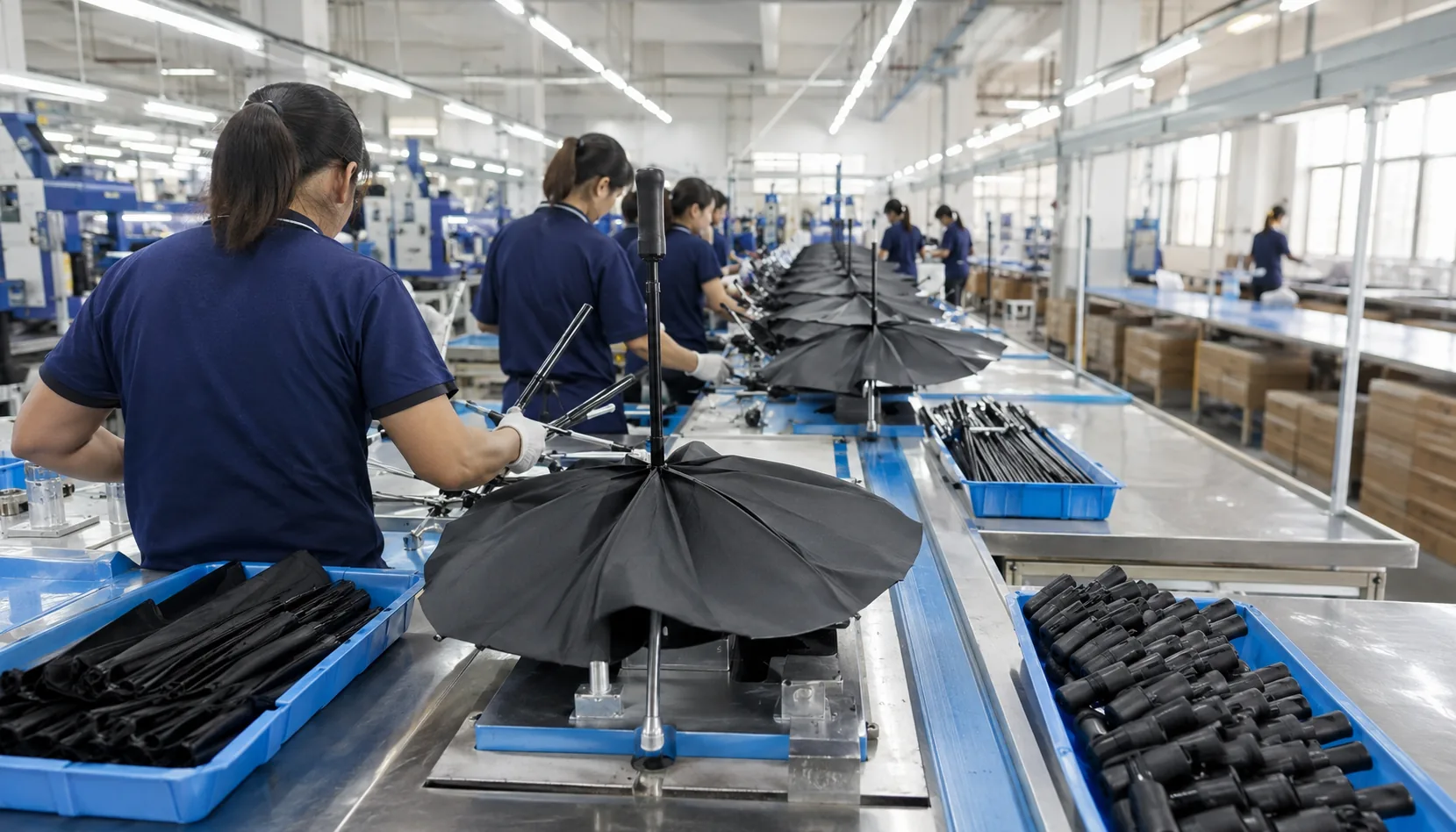
Umbrella Final Assembly Line Balancing for OEM Production
Plan umbrella assembly cells with takt time, inline QC gates, and pack-out checks to stabilize output, lead times, and A...
Read More »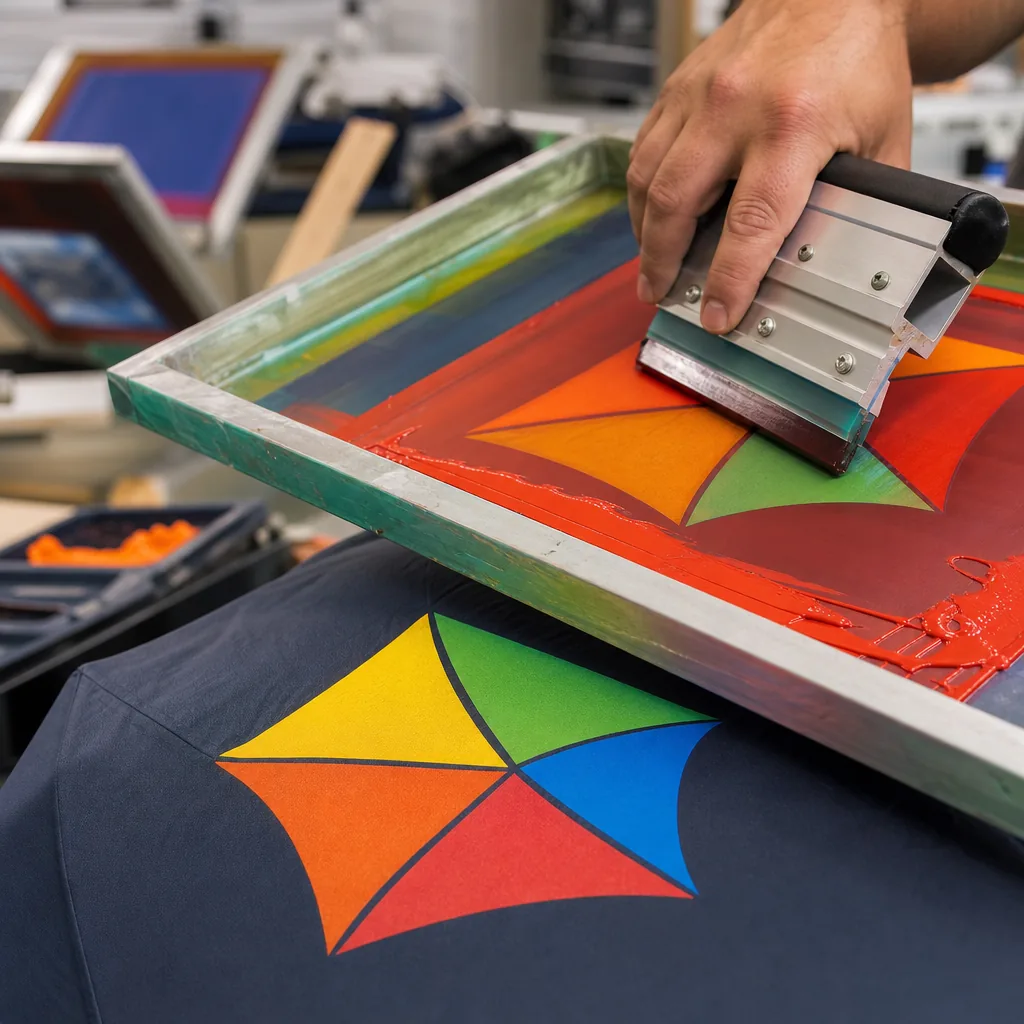
Umbrella Assembly Line Process Control for OEM Orders
Map the umbrella assembly line from frame prep to packing, with in-line QC points that reduce defects, delays, and rewor...
Read More »