Umbrella Frame Riveting Specs for Strong OEM Assembly
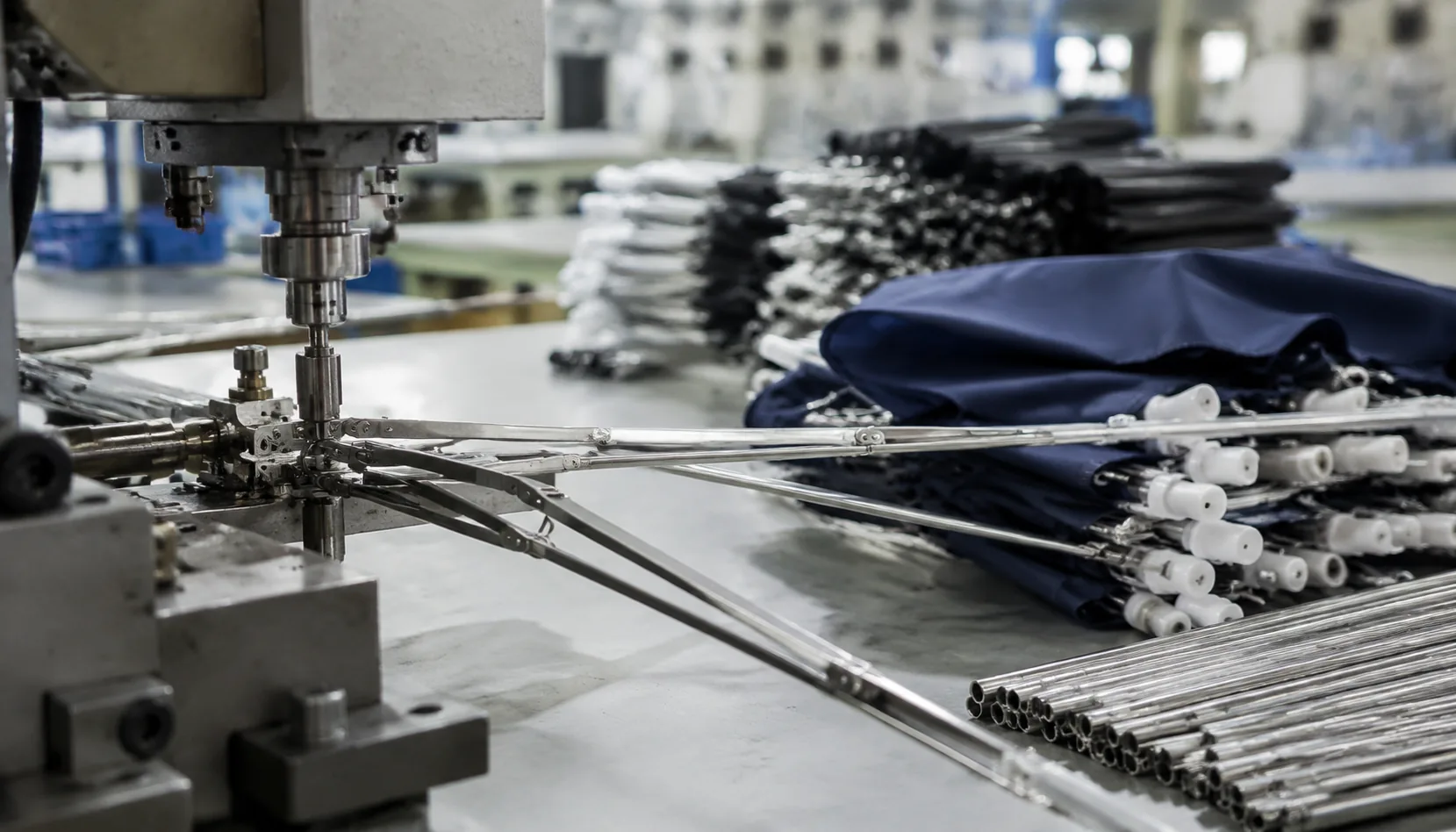
A frame that looks straight at packing can still fail after cycling if the rivet stack is loose, the rib hole is oversized, or the press stroke varies between operators. On our Songxia assembly floor, umbrella frame riveting specs start with matching rivet diameter, hole clearance, cap height, and pull force to the 8K or 16K layout before mass production. That control keeps ribs aligned through open-close testing and prevents surprises at AQL inspection.
Why Riveting Controls Frame Strength
Riveting controls frame strength because every opening load passes through small rotating joints before the canopy ever sees wind. On a standard 8K umbrella frame production line, rivets sit at the rib-to-stretcher joint, stretcher-to-runner joint, top notch connections, and sometimes at secondary links on auto-open or auto-open-close mechanisms. A 23" stick umbrella with steel ribs may use 16 to 24 frame rivets; a 27" golf umbrella with fiberglass ribs and a double-canopy vent can use more, depending on the windproof layout. The umbrella frame riveting specs must define rivet diameter, shank length, head profile, washer use, hole clearance, and peening pressure, not just “tight enough.” If the rivet head is under-formed, the joint gets loose after 200 to 500 open-close cycles. If it is over-pressed, the rib eye deforms and the frame binds before it reaches full spread.
Poor riveting shows up first as geometry trouble, not dramatic breakage. A loose rib-stretcher rivet lets one panel sit lower, so a 190T or 210T pongee canopy pulls diagonally and looks twisted even when cutting and sewing are correct. At the runner, uneven rivet friction makes the umbrella open with one rib lagging behind, which customers describe as “crooked” or “cheap.” On manual frames this causes rough sliding; on auto-open frames it steals spring energy and may leave the canopy half deployed. On auto-open-close compact umbrellas, the tolerance is even less forgiving because the reverse-fold ribs must collapse in sequence. In OEM umbrella assembly, I prefer checking frame symmetry before sewing approval, because once the canopy is attached, workers may blame fabric tension when the real fault is rivet clearance or inconsistent peening.
A practical umbrella rivet pull test should be written into the inspection plan, not left to line supervisors by feel. For steel rib frames, we normally look for stable rotation with no axial looseness after pull loading and repeated cycling; for fiberglass ribs, the test must avoid crushing the composite eye while still confirming the rivet will not walk out under wind load. In umbrella quality engineering, this is tied to AQL 2.5 final inspection, but the real control belongs in in-line checks every 300 to 500 frames: head diameter gauge, joint swing test, runner travel test, and 100-cycle sampling for auto mechanisms. Strong frames that survive 50+ mph wind-tunnel claims are rarely about one heroic part; they come from consistent riveting at every rib, stretcher, runner, and notch. That is why clear umbrella frame riveting specs are a production requirement, not a paperwork detail.
Core Rivet and Hole Specifications
Rivet choice starts with the frame material, not the catalog price. In standard OEM umbrella assembly, we use soft aluminum semi-tubular rivets for many 8K umbrella frame production runs because they flare cleanly without cracking thin rib channels. Typical shank diameters are 2.0 mm, 2.2 mm, and 2.5 mm, with head diameters around 4.0–5.0 mm depending on rib width and runner load. Steel rivets are stronger, but they punish light-gauge parts if the press height is not controlled; I reserve them for heavy 27" and 30" golf frames, thick stretcher joints, and high-wind double-canopy builds. For most 21" and 23" folding frames, the correct aluminum rivet with a stable flare beats an over-hard steel rivet that ovalizes the hole after 500 open-close cycles.
Good umbrella frame riveting specs set the hole slightly larger than the rivet shank, but not loose enough to invite rocking. For a 2.2 mm rivet, our normal punched-hole target is 2.25–2.35 mm after deburring; for a 2.5 mm rivet, 2.55–2.65 mm is usually safe. Burr height should stay under 0.05 mm on ribs and stretchers because a raised burr cuts plating, scratches fiberglass, and creates false tightness during assembly. I do not accept “hammered flat” rivets on production frames; the rolled or spun flare must be concentric, with no radial splits and no sharp lip touching the canopy side. Our standard practice at ZheBrella is to verify critical joints during umbrella quality engineering with opening torque checks plus an umbrella rivet pull test on sampled frames before canopy sewing locks the defect inside the product.
Steel rib assemblies need tighter control on corrosion and hole deformation, while fiberglass rib assemblies need more attention to crushing and point loading. On steel ribs, zinc or nickel plating must remain intact around the rivet hole, and any red rust after salt-spray screening is a rejection for retail orders. On fiberglass, a washer or small bearing plate is often necessary at the stretcher-to-rib joint because the rivet head can bite into the composite wall and start a crack under wind load. Nylon or brass washers also help when the joint must pivot smoothly, especially on auto-open and auto-open-close frames where spring force is higher than manual frames. For vented windproof umbrellas rated around 50+ mph, I prefer a slightly freer pivot with controlled lateral play over an over-tight joint that binds, twists the rib, and fails suddenly in gust cycling.
Assembly Settings for 8K and 16K Frames
The main difference between 8K and 16K frame riveting is not just rib count; it is the number of loaded joints that must stay coaxial after opening, closing, and wind flexing. In 8K umbrella frame production for a 21" or 23" promotional umbrella, each rib set usually has top notch, runner, stretcher, and tip-side pivot points, so the operator is managing fewer rivets and faster cycle time. A 16K golf umbrella, often 27" to 30" with double-canopy vented construction, doubles the rib stations and adds more cumulative tolerance stack-up. If one stretcher fixture is off by 0.5 mm, an 8K frame may still pass visual opening; on a 16K frame, the error travels around the canopy and creates twist, uneven panel tension, or runner drag.
For practical umbrella frame riveting specs, I set fixture alignment tighter on 16K frames: rib channels should sit flat in the nest, the center shaft must be held vertical, and the runner height stop should be checked every 300 to 500 pieces instead of once per shift. Steel ribs tolerate slightly more forming pressure, but fiberglass ribs need controlled squeeze so the rivet head seats without crushing the laminate or creating a white stress mark. For most OEM umbrella assembly, promotional 8K frames use lighter rivets around 2.0 to 2.3 mm diameter, while 16K golf frames often move to 2.4 to 2.8 mm depending on rib gauge, stretcher thickness, and whether the frame is manual, auto-open, or auto-open-close.
Pressure settings should be validated by function testing, not copied blindly from another model. A good umbrella rivet pull test should confirm the joint resists separation while still rotating smoothly after salt spray, opening fatigue, and wind-tunnel flexing; our standard practice at ZheBrella is to record pull-test values by frame type, rivet lot, and operator line during pilot production. For AQL 2.5 inspection, I want no loose rivets, no cracked rib coating, no runner binding, and no asymmetric opening under normal hand force. In umbrella quality engineering terms, 8K promotional frames are optimized for speed and consistent appearance, while 16K double-canopy golf umbrellas need higher joint retention because the vented canopy can survive 50+ mph gusts only if the riveted skeleton distributes load evenly.
In-Line Tests Before Final Inspection
The strongest final inspection result is built 200 pieces earlier, not at the carton sealing table. For umbrella frame riveting specs, our in-line control starts after rib-to-stretcher riveting and again after runner assembly, because loose pivots usually show up before the canopy is sewn on. In 8K umbrella frame production, we pull samples every 300 to 500 frames per line and check rivet head height, flare diameter, and side play with a go/no-go feeler target agreed in the control plan. A typical steel-rib compact frame needs less lateral wobble than a fiberglass golf frame, but neither should bind when opened by hand. For critical joints, we run an umbrella rivet pull test with a small force gauge; depending on rib gauge and rivet size, buyers often specify 80 to 120 N minimum before deformation. Any drift means we stop the riveting press, check punch wear, anvil alignment, and rivet batch hardness before more bad frames are produced.
Manual flex checks catch problems that gauges miss. Operators open each sampled frame fully, flex opposing ribs downward, twist the shaft lightly, and close the umbrella three to five times while listening for clicking, scraping, or asymmetric rib recovery. A 23-inch 8K straight umbrella with steel ribs should feel firm but not stiff; a 27-inch fiberglass windproof frame should absorb flex without the rivet hole whitening or the stretcher walking off-center. For auto-open and auto-open-close models, we cycle-test samples at the assembly bench before canopy attachment and again after finishing. Promotional OEM umbrella assembly may only require 20 to 30 open-close cycles in-line, while retail programs often call for 100 cycles on pre-shipment samples. Springs, runners, safety notch engagement, and button return are checked together, because a clean rivet is useless if the mechanism shocks the frame unevenly.
Canopy symmetry review is the last in-line filter before the shipment moves to AQL 2.5 final inspection. Once the 190T or 210T pongee canopy is sewn and tied to the rib tips, inspectors check panel tension, tip alignment, center cap seating, and whether the logo panels sit square when the umbrella is open. A frame that passed riveting can still fail visually if one stretcher sits 3 mm short, pulling the canopy into a spiral. At ZheBrella, in-line defects are logged by station and defect code, so final QC is not guessing when cartons reach the inspection room. The AQL 2.5 inspection then confirms workmanship across packed goods, but the sampling plan is only meaningful when earlier pull-force checks, flex checks, cycle tests, and symmetry reviews have already stabilized the process. That is the practical side of umbrella quality engineering: prevent repeat defects before they become a statistical argument with the buyer.
What Buyers Should Put in the Tech Pack
The tech pack should define the rivet before it defines the umbrella shape, because loose joint control ruins even a good canopy. For standard 8K umbrella frame production, specify rivet material as low-carbon steel, stainless steel 201/304, brass, or aluminum based on price point and corrosion exposure. I prefer stainless 304 for coastal retail programs and plated low-carbon steel for dry promotional use. Call out the finish clearly: nickel plated, black electrophoresis, zinc plated, or salt-spray requirement such as 24 or 48 hours with no red rust. Your umbrella frame riveting specs should also state rivet diameter, head style, flare height, and whether washers are required at the runner, stretcher, and rib-tip joints. If these are left open, the workshop will follow its usual tooling, which may not match your brand’s durability target.
For OEM umbrella assembly, buyers should request mechanical acceptance limits, not just “strong frame.” A practical umbrella rivet pull test is 80–120 N for compact frames and 120–180 N for 23 inch or 27 inch straight umbrellas, depending on rib material and joint location. Joint play should be written as a measurable limit: no axial looseness over 0.3 mm at stretcher pivots and no side-to-side wobble that causes rib crossing during open-close cycling. Cycle testing should be tied to the mechanism: 500 cycles for manual promotional umbrellas, 1,000 cycles for auto-open, and 1,500 cycles for auto-open-close or retail windproof models. If the design uses fiberglass ribs with steel stretchers, also require post-cycle inspection for rivet ovaling, cracked plastic notches, and runner distortion.
Sample approval should happen in two stages: first a bare-frame sample before canopy cutting, then a pre-production sample with final 190T or 210T pongee, POE, PVC, or EVA canopy attached. Our standard practice at ZheBrella is to lock riveting pressure and tooling after the bare-frame approval, then run a small pre-production batch for AQL 2.5 inspection before mass assembly. Buyers should understand that tighter umbrella frame riveting specs can affect MOQ and lead time. Custom rivet material, nonstandard black finish, or added washer positions may push MOQ from 500–1,000 pieces to 2,000–3,000 pieces because the supplier must set separate tooling and plating lots. Add 3–5 days for custom rivet procurement, 2–3 days for salt-spray validation, and 2 days for cycle-test reporting before approving bulk production.
Frequently Asked Questions
Can rivet specs change between promotional and retail umbrellas?
Yes. Low-cost promotional umbrellas may use lighter steel ribs and fewer stress points, while retail or golf models often need stronger rivets, tighter fixtures, and more cycle testing.
How are loose umbrella rivets caught before shipment?
Factories should use in-line pull checks, visual joint-play checks, and open-close cycling before carton packing. Final inspection can include these items under an AQL 2.5 checklist.
What rivet pull force should an OEM umbrella frame pass before mass production?
Most buyers set a minimum pull force based on joint diameter and material, then confirm it during pilot runs and first-article inspection. A practical target is usually defined per component drawing, with the accepted value verified before line release and again during AQL checks.
How much hole clearance is typical for umbrella frame riveting?
For small umbrella frame rivets, buyers often specify a slight clearance that allows insertion without excessive play, then lock the final tolerance to the frame wire diameter and rivet shank size. The exact limit should be tied to alignment and cycling results so the joint does not loosen after repeated openings.
Should 8K and 16K frames use the same riveting spec?
Not always. 16K frames usually need tighter alignment control and more consistent rivet placement because there are more ribs and more cumulative tolerance stack-up, so the rivet spec and in-line checks are often stricter than for 8K frames.
Looking to Launch Your Custom Umbrella Line?
ZheBrella is a Zhejiang-based OEM/ODM umbrella manufacturer with 17 years of export experience. Free design, low MOQ from 100 pieces, windproof construction, full-color print.
Get Free Quote Now »People Also Search For
Related Articles
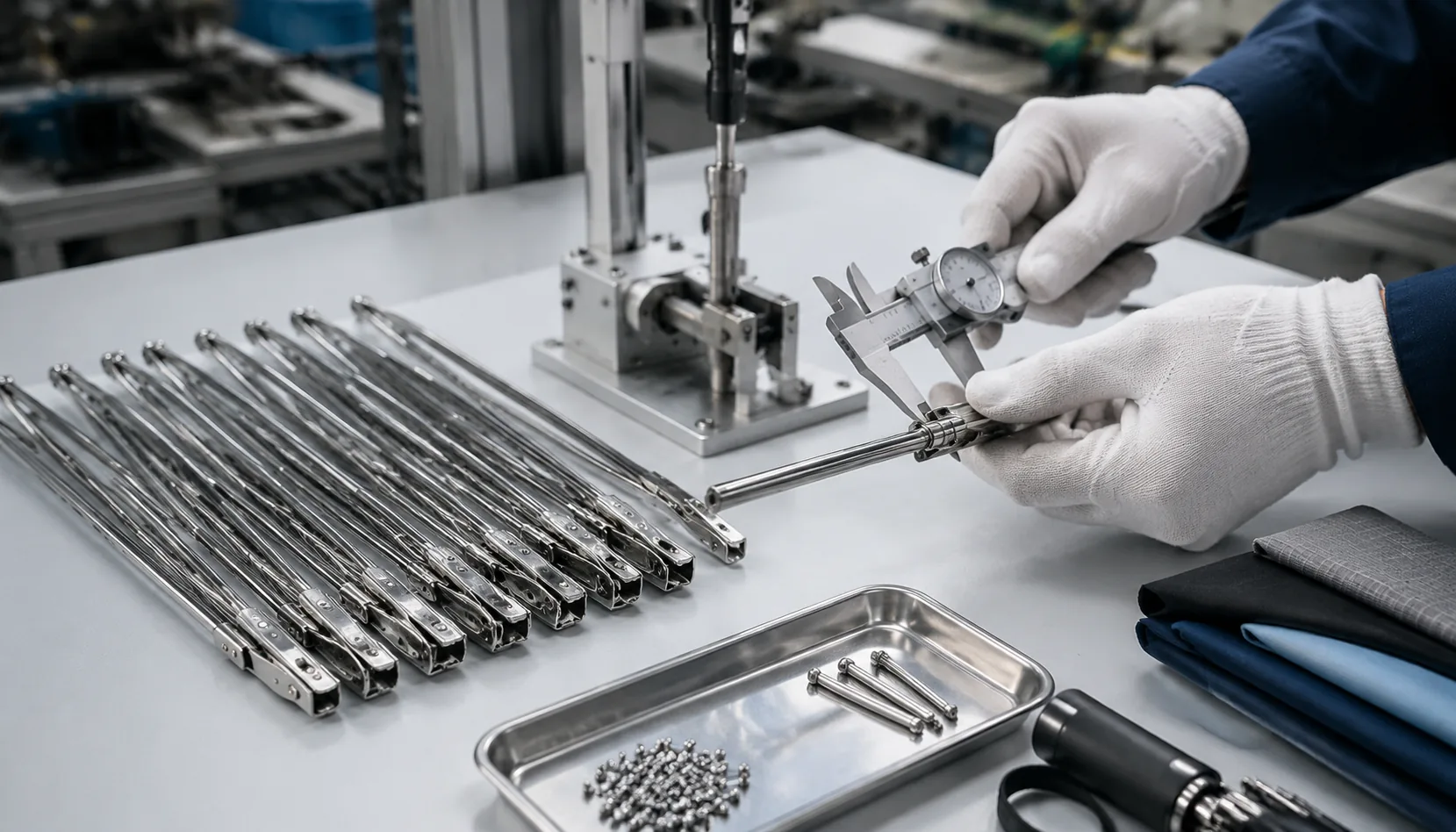
Umbrella Frame Riveting Quality: Tolerances and Pull Tests
Specify rivet fit, pull strength, and in-process checks to reduce loose ribs, canopy sag, and field failures in OEM umbr...
Read More »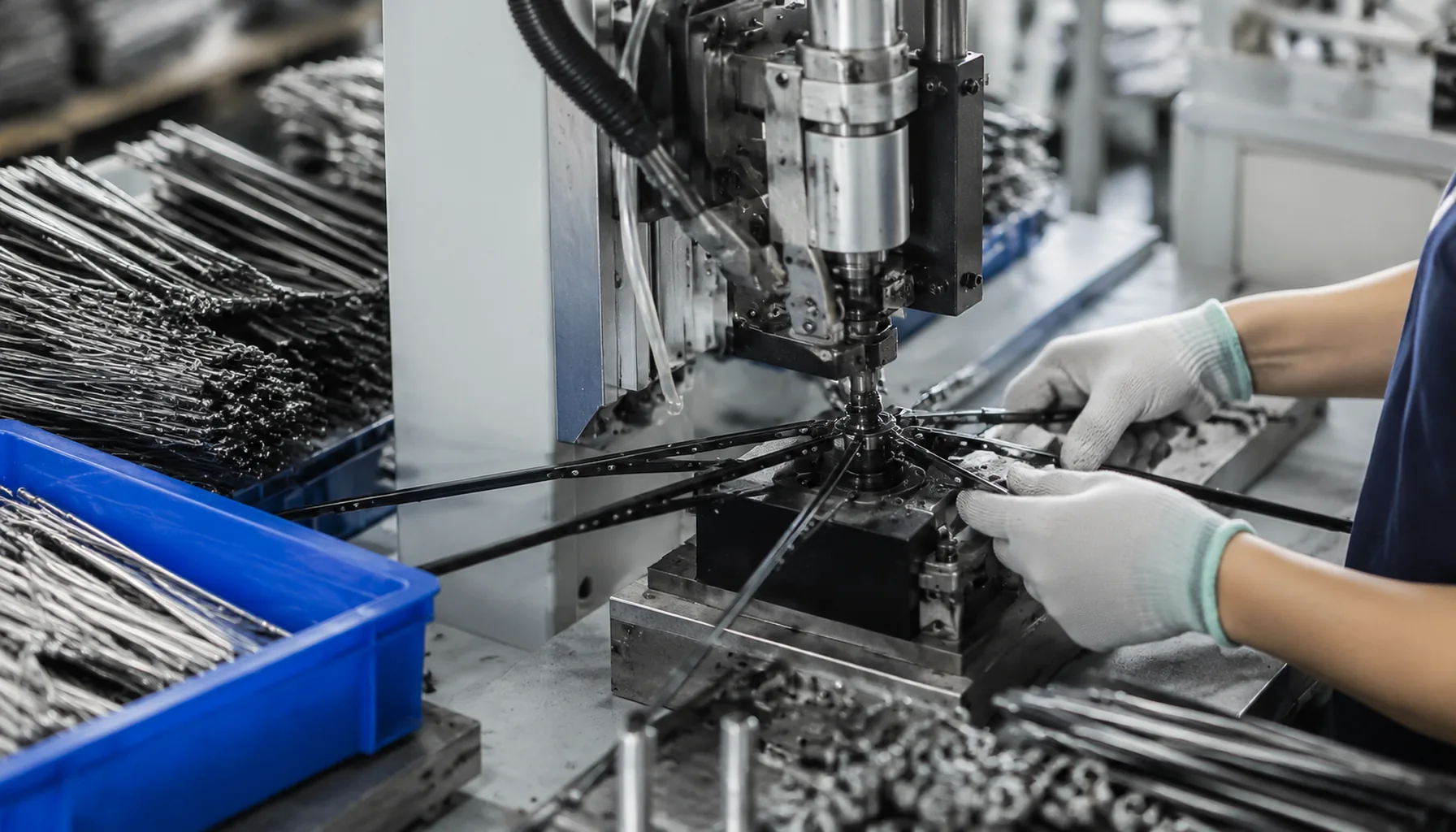
Umbrella Frame Riveting Process for Strong OEM Builds
See how rib riveting, runner assembly, and in-line pull checks improve umbrella frame strength before final canopy mount...
Read More »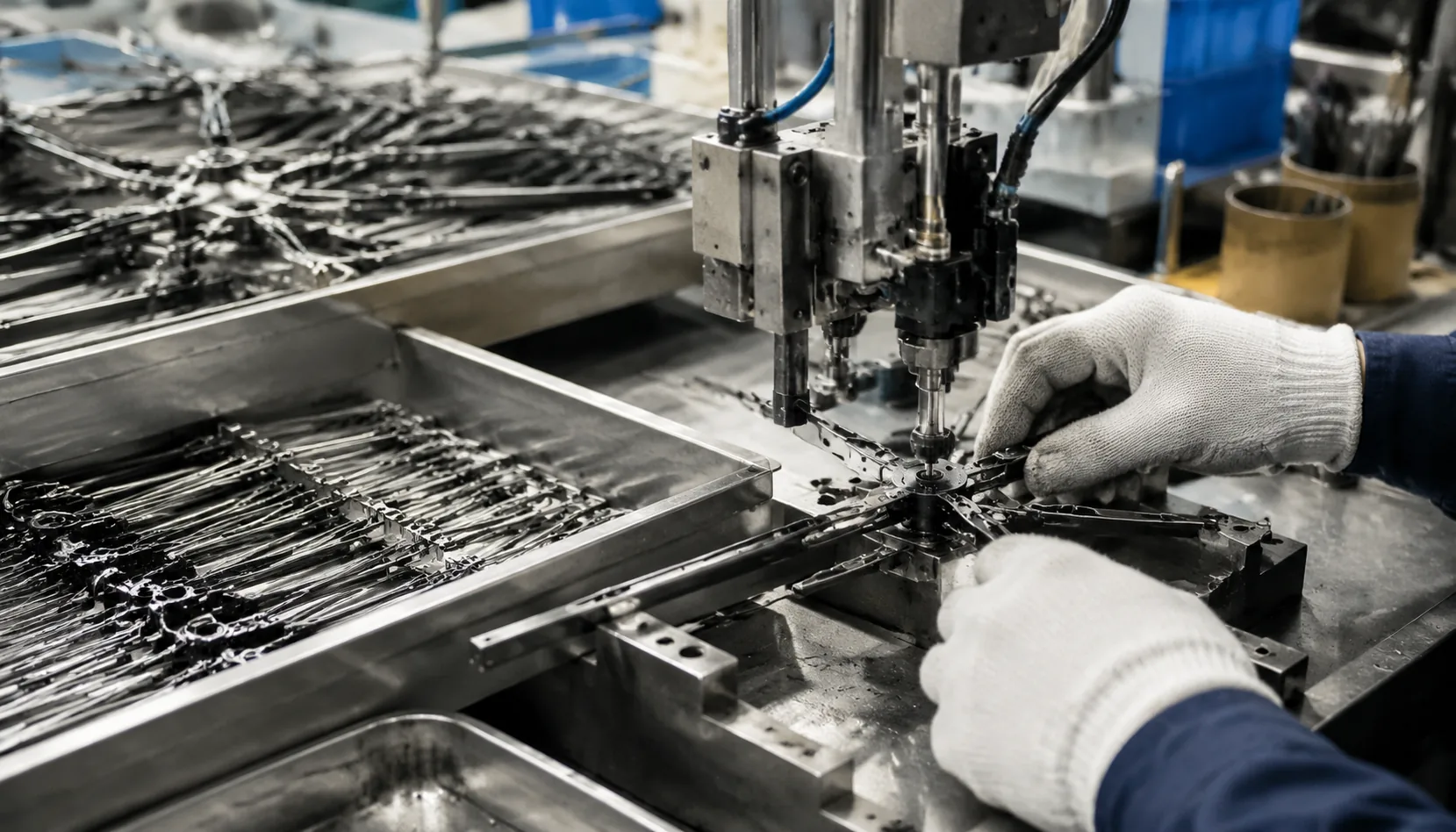
Umbrella Frame Riveting Process Control for Bulk Orders
See how rivet size, hole alignment, and pull-force checks improve umbrella frame durability across fiberglass, steel, 8K...
Read More »