Umbrella Print Coverage Planning for Retail Brand Collections
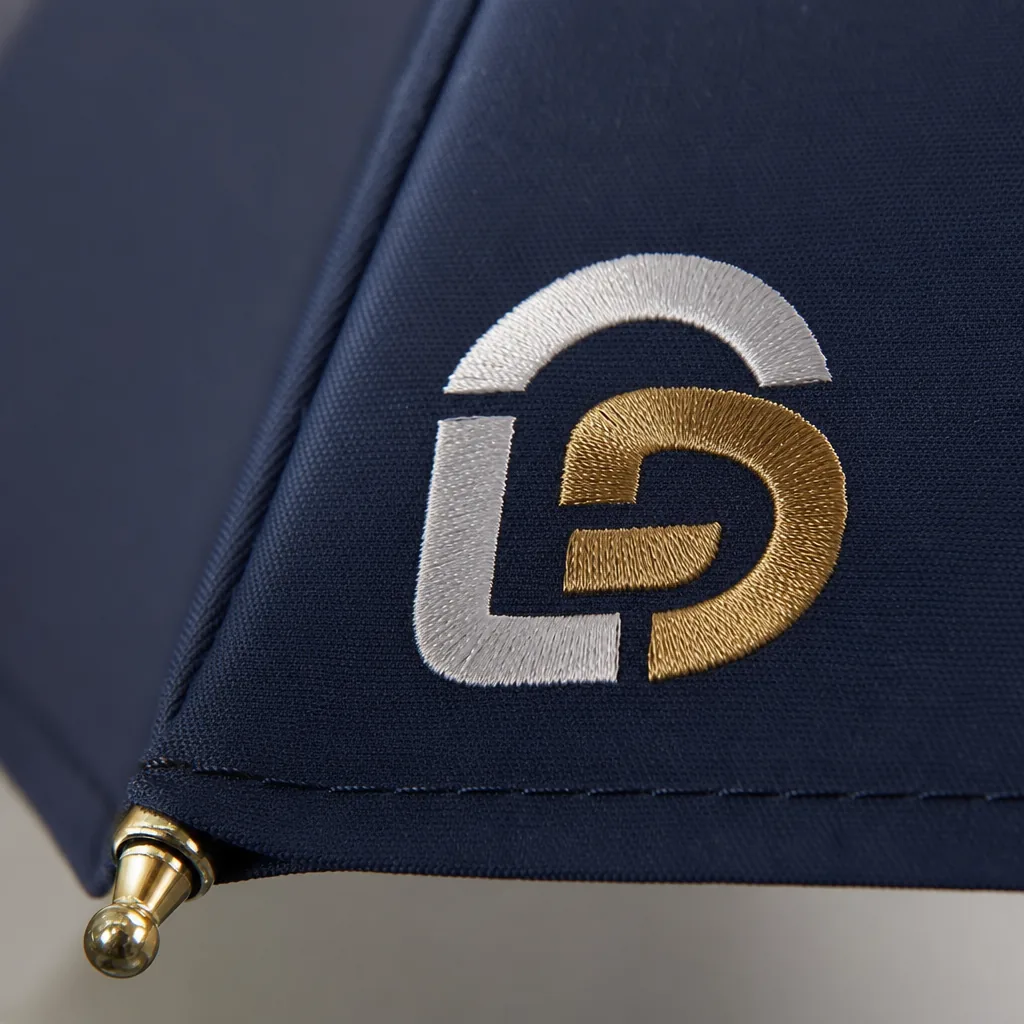
Retail buyers often approve strong artwork but run into trouble when panel breaks, rib shadows, and handle-to-canopy coordination start affecting cost, lead time, and brand consistency across a collection. On our production floor in Songxia, umbrella print coverage planning usually succeeds or fails on how early partial prints, repeat layouts, and mixed-zone graphics are matched to panel geometry, printing method, and assembly tolerances.
Define Print Coverage by Product Tier and Use Case
Margin usually fails when entry umbrellas carry premium-level ink coverage while higher-ticket SKUs look under-designed. Strong umbrella print coverage planning starts with fixed coverage rules by tier before strike-offs, not after. For opening-price styles, keep branding simple and repeatable: a 1-color logo on 1 or 2 panels, a small step-and-repeat across all 8 panels, or a compact mark near the canopy edge where registration tolerance is more forgiving on 190T pongee or basic polyester. On 21-inch or 23-inch manual-open frames, that lowers print cost and reduces reject risk from panel shift, seam mismatch, and uneven canopy tension. Clear POE bubble umbrellas need even less coverage. Transparent film makes glue lines, panel overlaps, and distortion more visible than woven fabric, so restrained placement protects appearance and helps keep bulk quality within standard inspection limits such as AQL 2.5.
Mid-tier is usually the best place for partial print umbrella design because buyers get stronger shelf impact without paying for full-canopy decoration. On 8K or 10K auto-open umbrellas in 190T or 210T pongee, effective canopy print zoning includes alternating printed panels, oversized logos on 2 opposing panels, or a banded graphic that crosses seams with controlled alignment. Collection consistency comes from repeating the same visual code across SKUs—core colors, logo scale, or icon repeat—while changing coverage by tier: opening price uses a corner logo, mid-tier uses 4 alternating printed panels, and a giftable style adds an interior message or printed sleeve. Lock those rules before screen layouts or heat-transfer approvals to avoid waste, added sampling cost, and lead-time delays from late artwork changes.
Premium umbrellas should earn broader coverage through better construction, not just bigger graphics. In an OEM umbrella collection, hero styles such as 27-inch golf umbrellas with double-canopy vented frames, inverted umbrellas, or compact auto-open-close models with fiberglass ribs can hold 6-panel artwork, engineered stripes, large florals, or near full-panel graphics more cleanly than entry frames. This is also the right tier for inside-canopy print, matched sleeves, and finishing upgrades such as Teflon coating or UPF 50+ treatment that support a higher retail ticket. The best retail umbrella assortment branding does not apply the same print area to every SKU; it keeps one recognizable system—brand icon, stripe angle, or color family—while scaling from small repeat logos to broad hero coverage so the full assortment still reads as one collection.
Choose Coverage Zones That Fit the Umbrella Structure
Start with the frame geometry, not the open diameter. In umbrella print coverage planning, the printable area on a straight umbrella ends before the seam allowance, tip pocket, and runner travel path, so artwork has to follow the true panel template. On a 23-inch or 27-inch 8K frame, each of the 8 wedges is wider, which gives retail buyers more room for larger logos, broad color blocking, and cleaner repeats with fewer seam interruptions. A 16K fashion umbrella divides the canopy into 16 narrower wedges, creating a finer look but reducing horizontal artwork width on every panel. That difference matters in production: a graphic approved on an 8K golf umbrella often cannot transfer directly to a 16K city style without adjusting logo scale, repeat spacing, and seam breaks. For retail umbrella assortment branding, confirm rib count, closed and open size, and whether the artwork runs full canopy or selected panels before releasing print files; that reduces redraws, sample revisions, and bulk-production risk.
Folding and vented frames need stricter canopy print zoning because more of the surface is lost to structure. On a 21-inch or 23-inch 3-fold umbrella, joints, rib bends, and ferrule pressure points reduce stable print area, so a coordinated layout across the outer canopy, closing strap, and sleeve usually performs better than forcing graphics onto every wedge. A partial print umbrella design with 2 printed panels and solid companion panels is often the safer commercial choice: it lowers registration risk, simplifies colorway control across an OEM umbrella collection, and keeps print cost and lead-time exposure down. The strap offers a small but high-visibility branding zone, while the sleeve can carry the collection name, color code, or SKU if the artwork accounts for sewing overlap and side-seam loss. Double-canopy windproof umbrellas need separate artwork maps for the upper and lower canopies because the vent gap breaks any continuous image. On a 27-inch or 30-inch vented style, parts of the lower layer are hidden after assembly, so panel-by-panel strike-offs should identify exposed and concealed areas before bulk production to prevent misaligned logos, wasted ink, and sample-to-bulk surprises.
Balance Print Ambition With Fabric, Mechanism, and Cost
Start with fabric, because it determines print sharpness and unit cost before cutting starts. For umbrella print coverage planning, 190T pongee is the standard cost-control fabric for 21" and 23" folding umbrellas, but its lighter surface usually delivers less color depth than 210T pongee. Large dark fills can show seam stitching more clearly, fine gradients tend to break sooner, and saturated artwork often reads flatter on finished panels. By comparison, 210T pongee has a tighter weave and better ink holdout, so logos, repeat patterns, and geometric artwork keep cleaner edges and more even color across the canopy. That extra definition matters when a program moves from a one-panel logo to broader canopy storytelling. The tradeoff is direct: 210T raises fabric cost, and added finishes such as Teflon water repellency or UPF 50+ coating require closer strike-off review because coatings can slightly change both hand feel and printed color appearance, which increases approval time and sampling risk.
Frame choice sets the real branding area. A 23" or 27" straight auto-open umbrella on an 8K frame gives wider panels and more even canopy tension, so canopy print zoning is easier to control for border prints, oversized logos, and alternating panel graphics. Compact 3-fold umbrellas, especially auto-open-close models, lose usable space at the runner, seam allowance, tip reinforcement, and rib-joint fold points, where distortion becomes visible after opening. That is why a partial print umbrella design often outperforms forced edge-to-edge coverage on compact frames: the artwork stays cleaner, registration risk drops, and seam breaks are less obvious. For retail umbrella assortment branding, hero prints usually fit better on straight umbrellas or larger 10K frames, while compact SKUs benefit from simpler layouts. Cost follows the same pattern. Light-touch branding such as a one-panel logo on 190T uses fewer screen setups, faster handling, and lower spoilage; near-full coverage on 210T with panel-to-panel registration increases print labor, sewing control, reject risk, and lead time. For an OEM umbrella collection, match coverage level to target retail price before sampling and confirm artwork against final panel geometry first.
Sampling, Pre-Production Checks, and Factory QC
Sampling has to validate artwork on a finished umbrella, not a flat strike-off. For umbrella print coverage planning, start with panel registration on the actual built frame: logos, borders, and edge graphics should land consistently across all 8K, 10K, or 16K panels after stitching and canopy tensioning. A layout that looks centered on a cut panel can move 5-12 mm after sewing, and that shift is often more visible on 190T pongee than on 210T because the lighter fabric shows distortion faster. Review seam interruption at the same time. If a stripe, monogram, or color block crosses panel joins, the sample must show the real break at every seam so the buyer can decide whether the gap is acceptable or whether the art file needs compensation before pre-production. This matters even more in partial print umbrella design, where the line between printed and blank canopy areas makes small mismatches easy to spot. Buyers should also confirm canopy print zoning against the actual frame size—typically 21 inch, 23 inch, or 27 inch—so graphics sit the right distance from tips, seams, and the closing strap both open and folded.
Do not approve a single clean sample and assume bulk production will hold the same placement. Check print position repeatability after 20-30 open-close cycles, and re-measure key print points from the top notch, runner, and panel edge to confirm the canopy has not skewed under rib tension. Sleeve-to-canopy consistency also needs approval: the sleeve print should match canopy orientation, logo scale, and color standard so the set reads as one retail unit. Test abrasion risk before sign-off, especially on auto-open-close frames, where metallic inks, dense screen prints, and large heat-transfer areas can scuff at fold lines, rib pockets, the runner, and strap contact points; clear POE canopies show scratch and drag marks faster than woven polyester. Retail buyers should approve a sealed sample before bulk production because it becomes the physical standard for color, print placement, handle trim, fabric handfeel, and packing. Factory QA can then inspect bulk against that standard, while final inspection at AQL 2.5 only screens random defects in the shipment—it does not fix unapproved seam breaks, artwork drift, or retail umbrella assortment branding inconsistencies across an OEM umbrella collection.
Build a Scalable Collection Brief for OEM Execution
Start the brief with a style matrix the factory can price before artwork review. For each SKU in the OEM umbrella collection, include SKU code, umbrella type, finished size, opening system, rib count, and handle construction: 21-inch folding, 23-inch straight, 27-inch golf, or 30-inch beach; manual, auto-open, or auto-open-close; and 8K, 10K, or 16K frames. Specify frame material on every row. Fiberglass ribs and shafts cut break risk and improve wind performance, while plated steel lowers unit cost but adds weight and affects carton drop performance. If one SKU uses a vented double-canopy fiberglass frame rated above 50 mph and another uses a basic 8-rib steel promo frame, that difference must be visible on page one or the quote will drift. Effective umbrella print coverage planning starts with frame geometry because panel width, seam count, canopy tension, and printable area all change with construction.
The second block is the print coverage map, supported by SKU-level fabric, packaging, MOQ, and shipping fields. Avoid vague notes such as “all-over print” or “logo on 2 panels.” Define canopy print zoning by panel number, exterior or interior placement, edge-to-center position, seam clearance, and whether art crosses seams or stays within each wedge. For partial print umbrella design, add print dimensions in millimeters, orientation to the closing strap, and branding on the valance, tie wrap, sleeve, or handle dome. Put fabric spec beside the map: 190T or 210T pongee, recycled PET where required, or POE, PVC, or EVA for clear styles, plus any Teflon finish or UV target such as UPF 50+. Then state packaging level, MOQ by SKU, and shipping terms: bulk pack, individual sleeve, color box, or retail-ready pack with hangtag, barcode label, and inner-carton assortment rules; 500-piece MOQ on a stock steel frame versus 3,000 pieces for a custom handle or printed sleeve; FOB Ningbo or DDP to the named warehouse. Clear zoning helps the factory choose screen print, heat transfer, or sublimation faster, estimate panel waste correctly, and review the brief against AQL 2.5 before sampling.
Frequently Asked Questions
Is partial-print coverage more cost-effective than full graphic coverage for retail umbrellas?
In many cases, yes. Printing fewer panels or using repeat motifs can reduce setup complexity, lower rejection risk, and keep branding consistent across a collection. It is also easier to scale across multiple SKUs with different MOQs.
Do windproof double-canopy umbrellas limit print coverage options?
They can. The vented top layer and inner canopy structure create extra seams and alignment considerations, so some graphics need to be simplified or repositioned. Buyers should request a print zoning template before finalizing artwork.
How many print zones can be combined on one umbrella without slowing production too much?
Most OEM programs can combine 2 to 3 zones efficiently, such as exterior panel print, interior edge print, and a closing strap logo. Once artwork changes across too many individual panels, sampling time and inspection complexity increase, which can add 5 to 10 days to approval and production.
Does partial print coverage reduce MOQ compared with full canopy printing?
Usually no—the MOQ is driven more by frame, fabric color, and printing method than by print size alone. For many custom programs, the practical MOQ still starts around 300 to 500 pieces per design, but partial coverage often lowers unit cost by reducing print screens, ink coverage, or transfer usage.
What is the safest way to build a multi-style retail umbrella assortment from one base model?
Use one shared frame and fabric specification, then vary only the canopy artwork zones across 3 to 5 SKUs. This keeps testing, sampling, and spare-part sourcing simpler while giving the factory a cleaner production plan and more consistent landed cost.
Looking to Launch Your Custom Umbrella Line?
ZheBrella is a Zhejiang-based OEM/ODM umbrella manufacturer with 17 years of export experience. Free design, low MOQ from 100 pieces, windproof construction, full-color print.
Get Free Quote Now »People Also Search For
Related Articles
Umbrella Color Blocking Strategies for Private Label Lines
Build sharper private-label umbrella lines with practical color-blocking rules tied to panel layout, fabric specs, MOQ, ...
Read More »
All-Over Pattern Printing for Branded Umbrella Collections
Build branded umbrella patterns that repeat cleanly across panels, control color, and meet production limits for retail,...
Read More »Color-Blocking Strategies for Brand-Driven Umbrella Design
Show how color-blocked umbrella layouts strengthen brand recognition while staying production-friendly, with fabric, pri...
Read More »