Fiberglass vs Steel Umbrella Ribs for UV Sun Umbrellas
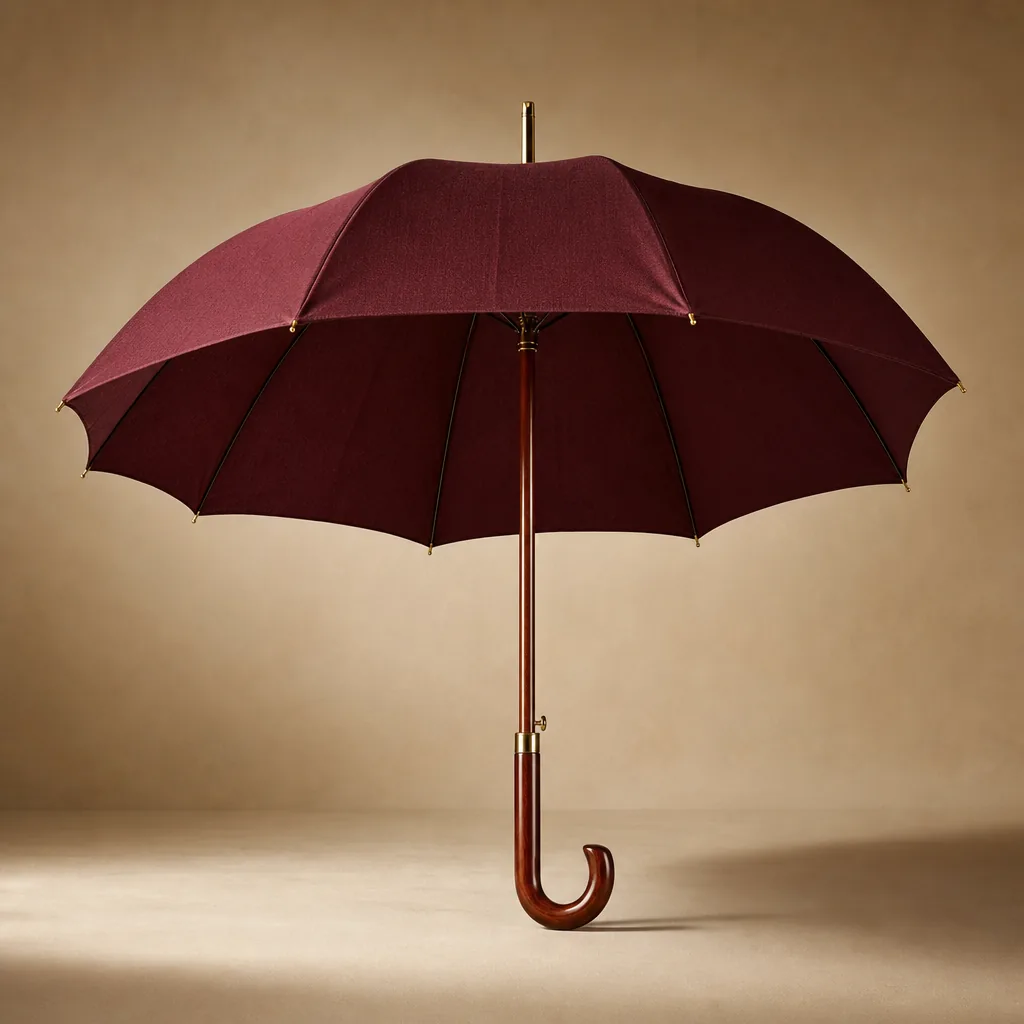
For UPF 50+ sun umbrellas, the canopy fabric gets most of the attention, but the rib material often decides how the product feels in hand, survives coastal humidity, and holds shape after repeated opening cycles. On our factory floor, UV sun umbrella ribs are a practical sourcing decision between steel’s stiffness and price stability and fiberglass’s lighter weight, corrosion resistance, and better flex under wind load.
What a UV sun umbrella needs structurally
A sun umbrella has a different structural load than a rain umbrella: longer open time, higher heat soak, and steady light-to-moderate gusting. At a beach, golf course, resort pool, outdoor cafe, or brand event, the frame may stay open for 3 to 6 hours instead of cycling through short storms. On 27 inch and 30 inch golf umbrellas, a dark 190T or 210T pongee canopy with black UV coating can run well above ambient temperature. That heat concentrates stress at plastic joints, rivets, rib tips, and the runner lock, while fabric expansion and contraction changes panel tension. UV sun umbrella ribs must keep the canopy crown smooth after hours under static load, not only pass a few open-close cycles during sampling.
Salt and moisture make the cost tradeoff between steel umbrella ribs and fiberglass umbrella ribs visible fast. A sun protection umbrella near the ocean is often opened dry, packed damp, and stored overnight in a hot car, hotel storeroom, or beach kiosk. Steel ribs give high stiffness at a lower unit cost, but they need a corrosion package matched to the use case: plating, phosphate treatment, powder coating, or stainless parts at punched holes, rivets, and rib tips where coating damage starts. Fiberglass ribs do not rust and flex better in crosswind, so they are common in double-canopy vented models rated around 50+ mph. Buyers still need to control diameter consistency, resin content, and end finishing, because poor fiberglass can splinter after repeated bending.
A UPF 50+ umbrella only protects as specified when the frame holds the coated canopy in its intended shape. The UPF 50+ rating belongs to the fabric, but sagging panels, twisted ribs, open seams, or a runner that fails to lock reduce shade coverage and create wind failure points. Match rib count to size and canopy weight: 8K is standard for compact and 21 inch to 23 inch models, 10K improves stability for heavier coated pongee, and 16K is usually a premium or styling choice rather than proof of stronger wind performance. For OEM umbrella ribs, review the whole frame system: rib material, stretcher geometry, rivet size, notch strength, runner travel, and whether the manual, auto-open, or auto-open-close mechanism can handle canopy weight after heat aging plus salt or moisture exposure. That specification protects durability, warranty exposure, and landed cost.
Fiberglass rib performance under sun use
Fiberglass outperforms steel in UV sun umbrella ribs when the frame sees side load, not just straight downward pressure. Beach, golf, resort, and outdoor-event umbrellas are opened, tilted, closed, and pushed into crosswind, which concentrates reverse bending at the outer rib and stretcher joint. Steel umbrella ribs can carry static load, but repeated flexing can leave a permanent set or snap near the rivet. Fiberglass umbrella ribs deflect and recover, so a properly sized 8K or 10K frame usually survives more open-close cycles than a lightweight steel frame. That matters on a UPF 50+ umbrella, where a 190T or 210T pongee canopy with UV coating may last several seasons longer than a weak frame.
Fatigue resistance reduces buyer risk in daily-use sun protection umbrella programs. Every opening sends impact through the runner, stretcher, rib tip, and rivets; automatic-open frames hit harder than manual frames. On 21 inch and 23 inch models, fiberglass helps reduce breakage at the rib tip and outer rib section while keeping carry weight acceptable for retail and promotional orders. On 27 inch and 30 inch golf umbrellas, fiberglass pairs well with a vented double canopy when the wind claim is above 50 mph, because the ribs flex while the vent releases pressure. Steel ribs can still fit low-cost MOQ programs, but coastal humidity, poolside use, resort rental service, and wet packing expose rust and fatigue faster in AQL 2.5 inspection returns.
Lifespan depends on rib diameter and joint execution as much as material. A 2.5 mm fiberglass rib on a cheap 8K frame will not match a 3.0 mm or 3.2 mm rib built with clean ferrules, smooth rivets, and correct stretcher alignment. Poor punching creates stress points, while an over-tight rivet cuts into the rib during every open-close cycle. For OEM umbrella ribs, ZheBrella checks rib straightness, rivet freedom, runner locking force, and tip stitching pull before mass production approval, because one bad joint can erase the durability advantage of fiberglass. Fiberglass is also rust immune, avoiding the brown stains steel ribs can leave on silver, white, or printed UV canopies after salt-air storage or wet packing.
Steel rib performance and cost positioning
Steel rib performance is strongest where landed cost, canopy flatness, and a crisp opening feel outrank wind recovery. For lower-cost 21" and 23" promotional sun protection umbrella programs, especially manual and basic auto-open models, steel umbrella ribs can hold 190T pongee or silver-coated polyester flatter than a low-cost flexible frame. That matters for retail display, event photography, school campaigns, beach giveaways, golf outings, and entry-price retail sets used mainly in calm sun. Steel also delivers higher initial stiffness in a thinner rib section, so the canopy looks tighter at first inspection. For UV sun umbrella ribs, steel does not improve UV blocking; UPF 50+ umbrella performance comes from the canopy fabric, coating, and test result. The frame risk is deformation: an 8K steel frame may feel firm on day one, but repeated inversion or bending can leave permanent set, while fiberglass umbrella ribs recover more reliably.
Corrosion control determines whether steel is a cost saver or a warranty risk. Bare steel or weak plating can show red rust after salt-air exposure, wet storage, sweat during assembly, or water trapped at rib tips. Acceptable finish options include nickel plating, zinc plating, black electrophoresis, and powder coating, but the purchase spec must cover rib ends, rivet holes, runner contact points, and rubbed areas, not just the visible rib center. Those friction points lose coating first during open-close cycles. For OEM umbrella ribs, finish checks should include plating adhesion, wet-cloth rub testing, and cycling before mass assembly because most rust complaints start at small coating breaks. If the canopy is sold as UPF 50+, the frame finish should last as long as the UV fabric promise, or the umbrella will fail in use before the fabric claim becomes the issue.
Weight is the hidden cost in steel rib programs. A 23" 8K steel frame can be acceptable for a compact or straight sun umbrella, but 10K, 16K, 27", and 30" builds become noticeably heavier, especially with POE, PVC, or double-layer UV canopies. Steel can lower FOB unit price, yet raise carton weight, air freight cost, and user fatigue for event staff, resorts, and outdoor teams carrying umbrellas for hours. Specify steel when the buyer needs a rigid retail look, modest wind expectations, controlled finish quality, and AQL 2.5 inspection. Avoid all-steel ribs when the label promises windproof performance, vented double-canopy construction, or 50+ mph wind-tunnel survival. Those UV sun umbrella ribs are better built with fiberglass or a hybrid frame, typically a steel shaft with fiberglass outer ribs.
Matching ribs with canopy fabric and coating
A UPF 50+ umbrella starts with canopy construction, but the rib set determines whether that fabric keeps even tension after cutting, sewing, folding, carton loading, and daily use. Pongee 190T is the lower-cost choice for promotional sun umbrellas because it prints cleanly and keeps packed weight down; with silver coating, it can provide strong UV rejection, but loose panel valleys expose coating stress and visible light leakage. Pongee 210T has a tighter hand and better opacity, so silver or black UV coating lays more evenly and looks cleaner on 23-inch and 27-inch umbrellas. A dark inner lining, typically black or navy, reduces reflected glare under the canopy and improves perceived cooling even when the outer canopy is white or full-color printed. Silver coating reflects radiation well, but repeated folding at rib contact points can create cracking that reduces measured UV performance along those stress lines.
Fiberglass umbrella ribs and steel umbrella ribs create different tension profiles on coated pongee. Steel ribs are stiffer at the same diameter, so they pull panels into a crisp dome and reduce wrinkles that interrupt the printed surface. The tradeoff is recovery risk: after wind inversion, rough carton compression, or heavy warehouse stacking, a bent steel rib can stay deformed and leave the canopy uneven. Fiberglass ribs flex and recover better, especially on double-canopy vented windproof models, but they need accurate panel geometry because excess fabric stretch can make the crown look soft. For UV sun umbrella ribs on 27-inch and 30-inch golf-style sun protection umbrellas using 210T pongee or coated polyester, fiberglass is usually the stronger frame choice because fabric and rib can move together in gusts instead of forcing coating stress into one fold line.
Panel count and rib arc affect UV consistency as much as rib material. A shallow 8K canopy with wide panels puts more load on each rib and can show coating fatigue near the seam allowance; 10K or 16K layouts spread tension more evenly and reduce edge scalloping. For OEM umbrella ribs, ZheBrella checks rib arc against the cutting pattern before bulk sewing: a flat arc leaves wrinkles, while an aggressive arc can make silver or black UV coating whiten at fold lines after 500 open-close cycles. Buyers should test coated 190T and 210T panels on the actual frame set before approving bulk fabric, because a lab UPF 50+ fabric report proves only the swatch, not the finished umbrella. Bulk approval should cover visual tension, coating adhesion, opening load, and post-fold inspection to reduce return risk before production locks.
Buyer spec sheet and inspection points
Lock the frame specification before requesting pricing for UV sun umbrella ribs. In the drawing or RFQ, state rib material, rib count, rib length, rib profile, and thickness tolerance: for example, 8K fiberglass umbrella ribs at 2.8-3.2 mm for a 23-inch sun protection umbrella, or 10K ribs for a 27-inch golf-style UPF 50+ umbrella. For steel umbrella ribs, identify carbon steel with electroplating, painted steel, or stainless components because each option changes corrosion risk, unit cost, and inspection criteria. Add open diameter, arc diameter, shaft diameter, runner type, stretcher material, tip style, and opening system, whether manual, auto-open, or auto-open-close. Keep the canopy tied to the frame spec: list 190T or 210T pongee, POE/PVC if used, black coating, silver coating, or verified UV coating, and connect it to a UPF 50+ target instead of loose terms such as “sunproof.”
Put sample testing in the PO before production starts. For OEM umbrella ribs, approve pre-production samples only after checking opening force, closing force, rib rebound, tip alignment, canopy tension, and frame shake after 300-500 open-close cycles. A practical manual-frame opening force is typically 25-45 N, with smooth runner travel and no scraping, sticking, or lock failure. If the product carries a wind claim, define the test method and pass/fail criteria. Fiberglass ribs should be checked for splitting or permanent bend after inversion testing; steel ribs should be checked for deformation at stretcher joints, rivet holes, and plated areas. A double-canopy vented umbrella that survives 50+ mph in a wind tunnel has a usable claim. “Strong wind resistant” gives buyers no enforceable inspection point.
Use AQL 2.5 for major defects at incoming and final inspection, with written limits for rust, rib breakage, weak rivets, loose tips, canopy skew, failed UV label claims, unstable runner locks, and sharp rib ends that can cut canopy pockets. For metal parts, require 24-48 hours of neutral salt-spray testing based on channel risk; beach, resort, and outdoor-event programs need tighter rust control than one-season promotional orders. Inspectors should open each sampled umbrella fully, measure open diameter against tolerance, check rib symmetry on a flat surface, rub coated ribs for paint adhesion, and compare production against the approved rib sample. At ZheBrella, approved samples and production drawings stay together because substitutions such as changing a 3.0 mm fiberglass rib to 2.6 mm, or using thinner plated steel stretchers, are common causes of UV sun umbrella ribs failing in the field.
Frequently Asked Questions
Is fiberglass always the better choice for UV umbrellas?
No. Fiberglass is usually better for corrosion resistance and flexibility, but steel can still work when cost control is the main objective. The right answer depends on retail price point, market climate, and expected usage cycle.
What should buyers confirm besides the rib material?
They should confirm canopy fabric, coating, and how the frame handles prolonged UV exposure. A strong UPF claim means little if the construction fails early or the canopy loses tension.
Which rib material is better for coastal or beach UV sun umbrellas?
Fiberglass ribs are usually preferred for coastal programs because they do not rust and handle salt-air exposure better than painted or plated steel. For steel ribs, buyers should request anti-rust coating, salt spray testing requirements, and clear packaging controls to reduce corrosion risk during shipping.
Do fiberglass ribs increase the cost of a UPF 50+ umbrella order?
Yes, fiberglass ribs typically cost more than standard steel ribs, but the difference depends on rib count, shaft material, umbrella size, and order quantity. For OEM orders, factories often quote both options at the same MOQ, commonly starting around 1,000-3,000 pieces per style.
Can steel ribs still be used for premium sun protection umbrellas?
Steel ribs can work well for budget or structured sun umbrellas where stiffness and lower unit cost matter most. Buyers should pair them with UPF 50+ fabric, reinforced joints, and corrosion-resistant finishing if the umbrellas will be used outdoors for long periods.
Looking to Launch Your Custom Umbrella Line?
ZheBrella is a Zhejiang-based OEM/ODM umbrella manufacturer with 17 years of export experience. Free design, low MOQ from 100 pieces, windproof construction, full-color print.
Get Free Quote Now »People Also Search For
Related Articles
UPF 50+ Umbrella Fabric and Frame Guide for Sun Protection
Specify fabrics, coatings, canopy coverage, and frames that deliver UPF 50+ performance for retail and promotional sun u...
Read More »
Buyer Guide to Sun and Rain Umbrella Specs for Dual Use
Specify one umbrella for sun and rain with the right fabric, frame, coating, and testing so retail and promo programs me...
Read More »
UPF 50+ Sun Umbrella Materials for Outdoor Retail Buyers
Compare fabrics, coatings, and frame specs for UPF 50+ sun umbrellas so buyers can source durable products for retail an...
Read More »