Umbrella Canopy Cutting Tolerances for Cleaner Panel Fit
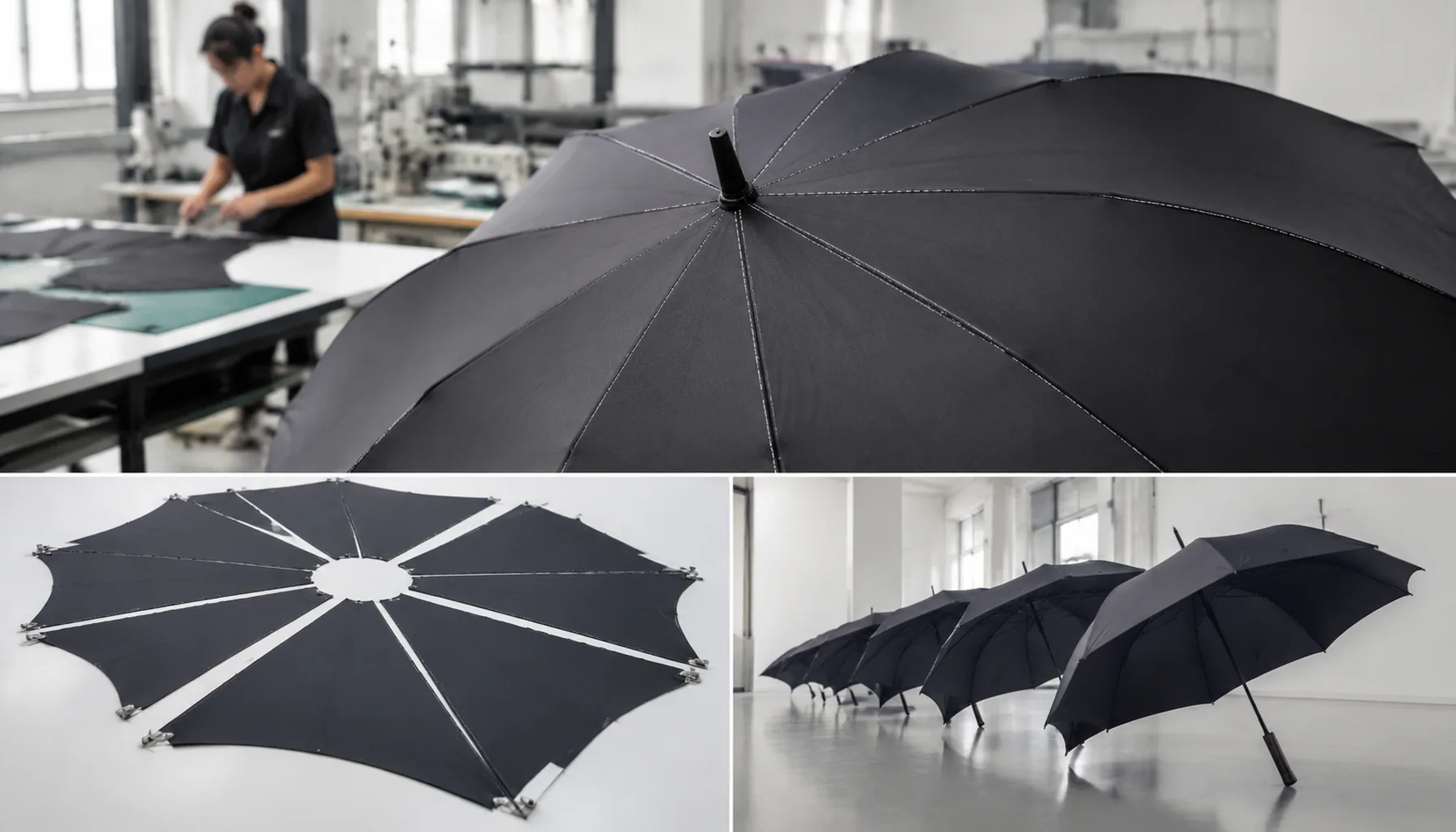
When buyers source umbrellas, the real problem is not just fabric quality but whether every panel cuts and matches cleanly enough to build a symmetrical canopy that seals and prints correctly. At ZheBrella, we see how umbrella canopy cutting tolerances shift with die condition, fabric relaxation, and panel matching on 190T and 210T pongee, and those small deviations quickly show up as crooked seams, off-register logos, and leak points.
How Panel Cutting Drives the Final Umbrella Shape
Panel cutting decides the umbrella’s final silhouette before a sewing operator ever touches the fabric. Each gore has to match three things at the same time: rib length, canopy arc, and seam allowance. If the outside arc is 3 mm short on a 23 inch straight umbrella, the canopy pulls tight between tips and the ribs bow upward; if it is 3 mm long, the same umbrella shows soft wrinkles near the seam line after closing. In OEM umbrella manufacturing, we normally set umbrella canopy cutting tolerances tighter on the tip-to-tip arc than on the inner notch because the eye sees distortion at the outer edge first. For 190T or 210T pongee umbrella canopy fabric, a practical tolerance is often +/-1.5 mm per panel edge after die cutting, with seam allowance held around 6-8 mm depending on single-needle or double-needle sewing. Loose cutting discipline cannot be fixed by stretching during assembly; it only moves the wrinkle to another rib bay.
Compact umbrellas are the hardest to cut cleanly because the frame folds in 2 or 3 sections and the canopy has to collapse without stacking bulky seams at the runner. A 21 inch auto-open-close model with 8K steel-and-fiberglass ribs needs panels that are slightly more forgiving near the crown but very consistent at the outer arc, otherwise the fabric twists when the shaft retracts. Golf umbrellas are different: a 27 inch, 30 inch, or 34 inch double-canopy vented windproof frame has a larger panel span, often 8K or 10K fiberglass, so small errors multiply across a wider surface. On a 30 inch golf umbrella, 2 mm per panel can become a visible 16-20 mm mismatch around the full circumference. Straight umbrellas sit between those extremes; a 23 inch manual or auto-open model with 8K ribs usually tolerates less crown bulk than a compact but less arc tension than a golf frame.
Good canopy quality control starts at the cutting table, not at final AQL 2.5 inspection. We check fabric relaxation before cutting because pongee rolls can shrink or skew after lamination, Teflon coating, or UV UPF 50+ treatment; cutting immediately after unrolling is a common cause of uneven panel recovery. For umbrella panel cutting, stacked layers must stay low enough that the bottom ply does not drift under the blade. In our standard practice at ZheBrella, printed panels are cut with registration marks checked against rib tip positions, especially for logo panels where a 5 mm lean is obvious after sewing. Compact panels need notch accuracy for fold alignment, golf panels need arc consistency for a smooth dome, and straight umbrellas need balanced seam pull so the canopy opens round instead of octagonal. The best test is still mechanical: assemble a pilot frame, open it 20-30 times, inspect seam tension under light, and confirm the canopy sits evenly without forcing the tips.
Fabric Behavior: 190T vs 210T Pongee and Coated Materials
Fabric movement is the first reason umbrella canopy cutting tolerances cannot be copied blindly from one material to another. A 190T pongee umbrella canopy has a looser hand and usually shows more relaxation after spreading, especially when fabric arrives tightly rolled from dyeing or water-repellent finishing. On our cutting tables, 190T can relax 2–4 mm across a typical 23" panel stack if it is cut too soon after unrolling, so we normally let the roll sit open for 4–8 hours before marker placement. 210T pongee is denser and more stable, but it is not “zero movement”; it can still creep along the warp when pulled hard during spreading. For umbrella panel cutting, the operator should avoid stretching the selvage edge to make the layers look neat, because that false tension releases after sewing and creates uneven scallops at the canopy edge.
Plain polyester and pongee behave differently again once coatings are added. A standard water-repellent finish or Teflon treatment has little effect on panel geometry, but silver, black, or color UV coatings for UPF 50+ fabrics add stiffness and reduce fabric recovery. The coated side can also drag against the layer below, so cutting stacks that work fine at 80–120 layers in uncoated 190T may need to drop to 40–60 layers for cleaner notches and straighter bias edges. In OEM umbrella manufacturing, I prefer testing shrinkage after both steaming and wetting, because some coated fabrics look stable dry but tighten slightly after rain exposure. A 1% change sounds small, but on a 27" golf umbrella panel it can shift rib-tip alignment enough to show wrinkles between the 8K or 10K ribs.
Thicker coatings also change seam behavior, not just cutting size. A UPF 50+ black-coated pongee may fold with 15–25% more bulk at the cap seam and rib-tip reinforcement, which means the same seam allowance can behave tighter than on a soft 210T pongee. If the panel is cut narrow, the canopy pulls hard at the runner when opened; if it is cut wide, the loose fabric forms waves between ribs and fails canopy quality control before AQL 2.5 inspection even begins. For stable production, ZheBrella’s standard practice is to record fabric relaxation time, stack height, cutting temperature, and first-piece open-frame fit before releasing bulk cutting. That is the practical way to keep umbrella canopy cutting tolerances tied to real fabric behavior instead of a drawing-room number.
Cutting Methods for OEM Orders: Knife, Die, and Laser
For OEM umbrella manufacturing, the cutting method should be chosen by repeatability first and unit cost second. Manual knife cutting is still useful for low MOQ sampling, custom 8K/10K layouts, and unusual shapes like petal-edge golf umbrellas, but it depends heavily on the cutter’s hand pressure and template condition. On a 190T pongee umbrella canopy, I normally allow tighter control on the straight grain and more caution on bias edges because fabric stretch can turn a clean paper pattern into a poor sewn fit. Practical umbrella canopy cutting tolerances for knife work are usually within ±2 mm on panel length if the fabric is stacked low, but that can drift when operators stack too many plies to save time. For 21" and 23" promotional umbrellas, that drift shows up as twisted tips, uneven skirt lines, and sewing operators forcing panels into the rib spacing.
Steel die cutting is the better answer when the PO is stable, the panel shape is proven, and MOQ justifies tooling. A well-made die gives consistent umbrella panel cutting across thousands of panels, especially for 23" auto-open and 27" golf models where small panel differences become obvious after assembly. The tradeoff is upfront die cost and less flexibility when the client changes arc depth, seam allowance, or logo position after approval. In our factory practice at ZheBrella, die cutting is preferred once a style moves beyond sample or pilot production because canopy quality control becomes measurable: panel stack height, die wear, notch location, and first-piece approval can be checked before bulk sewing. For common 8K promotional umbrellas, MOQ may start around 500–1,000 pcs, but die tooling makes more sense at several thousand units or repeat programs.
Laser cutting is precise on outline and useful for short-run complicated shapes, but buyers should not treat it as automatically superior. It can seal some synthetic edges, yet it may leave yellowing or a hard edge on light-color 190T/210T pongee if power and speed are not tuned. For printed panels, the real issue is registration, not only cutting accuracy. Screen print, heat transfer, and sublimation layouts need registration marks outside the seam allowance, plus clear centerline and top/bottom orientation marks, so the cutter can align the artwork before cutting. On sublimated panels, we also account for fabric shrinkage after heat pressing; otherwise the logo may be centered on the print file but off-center on the finished canopy. Good umbrella canopy cutting tolerances mean the printed logo, seam allowance, notch, and rib-tip position all agree after sewing, not just that the raw panel matches a CAD outline.
In-Line QC Checks Before Sewing Begins
In-line QC has to start at the cutting table, not after the canopy reaches the sewing line. For 190T and 210T pongee umbrella canopy work, I do not like panel stacks higher than 60–80 layers for straight manual knife cutting, and 80–120 layers only when the fabric is well-clamped and cut on a clean die or CNC table. Taller stacks save minutes but push the lower panels out of shape, especially on 23" and 27" stick umbrellas where a 2 mm angle drift becomes visible at the tip. Our standard practice at ZheBrella is to pull the top, middle, and bottom panels from every stack and check them against the approved pattern before bundling. That is where umbrella canopy cutting tolerances should be recorded clearly: side seam length, notch position, tip allowance, and arc consistency, normally held within ±1.5 mm for promotional orders and ±1.0 mm for retail-grade OEM umbrella manufacturing.
Edge condition tells you whether the cutter is sharp and whether the fabric coating will survive sewing. On umbrella panel cutting for pongee, polyester, POE, PVC, or EVA, inspectors should look for fuzzy yarns, heat-sealed edges that have hardened, coating cracks, and uneven selvage tension. A small amount of fraying on raw 190T pongee can be controlled by correct overlock and seam allowance, but loose threads longer than 3 mm along the bias edge are a warning sign because they will creep under the presser foot. We also measure diagonals from tip point to opposite seam base on sample panels from each cut bundle. If the left and right diagonals differ by more than 2 mm on compact 21" panels or 3 mm on 30" golf panels, the canopy will twist around the frame, even if the sewer is skilled. Good canopy quality control catches that before labor is wasted.
Batch shade matching should be treated as a cutting-room checkpoint, not only a warehouse issue. Pongee rolls from the same dye lot can still show shade bands, and sublimation or heat-transfer panels can shift after calendaring. Before sewing begins, each bundle should carry roll number, color code, print direction, cutting date, operator, and inspector initials. For printed logos, check that panels from different stacks do not mix warm-white and blue-white backgrounds, because the mismatch becomes obvious once eight or ten panels meet at the cap. Documented umbrella canopy cutting tolerances protect both buyer and factory: if final AQL 2.5 inspection is the first time anyone notices rib-tip misalignment, uneven skirt drop, or shade variation, the order is already expensive to repair. The better system is simple: inspect every cutting batch, quarantine doubtful bundles, and release only panels that can sew into a balanced canopy without forcing the frame.
Procurement Specs That Prevent Bulk Rework
Lock the PP sample with the exact production fabric, frame, rib count, and coating before you sign the cutting approval. A 23 inch 8K umbrella with 190T pongee does not behave like a 27 inch 10K golf umbrella in 210T pongee, even if the artwork looks identical on a flat PDF. Fabric stretch, bias direction, seam allowance, and coating stiffness all change how the panel pulls over the ribs. For umbrella canopy cutting tolerances, I like buyers to specify panel length tolerance, arc tolerance, notch position, and seam allowance separately instead of writing only “standard factory tolerance.” A practical spec might allow ±2 mm on panel edge length, ±1.5 mm on notch position, and consistent grain direction across all gores. If the order uses Teflon, black-out UV UPF 50+, or heavy heat-transfer printing, approve that exact coated cloth, not a substitute roll from sampling stock.
Substitute fabric is the fastest way to create bulk rework in OEM umbrella manufacturing. A soft 190T pongee umbrella canopy can hide small cutting variation because it eases into the seam during sewing, while a stiffer UV-coated 210T panel will show puckering at the crown and tension wrinkles near the tips. POE, PVC, and EVA panels are even less forgiving because needle holes and heat sealing do not recover like woven pongee. For umbrella panel cutting, the PP sample should include the real rib count—8K, 10K, or 16K—because every extra rib changes the gore angle and the way the canopy sits after tip attachment. Our standard practice at ZheBrella is to check PP canopy fit on the actual frame after opening and closing cycles, not just by measuring loose panels on the cutting table. That is the only reliable way to catch crown twisting, short tips, and uneven drop before mass cutting starts.
Any change after cutting approval should be treated as a schedule and cost event, not a small artwork correction. Increasing from 23 inch to 27 inch, moving a logo 20 mm closer to the panel edge, switching from 190T to 210T pongee, or adding a UV coating can require new nesting, new cutting dies or CNC templates, print fixture changes, and another PP sample. On a normal MOQ of 1,000 to 3,000 pieces, that can add 3 to 7 days; for full-panel sublimation, double-canopy vented construction, or 30 inch golf umbrellas, the delay can reach 10 to 14 days because printing and sewing lines must be rescheduled. Good canopy quality control means freezing size, fabric weight, coating, rib count, and print position before cutting. Buyers who define umbrella canopy cutting tolerances clearly at PO stage usually avoid the painful choice between accepting visible panel mismatch or paying to recut hundreds of canopies.
Frequently Asked Questions
Do 190T and 210T pongee require different cutting tolerances?
The dimensional tolerance may be similar, but 210T pongee is denser and can fold thicker. Factories should validate canopy fit and runner closure on the real fabric before bulk cutting.
When should panel cutting begin after PP sample approval?
Bulk cutting should start only after fabric shade, coating, print placement, and canopy measurements are signed off. Starting earlier can save days but increases rework risk if the buyer changes specs.
What cutting tolerance is acceptable for OEM umbrella canopy panels?
For standard 190T/210T pongee umbrellas, many factories control panel cutting within about ±1–2 mm depending on canopy size and printing requirements. Tighter tolerances are usually needed for all-over prints, logo matching across seams, and high-end retail orders.
Why does pongee fabric relaxation matter before umbrella panel cutting?
Pongee fabric can shrink or shift slightly after being unrolled, especially if it has been tightly packed. Allowing fabric to relax before die cutting helps reduce panel distortion, uneven seam tension, and canopy twisting after sewing.
How should buyers inspect panel fit during pre-shipment quality control?
Inspectors should open finished umbrellas and check canopy symmetry, seam alignment, print position, and tension around rib tips. For bulk orders, AQL inspection can include measuring selected panels, checking water resistance at seams, and comparing the canopy shape against approved samples.
Looking to Launch Your Custom Umbrella Line?
ZheBrella is a Zhejiang-based OEM/ODM umbrella manufacturer with 17 years of export experience. Free design, low MOQ from 100 pieces, windproof construction, full-color print.
Get Free Quote Now »People Also Search For
Related Articles
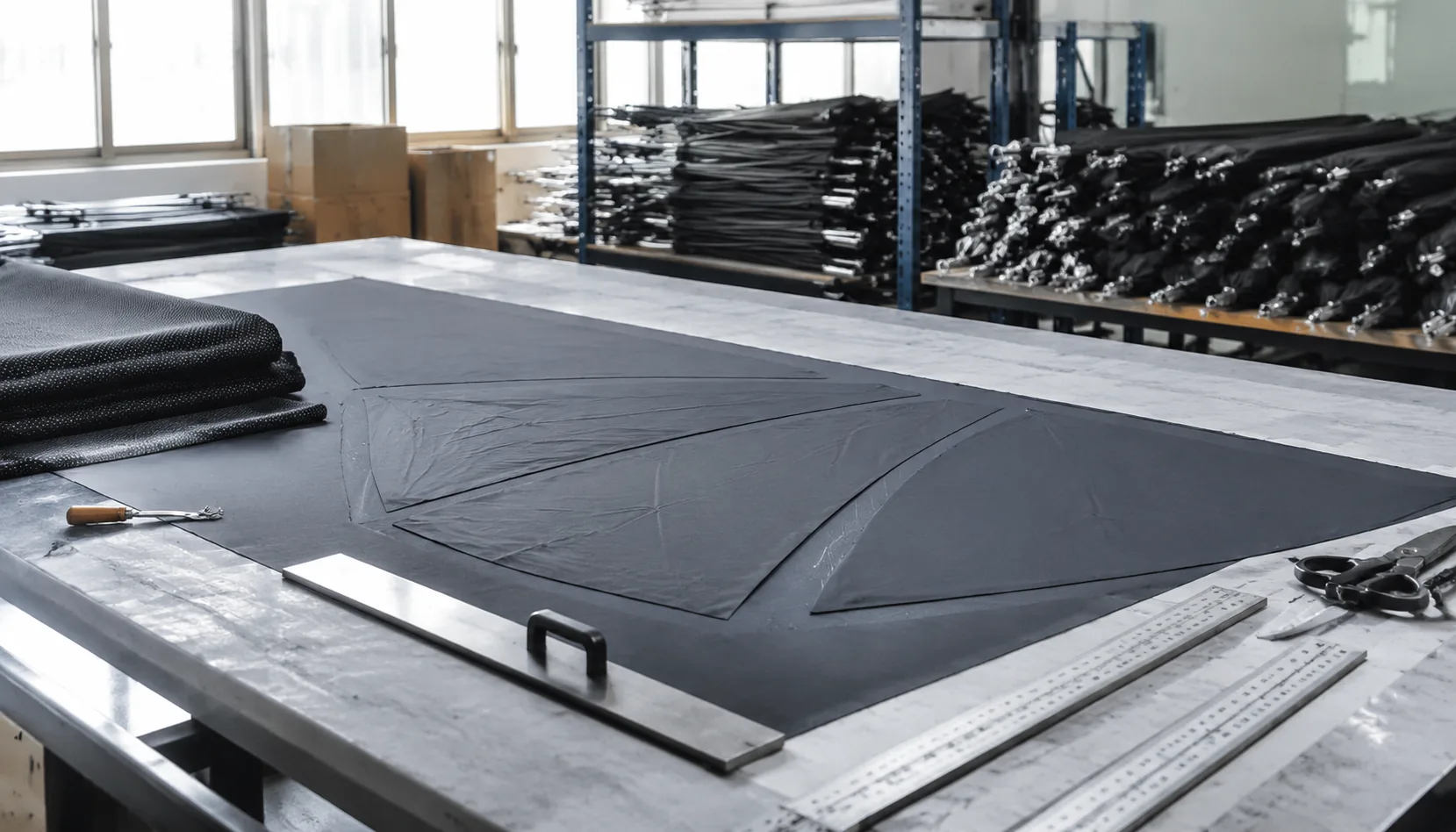
Umbrella Canopy Cutting Tolerances for Accurate Panel Fit
Set canopy cutting tolerances for 190T/210T pongee panels, print alignment, seam allowance, and frame fit to reduce wrin...
Read More »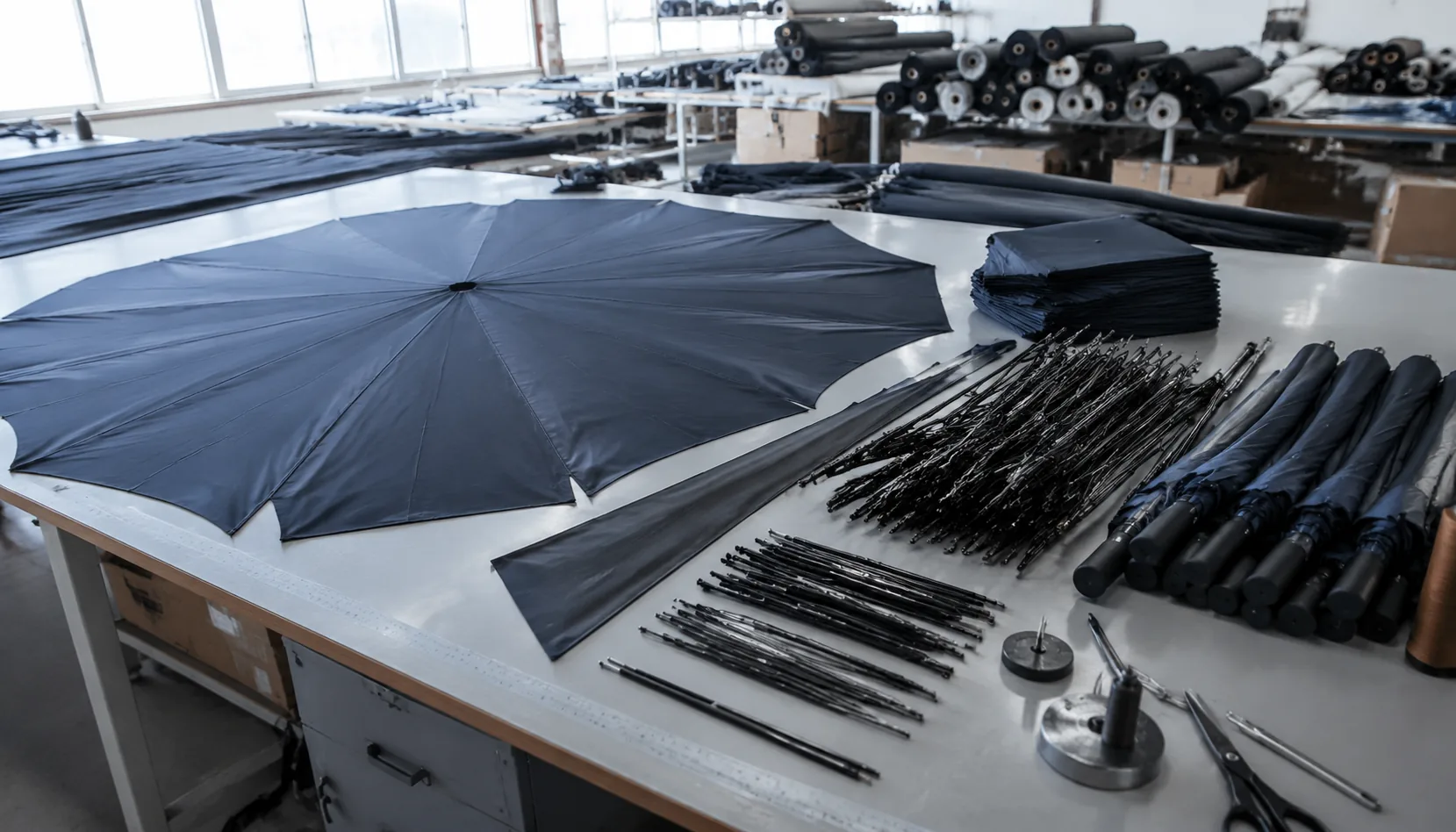
Umbrella Canopy Cutting Tolerances for Consistent Fit
Control panel cutting, fabric relaxation, and marker layout so 190T or 210T pongee canopies fit frames cleanly with fewe...
Read More »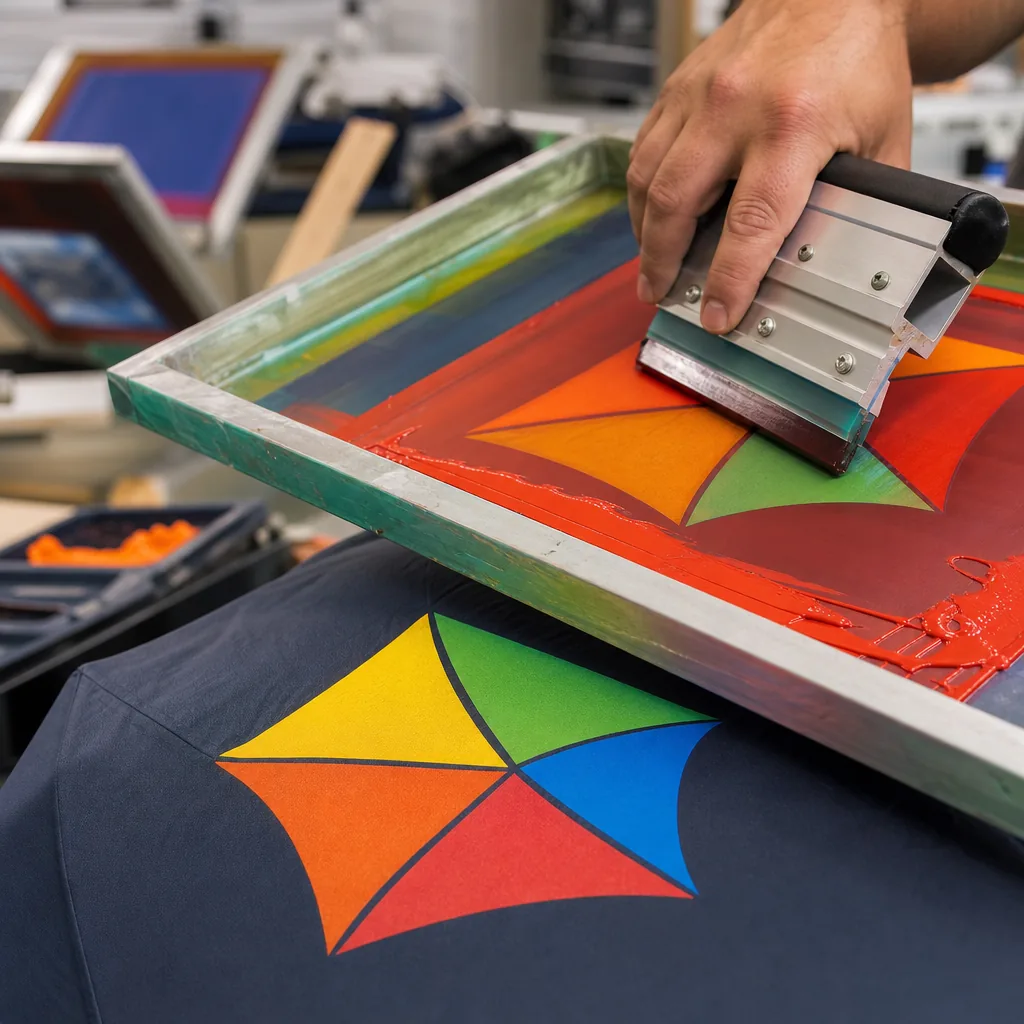
Panel Cutting Tolerances for Umbrella Production Lines
See how CNC patterns, fabric relaxation, +/-2 mm panel control, and shade-lot batching improve 190T/210T pongee canopy f...
Read More »